Showing posts with label prime minister. Show all posts

Thursday, 31 October 2019

General Election comes in with the cold

🎄⭐️GENERAL ELECTION 2019⭐️🎄

BRITAIN will head to the polls for the first General Election to be held in December since 1923 after the Early Parliamentary General Election Bill passed through both Houses of Parliament.

The poll - on Thursday 12 December - will be the fourth in a decade which has also included votes on Scottish membership of the United Kingdom in 2014 and UK membership of the European Union in 2016.

Of course, it is since the result of the latter referendum that Parliament has basically been gridlocked and unable to find any sort of way forward.

As briefly as possible then, here is how events have unfolded in the last three-and-a-half years...

On 23 June 2016 - a matter of 1,225 days ago now - the UK opted to leave the EU by a margin of 51.89% to 48.11% with England and Wales largely voting to leave, while Scotland and Northern Ireland largely voted to remain.

Then-Prime Minister David Cameron immediately resigned and Theresa May emerged as the last woman standing following a rather messy Conservative leadership election in which the initial favourite - Boris Johnson - did not even stand.

Mr Cameron had at least bequeathed a majority in the House of Commons to Mrs May, albeit only a relatively small one of 17.

But, with the Conservatives holding a massive poll lead of up to 21 points, Mrs May called an early General Election in a bid to strengthen her negotiating hand with the EU.

Unexpectedly, it all went horribly wrong for Mrs May who lost her majority following her own disastrous campaign and the resurgence of the Labour Party under Jeremy Corbyn.

Instead, to keep herself in office, Mrs May was forced into a confidence-and-supply agreement with the Democratic Unionist Party, a hardline Northern Irish group of 10 MPs.

But, while Mrs May was nominally still in office, she held little power - and, having stalled in bringing her Withdrawal Agreement with the EU to the Commons in December 2018, she had to ward off a vote of no confidence among Conservative MPs.

That vote was one of Mrs May's very few successes during her term - and she would ultimately then put her deal before Parliament on three separate occasions in the first few months of this year.

On each occasion, the proposal was defeated - and, in fact, it was refused by a record of 432 votes to 202 on the first attempt on 15 January.

Humiliated, Mrs May was left with no choice other than to request a Brexit extension which was eventually granted by the EU to run until today.

By this point, though, Nigel Farage had returned to the forefront with his new vehicle for self-aggrandisement, the Brexit Party.

And so, in the 2019 European elections that should never have been, the Brexit Party repeated the UKIP achievement of 2014 by winning the most votes and seats.

By contrast, the Tories had plunged to fifth place with just 8.8% of the vote nationally.

Mrs May choked back her tears as she made her resignation speech in Downing Street and so began another frantic Conservative Party leadership contest.

Rather ridiculously, no fewer than 10 Tory MPs received enough nominations to be considered - although it quickly became inevitable that Mr Johnson would emerge as the victor.

Unlike Mrs May, though, Mr Johnson did not inherit a majority - and so the new PM quickly ran into his own problems in the Commons.

Famously, Mr Johnson declared he would “rather be dead in a ditch” than fail to leave the EU on Hallowe'en - but he can hardly be seen to have helped himself achieve his aim.

On his first day in the Commons on 3 September, Mr Johnson lost his majority even when counting the DUP after Phillip Lee crossed the floor - literally - and defected to the Liberal Democrats following a disagreement with Brexit policy.

Later that day, 21 Conservative MPs including two former Chancellors Kenneth Clarke and Philip Hammond had the party whip withdrawn for supporting an opposition motion aimed at blocking a no-deal Brexit.

The ousted rebels also included Sir Nicholas Soames - the grandson of former Conservative Party Leader Sir Winston Churchill - as Mr Johnson tempestuously reduced his own working majority to minus 43.

Unsurprisingly then, in record-breaking style, the Prime Minister lost his first six Commons votes throughout September as Parliament prevented him from calling an election while the grim prospect of leaving the EU without a deal was still possible.

Meanwhile, Mr Johnson had also failed to prorogue Parliament for an extra-long period in another move widely expected to be an improper attempt to avoid scrutiny of his own deal with the EU ahead of the 31 October deadline.

Indeed, on 24 September, the Supreme Court unanimously ruled that the prorogation was unlawful and Mr Johnson was sheepishly forced to back down.

Gradually, though, the Prime Minister was able to make some breakthroughs as, remarkably, he returned from Brussels with his own Withdrawal Agreement after months of the EU stating that it would not reopen negotiations.

More remarkably still, Mr Johnson then achieved what Mrs May never came close to doing - and, on 22 October, the Commons voted in favour of a Withdrawal Bill for the first time.

The good news for Mr Johnson did not last long, however. The next vote on the Programme Motion, which set out only a three-day timetable for debate on the Bill, was defeated.

At this stage, a further Brexit extension had basically become an inevitability - but, rather than using the extra time to discuss the Withdrawal Agreement which had been approved in principle, Mr Johnson impertinently took it off the table altogether.

Instead, he focused on getting himself a General Election with which to improve his position in the Commons.

On Monday, Mr Johnson failed for a third time to get an election via the two-thirds majority required under the Fixed-Term Parliaments Act 2011 brought in under Mr Cameron.

But there was still yet another option. A short Bill notwithstanding the FTPA, originally proposed by the Lib Dems and Scottish National Party, provided Mr Johnson with a workaround which required only a simple majority in the Commons.

It meant that, with no-deal back off the table until then, Labour was almost obliged to agree with an election or be accused of running scared.

So, now for a first General Election in December in 96 years - but here is a word of warning from the history books for Mr Johnson.

In that election in 1923, the Conservatives, led by Stanley Baldwin, won the most seats - but Labour, led by Ramsay MacDonald, and Herbert Asquith's Liberal Party gained enough seats to produce a hung parliament.

Mr MacDonald consequently formed the first ever Labour Government, albeit one that only lasted 10 months.

Tuesday, 23 July 2019

Bugger Boris


BORIS JOHNSON will become the 76th Prime Minister of the United Kingdom tomorrow after he easily beat Foreign Secretary Jeremy Hunt in the Conservative Party leadership election.

Mr Johnson took 92,153 votes (66.1%) from party members to finish well clear of Mr Hunt who had 46,656 ballots (33.5%) cast for him. There were 509 papers rejected.

But, while this was a clear victory for the former Mayor of London among the Conservatives' rank and file, it also means he was elected into position by just 0.14% of the entire population.

During his campaign, Mr Johnson was largely kept out of trouble by his staffers, and yet he still managed to court controversy by refusing to rule out proroguing Parliament until after the Brexit deadline of 31 October - even if it meant the UK the European Union without a deal.

It was little more than three years ago that Mr Johnson led a Leave campaign which promoted sovereignty and urged Britain to "take back control" - but, now, parliamentary democracy does not seem all that important to him really.

Nevertheless, that inconsistency should have come as no surprise to anyone who has followed Mr Johnson's career closely enough.

Once upon a time, American comedian Groucho Marx joked: "Those are my principles, and if you don't like them... well, I have others!"

Frankly, it is a quote which is made for Mr Johnson.

After all, it is now little remembered that - during his time as Mayor of London between 2008 and 2016 - the new Prime Minister was never slow to praise the relationship between the UK capital city and the EU.

Now, of course, it is true that all people, even politicians(!), are entitled to a change in heart - and this is an admittedly cynical view of the situation.

But it seems far more likely in this instance that the wily Mr Johnson recognised the significant political capital which could be gained by opposing his former fellow Old Etonion and then-Prime Minister David Cameron in the EU referendum campaign.

Mr Johnson has never made much of a secret of his ambition to lead the country - and, in 2016, the gamble of his life appeared to have paid off handsomely when a humiliated Mr Cameron resigned in the immediate wake of the referendum.

However, in a month of political mayhem, Mr Johnson's leadership bid failed even to launch as his ally and expected running mate Michael Gove astonishingly announced his own candidacy.

Eventually, Theresa May became PM in unconvincing style - and, less than a year after taking office, she lost her overall majority in the snap General Election which she called in 2017.

For two more years, Mrs May led Britain in ever-decreasing circles, trying repeatedly to force through a compromise deal which ended up being opposed on all sides.

Perhaps things might have been different if Mr Johnson had won the leadership election three years ago. Perhaps Mr Johnson would have called a General Election, won an increased majority, and the first stage of Brexit would have already been completed.

That remains uncertain - especially as the 2017 election coincided with a popularity surge for Labour leader Jeremy Corbyn, never seen before or since.

If anything, this leadership campaign against Mr Hunt has emphasised some of the weaknesses of Mr Johnson - with his serial avoidance of the issues at hand and his tiresome jokes which appear to appeal only to the slack-jawed and simple-minded.

He was at it again in his victory speech this morning when he declared: "Dude! We are going to energise the country" - but gave no solutions to the main issue of the day or indeed any of the other problems currently facing Britain.

And then - deep sigh - there are the gaffes, of which threatening to prorogue Parliament is only just the latest.

In the past, Mr Johnson has referred to black people in Africa as "piccaninnies" with "watermelon smiles" and gay men as "bumboys".

Meanwhile, in November 2017 in the role of Foreign Secretary, he made a disastrous intervention in the case of a British mother Nazanin Zaghari-Ratcliffe who had been detained by the Iranian authorities.

Mr Johnson told a Select Committee that he believed she had been “simply teaching people journalism” - but these remarks put her at risk since a central part of Mrs Zaghari-Ratcliffe's defence was that she was there on a holiday visiting family.

Four days after Mr Johnson's comments, Mrs Zaghari-Ratcliffe was returned to court in Iran where the then-Foreign Secretary's statement was cited as evidence against her

Rather than gaffes then, these incidents are - at best - misguided or bad errors of judgement. At worst, they are the remarks of a mendacious and discriminatory man who is simply not fit to be Prime Minister.

Regardless of that, Mr Johnson already faces an arithmetical headache with the Parliament which Mrs May has bequeathed him - especially if he attempts to lead Britain towards a No Deal scenario.

Anne Milton - MP for Guildford - resigned from her from her ministerial post just minutes before today's result was announced.

Chancellor Philip Hammond and Justice Secretary David Gauke will surely follow, based on what they have previously said - while former leadership candidate Rory Stewart has vowed to lead the charge against a No Deal Brexit from the backbenchers.

The arithmetic could even get worse for Mr Johnson if - as expected - the Conservatives lose their seat in the Brecon and Radnorshire by-election, held on 1 August.

It is difficult to know what sort of boost, if any, there will be to the Tory campaign following the selection of Mr Johnson.

But it is certainly the case that Britain is now again running out of time, something which was warned against by Donald Tusk, the President of the European Council, on 11 April - the date on which the latest extension was granted.

Since then, there have been 104 days - while there are now just exactly 100 days until the Brexit deadline on Hallowe'en.

So far, with over half of the time since the original Brexit date having elapsed, Britain has achieved precisely nothing.

Worse still, Britain now has a loose cannon of a Prime Minister whose reference from his ex-Daily Telegraph boss Max Hastings declared him to be "unfit for national office".

And yet, tomorrow, Mr Johnson will be settling into Number 10 Downing Street where the difficult work will begin.

CONSERVATIVE PARTY LEADERSHIP CONTEST 2019


1st (%)
13 June
2nd (%)
18 June
3rd (%)
19 June
4th (%)
20 June
5th (%)
20 June
Members
Boris JOHNSON114 (36.4)126 (40.3)143 (45.7)157 (50.2)160 (51.1)92,153 (66.1)
Jeremy HUNT43 (13.7)46 (14.7)54 (17.3)59 (18.8)77 (24.6)46,656 (33.5)
Michael GOVE37 (11.8)41 (13.1)51 (16.3)61 (19.5)75 (24.0)
Sajid JAVID23 (7.3) 33 (10.5)38 (12.1)34 (10.9)

Rory STEWART19 (6.1)37 (11.8)27 (8.6)


Dominic RAAB27 (8.6)30 (9.6)


Matt HANCOCK20 (6.4)Withdrew


Andrea LEADSOM11 (3.5)


Mark HARPER10 (3.2)


Esther MCVEY9 (2.9)


Spoilt ballots00021509 (0.4)
Turnout313313313313313  139,318 (87.4)

Rt Hon BORIS JOHNSON MP Profile
Full name Alexander Boris de Pfeffel Johnson (born 19 June 1964)
Birth place New York City, United States
Education Eton College 
Alma mater Balliol College, Oxford
Constituency Uxbridge and South Ruislip (since 2015, maj. 5,034); previously Henley (2001-2008)
Public office
▪️2008-2016 Mayor of London
▪️2016-2018 Foreign Secretary

Saturday, 27 September 2014

Back to Iraq

BRITAIN will take part in air strikes over Iraq after MPs voted overwhelmingly in favour of joining the ongoing military action against ISIS.

Prime Minister David Cameron said the country had a "duty to take part" and that there was "no option to walk on by".

He added: "This is not the stuff of fantasy. It is happening in front of us and we need to face up to it."

Earlier this week, Mr Cameron had returned from his trip to the United Nations headquarters in New York to recall Parliament and raise a motion in favour of the strikes.

And, following a seven-hour debate in the House of Commons yesterday, the proposal was backed by the massive margin of 524 to 43.

That result stands in stark contrast to a similar vote just over a year ago. Back then, Mr Cameron embarrassingly lost in the Commons after proposing to take action against Bashar al-Assad's government in Syria.

This time, though, the mood in Westminster has been rather different. Assurances have been sought that Britain would not commit itself to ground troops or involve itself in the bombing of Syria - which, unlike Iraq, has not appealed for outside help.

And, with the wording of the motion confirming action was being restricted to air strikes over Iraq only, the outcome of the division was pretty obvious from the outset.

Of course, this decision to back military action comes after weeks and weeks of unremittingly grim news from the Middle East with ISIS having taken control of vast areas of Iraq and Syria.

More recently, the group has struck much closer to home, releasing a video this month of the beheading of British aid worker David Haines.

Another volunteer aid worker, Alan Henning from Eccles in Salford, remains in its clutches, his family this week having received an audio file of him pleading for his life.

Unsurprisingly then, it is not just the politicians who are in support of the strikes.

Recent polling shows that the British public are also now far more in favour of action against ISIS than they were of an intervention against Syria last year.

Yet, even these numbers show there is a fair proportion of people who remain war weary from the previous large-scale conflicts in Iraq and Afghanistan, and the campaign in Libya in 2011.

Dissenting MPs raised concerns in the debate and questioned the worryingly open-ended length of time which has been committed towards the campaign.

Mr Cameron admitted that the mission "will take not just months, but years" - while some of his other statements further seemed to raise the prospect of mission creep.

After all - if it had been up to the Conservative leader, then British forces would now be preparing to bomb Syria too. It was only a lack of consensus in the Commons which prevented this.

Remarkably then, for the third time in less than 24 years, it is Iraq which is the focus of a bombing campaign including British forces. 

Yes, of course, this is somewhat different to the 2003 invasion in terms of its legality and even in terms of its morality.

But that still does not mean the air strikes will necessarily actually work.

ISIS may now control large swathes of northern Iraq - however, it remains more of an idea and a belief system than a geographical area.

Arguably, the group has been borne out of a hatred of western intervention in Iraq and the wider Middle East.

And so, in this context, yet more air strikes can surely only be considered counter-productive in the long term.

Therefore, as sad and frustrating as it would have been, this was a time which Britain should have engaged in regrettable isolationism.

The engagement of Special Forces with highly specific missions to free trapped British hostages is surely something nobody reasonable would oppose.

But yet another general bombing campaign seems to be a depressingly simplistic fall-back option to a hideously complex problem.

Philosopher George Santayana once said: "Those who cannot remember the past are condemned to repeat it."

It feels, at the moment, as if we seem condemned to repeat it to fade.

THE MOTION
"That this House:
- Condemns the barbaric acts of ISIL against the peoples of Iraq including the Sunni, Shia, Kurds, Christians and Yazidi and the humanitarian crisis this is causing;
- Recognizes the clear threat ISIL pose to the territorial integrity of Iraq and the request from the Government of Iraq for military support from the international community and the specific request to the UK Government for such support;
- Further recognizes the threat ISIL poses to wider international security and the UK directly through its sponsorship of terrorist attacks and its murder of a British hostage;
- Acknowledges the broad coalition contributing to military support of the Government of Iraq, including countries throughout the Middle East;
- Further acknowledges the request of the Government of Iraq for international support to defend itself against the threat ISIL poses to Iraq and its citizens, and the clear legal basis that this provides for action in Iraq;
- Notes that this motion does not endorse UK air strikes in Syria as part of this campaign, and any proposal to do so would be subject to a separate vote in Parliament;
- Accordingly supports Her Majesty’s Government, working with allies, in supporting the Government of Iraq in protecting civilians and restoring its territorial integrity, including the use of UK air strikes to support Iraqi, including Kurdish, security forces’ efforts against ISIL in Iraq;
- Notes that Her Majesty’s Government will not deploy UK troops in ground combat operations;
- Offers its wholehearted support to the men and women of Her Majesty’s armed forces."
VOTING AGAINST THE MOTION
Labour (23)
Diane Abbott, Graham Allen, Anne Begg, Ronnie Campbell, Martin Caton, Katy Clark, Ian Davidson, Paul Flynn, Stephen Hepburn, Kate Hoey, Kelvin Hopkins, Sian James, Mark Lazraowicz, John Mc Donnell, Iain McKenzie, Austin Mitchell, Grahame Morris, George Mudie, Linda Riordan, Barry Sheerman, Dennis Skinner, Graham Stringer, Mike Wood, Jeremy Corbyn (Teller).
Conservatives (6)
Richard Bacon, John Baron, Gordon Henderson, Adam Holloway, Nigel Mills, Mark Reckless
Lib Dems (1)
Julian Huppert
Scottish Nationalists (6)
Stewart Hosie, Angus Roberton, Mike Weir, Eilidh Whiteford, Angus Brendan McNeill, Pete Wishart (Teller) 
Others (7)
Mark Durkan, Alasdair McDonnell, Margaret Ritchie, Jonathan Edwards, Hywel Williams, George Galloway, Caroline Lucas

Tuesday, 24 June 2014

Coulson guilty, Cameron guilty by association

PHONE-HACKING VERDICT 
(2) = facing two charges
DefendantCharge(s)Verdict
Andy Coulsonconspiracy to hack phones
conspiring to commit misconduct in public office(2)
Guilty
No verdict returned
Rebekah Brooksconspiracy to hack phones
conspiracy to pervert the course of justice(2)
conspiring to commit misconduct in public office(2)
Cleared 
of all charges
Charlie Brooksconspiracy to pervert the course of justiceCleared
Clive Goodmanconspiring to commit misconduct in public office(2)No verdict returned
Cheryl Carterconspiracy to pervert the course of justiceCleared
Mark Hannaconspiracy to pervert the course of justiceCleared
Stuart Kuttnerconspiracy to hack phonesCleared
 
PRIME MINISTER David Cameron apologised today after his former Director of Communications, Andy Coulson, was found guilty of conspiracy to hack phones while editor at the News of the World.

Coulson, who was editor of the newspaper between 2003 and 2007, was convicted by the jury of eight women and three men at the Old Bailey.

However, his predecessor at the now-defunct paper, the flame-haired Rebekah Brooks, was cleared of all of the charges against her.

Mrs Brooks's husband, Charlie Brooks, was cleared of conspiracy to pervert the course of justice, as was her long-standing personal secretary Cheryl Carter and News International's head of security Mark Hanna.

The last of the seven defendants, former News of the World managing editor Stuart Kuttner, was cleared of conspiring to hack voicemails.

The trial, which lasted 138 days, was one of the longest and most expensive in British legal history - but, with justice served in the courts, attention soon turned to Downing Street.

Mr Cameron, who hired Coulson only weeks after he resigned from the News of the World, had earlier promised to apologise if Coulson was found guilty.

And, today, Mr Cameron had to make that apology, stating that he was "extremely sorry" that he had made "the wrong decision" despite the assurances he had received.

Of course, the apology is all well and good - although, frankly, anything less would have surely been an abdication of responsibility. Nevertheless, doubts will remain over Mr Cameron's judgement.

After all, the PM had gone against the advice of some his own colleagues in making the appointment.

It was no surprise then to see Labour leader Ed Miliband look to make some easy political capital out of the verdict.

"David Cameron brought a criminal into the heart of Downing Street," declared Mr Miliband.

But the Tories can point out that Labour also once had a close association with the News of the World, such was the power of the Rupert Murdoch-owned weekly.

As a matter of fact, it was revealed during the trial that former Prime Minister Tony Blair had sent a series of text messages to Mrs Brooks signed with a "T" and a kiss.

And, this was not the only close relationship exposed in the deliberations at the Old Bailey.

It emerged, quite sensationally, that Coulson and Mrs Brooks had indulged in a long-term affair between 1998 and 2007 while Mrs Brooks was married to her ex-husband, actor Ross Kemp.

The jury ruled today, though, that while Coulson definitely knew that phone-hacking was going on at his newspaper, it could not be said that Mrs Brooks did.

So, while her embarrassment may be quite considerable - at least, in the eyes of the law, she cannot be considered a criminal.

In spite of this, few tears will be shed among phone-hacking victims for Mrs Brooks.

They will argue that the pain they suffered through the invasion of their privacy by Coulson and others at the News of the World far outweighs her embarrassment.

And, while welcoming Coulson's conviction and the damages they have received in their own civil cases, the phone-hacking victims could easily argue that they are still without an overriding resolution.

That, of course, was meant to emerge from the Leveson Inquiry into "the culture, practices and ethics of the press", which concluded that some kind of statutory regulation was required.

Political wrangling and some reasonable worries about state control of the press resulted in outright statutory regulation being replaced by a Royal Charter.

But, while Murdoch has been able to start up a new weekly paper on a Sunday, none of his publications has yet signed up to the Charter.

Nor have the newspapers from the Mail group, the Telegraph group or the Trinity Mirror stable.

Indeed, despite the Coulson verdict today, not much seems to have changed at all.

Saturday, 12 October 2013

Nothing to fear?

NEWSPAPERS have nothing to fear from the regulatory Royal charter drawn up by the three main parties at Westminster according to shadow culture secretary, Harriet Harman.

So why, then, is there still so much resistance from the Fourth Estate to the proposal almost a year on from the published report following the Leveson Inquiry?

Leading the charge against, Daily Mail editor Paul Dacre has claimed that the row last week between his paper and Labour leader Ed Miliband showed exactly why politicians should not be involved in press regulation.

Mr Dacre wrote in his own newspaper and in the Guardian: "Some have argued that last week's brouhaha shows the need for statutory press regulation. I would argue the opposite.

"The febrile heat, hatred, irrationality and prejudice provoked by last week's row reveals why politicians must not be allowed anywhere near press regulation."

Indeed, it could be added, perhaps slightly flippantly, that the consensus between the political parties is the perfect reason why the charter should be rejected.

Moreover, this is hardly a lone crusade by the Mail. Inevitably, the Murdoch-owned pair - the Sun and the Times - are against the plans... but then so is the left-wing daily, the Mirror.

The Telegraph and the Express are also opposed - and so, quite clearly, is the editor of Private Eye, Ian Hislop following his rant on the latest episode of Have I Got News For You.

The only notable outsiders are the Guardian, which is tentatively in support of the Royal charter, and the Independent, which wrote in an editorial: "To ignore the Royal charter would mock the very democracy the press claims to guard."

And the biggest problem for the press is that this is one of those seemingly rare occasions where the politicians are actually carrying out the will of the majority of the British public.

After all, it must be remembered exactly the context in which the whole debate on the future of the press began.

It began, of course, with the shocking revelations in July 2011 that the now-defunct News of the World had hacked the phone of the murdered teenager Milly Dowler.

Many other complainants had already come forward. The majority at first, like Hugh Grant and JK Rowling, were already in the public eye.

However, after the Dowler revelations, others then became aware that they had also been victims - and many of them, like the falsely-accused Christopher Jefferies, were categorically not.

Ever since, unsurprisingly, the tide of opinion has been against the newspaper industry. On this matter, it had effectively lost the moral high ground.

Yes, the newspapers can point out that the likes of Mr Grant and Mr Jefferies gained recourse in the courts within the existing legal framework - and, in suggesting statutory regulation, this was something which Sir Brian Leveson seemed to disregard far too easily.

But, whatever Mr Dacre and others claim, the above fact is exactly why the Prime Minister David Cameron insisted on a Royal charter, rather than a whole new set of laws.

In other words, the existing framework is generally accepted to work just fine - but there simply must be more done to make the press more accountable.

After all, none of what has actually been proposed would have prevented the Mail from publishing slurs about Mr Miliband's dead father or, more importantly, stories like the Telegraph uncovering the MPs' expenses scandal.

Happily, the draft proposals also include a vital opt-out for local and regional newspapers which even Sir Brian found to be rarely in the wrong.

And all of it is far superior to the rejected newspaper industry's alternative charter - which was frankly little more than a rehash of the failed and discredited Press Complaints Commission.

Quite predictably, there have already been howls of anguish that the proposed Royal charter is the end of the 'free press' as we know it.

This is a pretty bizarre assessment considering that much of the national media is so 'free' that it rests in the hands of just a few wealthy men...

And, sadly for journalism, the cliché that you should not believe everything you read in the papers is particularly true of the reporting of the Royal charter.

The proposals will be put to the Privy Council for final agreement on 30 October.

Friday, 26 July 2013

The boy in the bubble


THE ALMOST continual media coverage of the birth of the Duke and Duchess of Cambridge's first child has finally started to settle down in the wake of some actual news happening.

By contrast, on Monday, it was relentless and largely unwatchable.

From the breakfast announcement that Kate had gone into labour and been taken to the private Lindo wing of St Mary's hospital in London - to the moment, 10 hours later, that she had popped out an 8lb 6oz sprog - the likes of the BBC and Sky provided all-day coverage of... nothing much.

That much was confirmed by the brilliantly frank BBC royal correspondent Simon McCoy, who was forced to wait outside the hospital to report on any news.

He admitted on air: "Plenty more to come from here, of course - none of it news because that will come from Buckingham Palace but that won't stop us."

Meanwhile, this was - we were told by Prime Minister David Cameron - "a very exciting occasion and the whole country is excited". 

And it was certainly afforded the sort of breathless coverage - both at home and, in fairness, elsewhere around the world - which befits a landmark event.

Surely, though, there was far too much fuss over what was - on a basic level - a woman in childbirth, something which has been happening for thousands of years.

Private Eye perhaps best summed up the arrival of the third-in-line to the throne on the front page of its latest edition, which states simply in large letters - "WOMAN HAS BABY" - adding in tiny print at the bottom, "INSIDE: Some other stuff".

Of course, for the likes of the Sun and the Daily Mail, baby George Alexander Louis was gold dust in the generally quiet summer season.

Top cringe marks must go to the Sun for taking the unprecedented step of changing its masthead for the day to 'The Son'.

Meanwhile, the Daily Mail website benefited from its biggest ever audience - 10.5m unique users, and its print edition was unsurprisingly a "Royal Baby Souvenir Special".

Amusingly, though, in the midst of the copious amounts of print, the Mail had the nerve to criticise the BBC for its over-the-top coverage. Incredible.

At least those looking for an alternative view would have found some job with the Mirror and the mini version of the Independent.

The Mirror, though joining in the gushing of the new royal in its editorial, gave room to republican commentator Brian Reade - while, rather pointedly, 'The I' led with the headline: "Born to Rule".

Media Guardian commentator Roy Greenslade has claimed that the media was simply "giving people what they want" - and it is true that the baby has arrived at a time when the royal family is riding a wave of popularity.

An Ipsos Mori poll last week showed 77% of Britons were in favour of remaining a monarchy over a republic, close to its best-ever level of support.

However, another poll, by Yougov, found that only 14% of UK adults were "very interested" and 32% were "somewhat interested" in the royal baby.

As you may have guessed from the tone of this post, I fell into neither of those groups - though I should point out that this does not necessarily make me a strident republican either. It really was just too much coverage for something which is relatively insignificant to me.

Indeed, I have watched and read less news this week than in a long time but I will always remember it as a few days that Britain went baby bonkers.

And there has not even been the Sunday features or the ITV documentaries yet...

Wednesday, 10 April 2013

Thatcher dies but her politics live on

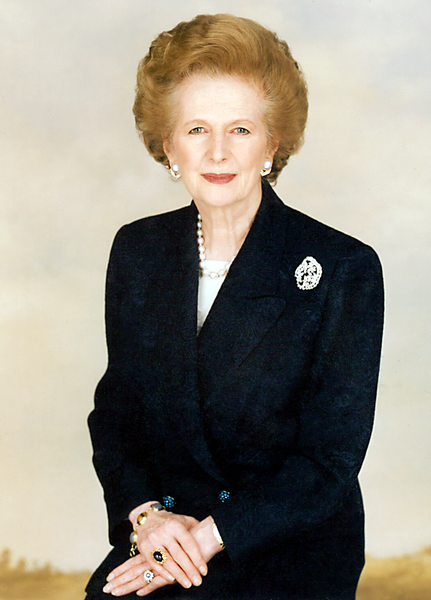
Baroness Margaret Thatcher (1925-2013), Prime Minister 1979-1990

MARGARET THATCHER, Britain's longest-serving and first - and so far only - female Prime Minister, has died at the age of 87, following a stroke.

Mrs Thatcher was PM from 1979 to 1990, and utterly transformed the country with her radical Right-wing policies during a controversial 11-year rule.

However, as shown by Meryl Streep's Oscar-winning portrayal of Mrs Thatcher in the film The Iron Lady, her recent years had been blighted by ill-health.

And, at Monday lunchtime, her friend and spokesman Lord Bell confirmed: "It is with great sadness that Mark and Carol Thatcher announced that their mother Baroness Thatcher died peacefully following a stroke this morning."

The flags over Downing Street were lowered to half-mast, and Mrs Thatcher's latest successor, David Cameron said: "Margaret Thatcher succeeded against all the odds. The real thing is she didn't just lead our country; she saved our country.

"I believe she will go down as the greatest British peacetime Prime Minister."

Tributes followed from across the political spectrum. Labour leader Ed Miliband said: "She will be remembered as a unique figure. She reshaped the politics of a whole generation.

"She was Britain's first woman prime minister. She moved the centre ground of British politics and was a huge figure on the world stage.

And deputy Prime Minister, the leader of the Liberal Democrats Nick Clegg added: "Margaret Thatcher was one of the defining figures in modern British politics.

"Whatever side of the political debate you stand on, no one can deny that as prime minister she left a unique and lasting imprint on the country she served."

Meanwhile, a Buckingham Palace spokesman said: "The Queen was sad to hear the news of the death of Baroness Thatcher. Her Majesty will be sending a private message of sympathy to the family."

But Mrs Thatcher was also truly a divisive figure, and has indeed become a hate-figure for many on the Left, having privatised several state-run industries and been involved in long run-ins with trade unions.

The most famous of these was the miners' strike of 1984-85 when pit-workers and police officers held brutal, running battles, notably in Orgreave, South Yorkshire.

Ultimately, though, Mrs Thatcher won. Unemployment in these communities soared, and the communities themselves broke down and lost any sense of purpose.

For this, Mrs Thatcher will never be forgiven in the pit towns and mining villages. As far as they are concerned, they were considered collateral damage in her reforms and their wounds remain to this very day.

At the time, there were many unashamedly spiteful protest songs - notably Elvis Costello's Tramp The Dirt Down and Hefner's The Day That Thatcher Dies, which foretold her demise with children singing "Ding Dong, the witch is dead" in its closing section.

Of course, it mattered not. The political result was the same - victory for Mrs Thatcher.

Indeed, it was clear by the time New Labour were swept into power in 1997, replacing John Major's tired Tory administration, that the post-war consensus was over and free-market economics had become the order of the day.

Tony Blair, who was elected in 1997, paid tribute to Mrs Thatcher, describing her as a "towering political figure" who changed "not only the political landscape of their country but of the world".

Of course, just like Mrs Thatcher, Mr Blair won three general elections and did not lose one, before being forced out instead by an internal party rift.

But, unlike Mrs Thatcher, Mr Blair did not significantly change the political landscape of Britain, as he has admitted himself.

"I always thought my job was to build on some of the things she had done rather than reverse them," he said, and in doing so he has effectively rendered Labour and the Conservatives as two sides of the same coin.

Mr Blair's successor Gordon Brown even invited a frail Mrs Thatcher to Downing Street in a seemingly fruitless attempt to broaden his appeal.

Now, at this point, I should point out that my parents actually benefited from Mrs Thatcher's period in power. The Right to Buy scheme took them out of council accommodation and put them on the property ladder.

But, in many ways, they were fortunate. My dad had a steady job as an electrician with a sign firm and the company he worked for did not go bust - but many did, especially in the early 1990s recession.

This meant that a lot of people who bought their homes could not afford to repayments, and a lack of social housing, which the government felt was not much required, left no safety net to those who became insolvent.

Famously, as Chancellor, Mr Brown foolishly promised an end to Tory "boom and bust". But then, in 2008, coincidentally shortly after he had become PM himself, came the biggest crash since the Great Depression in 1930s.

Just like in Mrs Thatcher's day, growth in the economy under New Labour had been utterly reliant on the financial services sector and an unsustainable housing boom.

Nothing had changed, and still nothing has. Mrs Thatcher is dead but her politics live on.

Thursday, 28 February 2013

Oh, when the Heed went marching in!


Gateshead 0
Bolton Wanderers 1 Lofthouse

Gateshead team Bobby Gray - Bobby Cairns, Billy March, Jack Callender, Tom Callender, Billy Brown, Johnny Ingham, Ken Smith, Ian Winters, Johnny Campbell, Eddie Johnson. More details here.
Attendance 17,692 at Redheugh Park 


QUEEN ELIZABETH II was coronated, Sir Winston Churchill was Prime Minister, Dwight D. Eisenhower became US President, and Gateshead FC enjoyed the finest day in its history.

1953 is a year fondly remembered south of the Tyne, particularly a football match on 28 February.

For, on this day 60 years ago, the Tynesiders took on Bolton Wanderers in the quarter finals on the FA Cup.

Newcastle United were the defending champions from the last two years, having triumphed at Wembley in 1951 and 1952 against Blackpool and Arsenal.

But the Magpies bowed out early in 1953, leaving Third Division (North) club Gateshead as the only representatives from Tyneside left in the competition.

Almost 18,000 packed into the Heed's then-home ground at Redheugh Park to see the underdogs face First Division Bolton, whose side featured the late Lion of Vienna, Nat Lofthouse.

The centre-forward had earned his nickname following a virtuoso display in a 3-2 win against Austria, one of the strongest international teams of the era.

Lofthouse would also prove ultimately decisive in this tie, scoring a late winning goal in a tight tie.

This fantastic Pathe newsreel shows that Gateshead were far from outclassed in the match, though. Indeed, the Heed pushed their more illustrious opponents all the way, and the Tynesiders were more than a little unfortunate.

At 0–0 late on in the match, Bolton defender Eric Bell handled the ball inside of his own penalty area - an offence Bell later admitted - but the referee waved play-on.

Bolton broke away quickly and Lofthouse rose at the far post to send a bullet header past Gateshead goalkeeper Bob Gray to give the visitors a winning 1–0 lead.

Having survived the banana skin, the Trotters went all the way to the Final.

But, in that famous match at Wembley, Wanderers were beaten 5-3 by near-neighbours Blackpool in a contest which has been forever known since as the Matthews' Final.

England winger Stanley Matthews turned the Final around with an unplayable spell in which he produced two second half assists for Stan Mortenson and Bill Perry.

Centre-forward Mortenson can feel slightly hard-done by the Matthews name christening the Cup, given that he is still the only player to score a hat-trick in a Wembley FA Cup Final.

Frankly, though, any personal sense of injustice is nothing compared to what happened to the Heed a short seven years later.

In 1960, Gateshead had a poor league season and finished in a lowly 22nd position. At that time, the bottom four teams in what was then then the Fourth Division had to apply for re-election.

Gateshead applied along with Southport, who were seeking a reprieve for the third year running, and for the seventh time altogether.

Oldham Athletic were applying for the second year in a row, and fellow north easterners Hartlepool United, were applying for the fourth time.

Purely on the strength of southern clubs sick of having to travel so far north, the Football League failed to re-elect Gateshead. Ever since, the Tynesiders have battled in vain to regain league status.

Recent times have been kinder on the club as manager Ian Bogie and striker Lee Novak helped fire Heed from the depths of the Northern Premier League to the Conference Premier.

In fact, Gateshead almost made amends for their 1953 disappointment with a run to the semi finals of the FA Trophy two years ago.

Things were looking good for a maiden trip to Wembley when Nathan Fisher and Adam Rundle gave the Heed a 2-0 half time lead at Darlington.

But the Quakers hit back to win 3-2, and a frustrating 0-0 draw at home meant another Wembley dream on Tyneside died.

This season, Gateshead went on another Trophy run, but they were knocked out in the quarter finals by Cumbrian rivals Barrow.

Results in the league have seen the departure of much-loved boss Bogie and the Heed have been dragged into a relegation battle at the bottom of the Blue Square Premier.

What has certainly not helped has been the awful problems with the pitch with debilitating rain and snow so bad that only one home match has been hosted in NE10 since the end of November.

Of course, the games in hand mean that Gateshead still have a good chance of survival in the non-league's top division.

But, with the pitch at International Stadium effectively deemed unplayable, a plethora of games are now getting re-arranged at venues from Hartlepool to York - and even Blyth.

And so, despite admirable progress in recent years, the glory days of the 1950s - of Football League status and FA Cup quarter finals - still seem a long way off.

Tuesday, 19 July 2011

Murdoch empire starts to fall apart

THE PHONE-hacking scandal has moved onto a new level in the last two weeks with arrests, resignations, apologies and recriminations.

Since my last post 12 days ago, the 168-year-old News of the World officially closed on 7 July and Rupert Murdoch withdrew his bid for full control of BSkyB on 13 July.

On 15 July, 11 days after it was revealed Millie Dowler's phone had been hacked, Rebekah Brooks - the chief executive of News International - eventually fell on her sword.

Two days later, on Sunday, she was arrested by the Metropolitan Police on suspicion of phone-hacking and making illicit payments to police officers. She was released on bail until October.

Just hours on from that, the country's most senior police officer, Met Police Commissioner Sir Paul Stephenson then resigned.

Stephenson had received criticism for hiring former News of the World executive editor Neil Wallis as an advisor and for using a luxury health spa owned by a company for which Wallis also worked.

But the Commissioner departed with a stinging criticism of his own in the direction of Prime Minister David Cameron for the PM's ill-judged appointment of former News of the World editor Andy Coulson as his director of communications.

It is worth noting here that Coulson had been arrested on 8 July for conspiring to intercept communications. On 14 July, Wallis was arrested under suspicion of committing the same offence.

Before Brooks' arrest on 17 July, News International used their own newspapers and others to print a full-page apology.

The apology took the form of a letter from Murdoch in which he wrote: "The News of the World was in the business of holding others to account. It failed when it came to itself.

"We are sorry for the serious wrongdoing which occurred. We are deeply sorry for the hurt suffered by individuals affected. We regret not acting faster to sort things out."

However, in the next line, Murdoch added: "I realise that simply apologising is not enough." Even the 80-year-old Australian media mogul appears to think he is a busted flush in Britain.

That so much was evident by spiking of the BSkyB bid, although Murdoch and News International took it upon themselves to give the government and Parliament perhaps one last run around.

First, Culture secretary Jeremy Hunt looked less than impressive in referring the bid to the Competition Commission shortly after Murdoch confirmed he was happy to do this.

And then Murdoch pre-empted a special debate in the House of Commons on the bid by withdrawing it before proceedings started anyway.

Nevertheless, the debate went ahead and the MPs acted as if a millstones had been removed from their necks and spoke against Murdoch and News International without fear of reprisal.

These were quite extraordinary moments with members on all sides of the House lining up to pour scorn on the man who has indirectly controlled British politics since the rise of Margaret Thatcher in 1979.

The British political system may remain far from perfect, to say the least, but it seems now to be free of the clutches of Murdoch at last.

Even former Prime Minister Gordon Brown was in the chamber for only the second time since his general election defeat last May.

And the former Labour leader used his rare appearance to lay into News International.

He accused NI of "law-breaking on an industrial scale" and claimed it had "descended from the gutter to the sewers".

Mr Cameron had pointed out earlier at Prime Minister's Questions that, despite there being questions over his relationship to Coulson, he had at least set up an independent inquiry which his predecessor Mr Brown had failed to do.

However, Mr Brown attempted to defend himself saying his moves to set up a judicial review were blocked by senior civil servants.

Meanwhile, his successor Ed Miliband has had his strongest few weeks since gaining the Labour leadership last September.

Mr Miliband was written off as a weak performer after mixed May election results.

But, in this scandal, he has been judged to have set the agenda, giving his personal poll ratings a much-needed boost to the heady heights of -28 'approval'. Mr Cameron remains ahead of Mr Miliband on -13, though.

And, of course, the Labour leader has not emerged entirely squeaky clean from the scandal himself after confirmation he had also attended events in Brooks' lair.

I guess the mere fact that Mr Miliband was even present as Leader of the Opposition just goes to show how deep Murdoch and the other top brass at News International had their claws into British politics.

Ah, Murdoch and Brooks - back to them, inevitably.

Inevitable because they will provide the next development of this fascinating story when they appear before a House of Commons Select Committee tomorrow.

There, we will see if Parliament really will show its teeth having been freed from the leash of the Murdoch empire.

Monday, 8 June 2009

Has Gordon somehow survived the Government meltdown?

Never has the cliché that a week is a long time in politics seemed so apt. For beleaguered Gordon Brown, I can only imagine it has felt even longer.

After all, this time last week, Jacqui Smith was still Home Secretary, Hazel Blears was Communities Secretary and James Purnell was Work and Pensions Secretary.

Labour controlled county councils in Lancashire, Staffordshire, Nottinghamshire and Derbyshire and sent 19 MEPs to Brussels.

But this has all changed after the most extraordinary week of the decade in British politics.

Ms Smith began the trickle, becoming the most high-profile casualty of the expenses scandal which has engulfed Westminster.

On the same day, Children's Minister Beverley Hughes resigned for family reasons and key Brown ally, Cabinet Office Minister Tom Watson also stepped down.

Backbencher David Chaytor, embroiled in the expenses scandal having allegedly claimed £13,000 for a non-existent mortgage, said he would stand down at the next election.

And former minister Patricia Hewitt also confirmed she would not seek re-election, though unlike Chaytor, she had escaped unblemished from the Telegraph's reports.

On Wednesday, Ms Blears quit the Cabinet, leaving Labour without a minister for local government on the eve of the council elections.

But it was the resignation of Mr Purnell late on Thursday night which seemed to have dealt Mr Brown a mortal blow.

Breaking from the precedent, Mr Purnell placed his reasoning squarely on his lack of confidence in Mr Brown as Prime Minister.

In a letter to The Times and The Sun newspapers, he said, "I now believe your continued leadership makes a Conservative victory more, not less likely."

Mr Purnell made it clear he was acting alone, but rumours spread that the Cabinet was ready to bring down the Prime Minister.

The tension only increased further on Friday when early results in the local elections suggested Labour would be battered at the ballot box and an email apparently circulated calling on him to resign.

Fears over the result were borne out by a record-low 23% share of the popular vote, 15 points down on the Conservatives and even five points down on the Liberal Democrats.

Labour lost their majorities in Lancashire, Derbyshire and Staffordshire to the Tories who also gained Devon and Somerset from the Lib Dems.

Nottinghamshire fell to no overall control as matters seemed to spiral out of control. Former Deputy Prime Minister John Prescott launched a scathing attack on Labour's "non-campaign" in the elections.

Mr Brown hastily brought forward his reshuffle to Friday - but even this was fraught with problems.

John Hutton resigned as Defence Secretary for personal reasons and Geoff Hoon stepped down as Transport Secretary.

But neither followed Mr Purnell in criticising the Prime Minister as the rumours of a Cabinet plot died away.

Indeed, Mr Brown seemed to have strengthened his position further by appointing the man who was most likely to challenge him – Alan Johnston – as the new Home Secretary.

He was, however, unable to move ally Ed Balls from Schools to the Treasury with expenses-hit Alistair Darling unwilling to relinquish his post as Chancellor.

This was despite briefings from Number 10 to the lobby that Mr Darling would not be in post after the shake-up.

And, just as Mr Brown was seeking to reassert his authority in a press conference by pretending these briefings never took place, he was dealt yet another blow.

Europe Minister Caroline Flint, who had only 24 hours earlier pledged her allegiance to Mr Brown, resigned and launched a scathing attack on his treatment of women in the Cabinet.

In her letter, she said: "Several of the women attending Cabinet - myself included - have been treated by you as little more than female window dressing."

The Prime Minister's aides were quick to dismiss the statement but it seems likely, whether it is true or not, that the charge of "female window dressing" will resonate and tarnish Mr Brown's premiership forever.

But with the Cabinet finally under a semblance of control - confirmation that Mr Purnell had indeed acted alone - it became obvious that it would need to be the backbenchers who would bring down Mr Brown.

Sunday's European election results gave the would-be rebels even more ammunition as Labour was forced into third place, behind UKIP.

And tension grew again yesterday in the wake of the poll disaster as Mr Brown faced a meeting of the Parliamentary Labour Party.

But it all passed off without much incident.

The dissenting voices from the backbenches include former Home Secretary Charles Clarke and ex-Cabinet minister Stephen Byers but they remain a bunch of disorganised individuals.

And while Gordon Brown may have lost the support of the public, he retains the backing of his reshuffled Cabinet – at least overtly.

It remains to be seen whether he can stick around for another year until the general election but his notorious stubbornness suggests he could.

Even if he does somehow make it, though, this week's results suggest he will do little more than lead Labour into an increasingly inevitable electoral wilderness.