Showing posts with label journalism. Show all posts

Sunday, 30 October 2022

Yet more hard times ahead

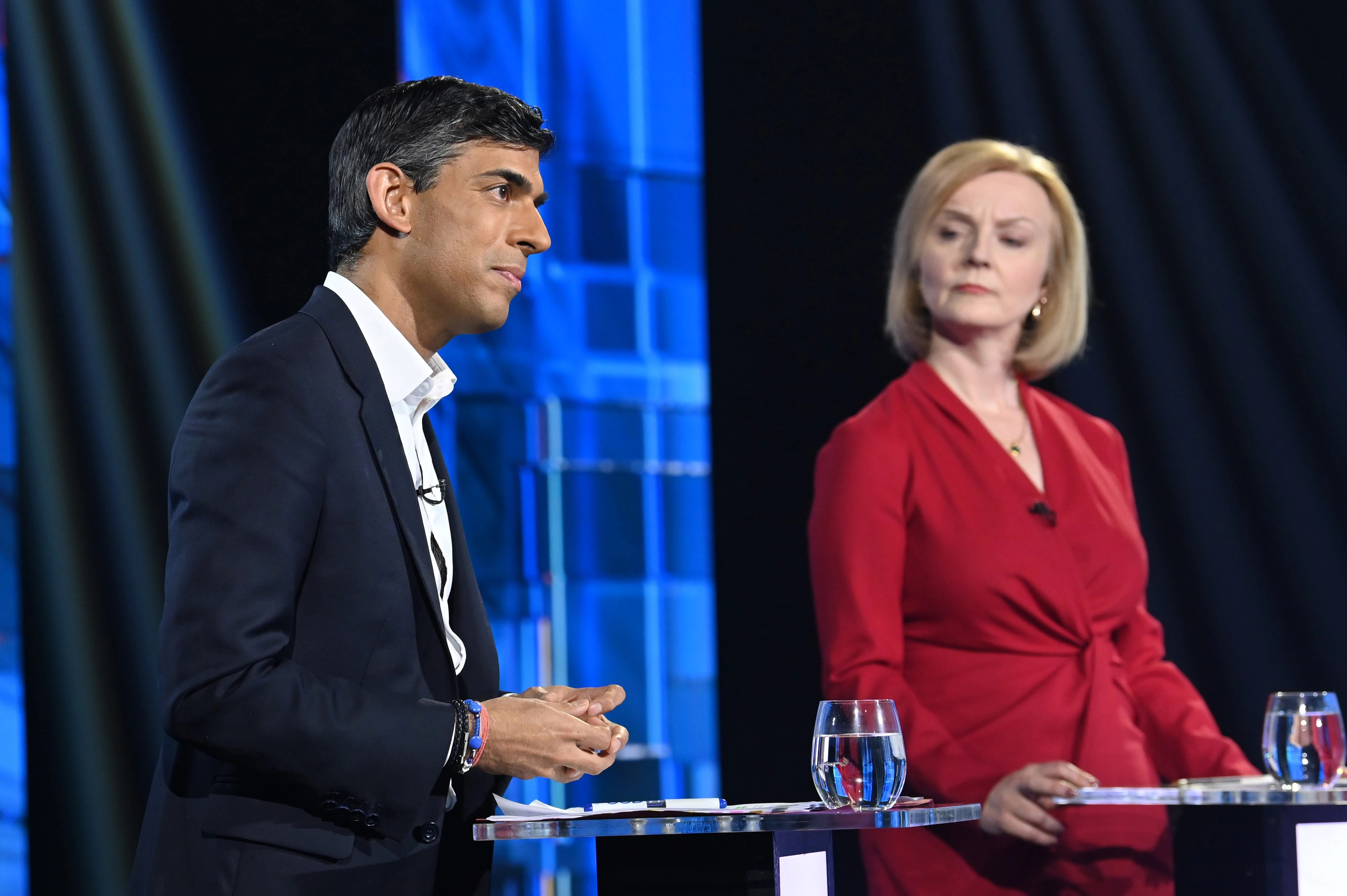
LATEST Prime Minister Rishi Sunak fired a grim warning in his first speech outside Number 10 Downing Street, stating that the country was in a "profound economic crisis", and there would be “difficult decisions to come".

Mr Sunak - the first ever Asian to hold the highest office in United Kingdom politics - replaced the deposed Liz Truss yesterday after she lasted only 50 days in the role, a record shortest tenure for a PM.

The markets appear to consider Mr Sunak, who previously worked in finance and was Chancellor of the Exchequer under Boris Johnson, to be a safer and more cautious pair of hands than his predecessor Ms Truss.

For, when it became clear on Monday that Mr Sunak was likely to be unopposed, trading in government bonds quickly rallied with the implied interest rate on these bonds dropping sharply.

That is a far cry from the reaction by the markets to plans laid out by Ms Truss and then-Chancellor Kwasi Kwarteng in their mini-budget on 23 September.

At first, Ms Truss tried to ride out the storm by defending her strategy - and, when that failed, by sacking Mr Kwarteng on 14 October.

That same day, Ms Truss subsequently gave an extremely unconvincing appearance at a press conference - and she was reportedly little better at presenting her vision in a meeting with her backbench MPs, known as the 1922 Committee.

Jeremy Hunt came in as replacement Chancellor and promptly pulled apart the economic plans launched by Ms Truss and Mr Kwarteng.

Meanwhile, Ms Truss - under severe pressure from all sides of the House of Commons at Prime Minister's Questions - declared herself to be "a fighter not a quitter" and committed her government to protecting the Triple Lock on pensions.

The problem with this was that, only a few days earlier, Mr Hunt had not ruled out a review of the Triple Lock policy - and it became evident that Ms Truss was not going to be able to extricate herself fully from her economic ideas.

Just after 1.30pm at 20 October, the 56th Prime Minister bowed to the inevitable.

Humiliatingly, the end of Ms Truss's tenure will be remember for her failure to outlast an iceberg lettuce which had been placed by the Daily Star on a bench alongside a photograph of her. 

The newspaper responded to the resignation with the headline, "
Lettuce rejoice", and bookmakers offered odds of 500/1 that the lettuce would become the next PM.

Instead, it was Mr Sunak, and he now appears to have calmed the storm in the financial sector. 

At the same time, though, the Richmond (Yorks) MP has caused an immediate stir in Westminster by conducting a major reshuffle to remove many of the figures involved in the brief Truss administration. 

Mr Hunt remains as the current Chancellor, while James
Cleverly - a single person argument against nominative determinism - has retained his position as Foreign Secretary. 

However, Steve Barclay, a non-entity of a former Brexit Secretary, becomes the
fourth Health Secretary since July - and Gillian Keegan has been named as the fifth Education Secretary of 2022. 

Most extraordinarily, though, the reshuffle produced the return of Suella Braverman as Home Secretary who replaced Grant Shapps less than a week after she had been
forced to resign from the same job.

Only just over a week ago, in a major breach of the ministerial code, Ms Braverman admitted she had been sent an official document from her personal email to a fellow MP.

But Ms Braverman did not leave Ms Truss's Cabinet quietly, penning a scathing resignation letter in which she raised concerns about "the direction of [the] government" and said "key pledges promised to voters" had been broken.

In his speech, Mr Sunak pledged to bring “integrity and accountability” to office of Prime Minister - but, with this appointment, that does not seem to have lasted for long.

Remember too that the new Prime Minister defended Mr Johnson throughout the Partygate scandal - and was even himself given a fixed penalty notice
by the Metropolitan Police

Fortunately for Mr Sunak, the Conservative Party is currently in such mess that his fine had no bearing at all on him being installed at the head of the UK government. 

Indeed, in the end, it was remarkably straightforward.


On Monday afternoon, Penny Mordaunt withdrew her candidacy despite her supporters earlier that day stating she was closing in on the backing of 100 MPs, as required by the rules to make it to the members' ballot. 

In the previous contest, Ms Mordaunt had attracted as many as 105 MPs' votes - but, this time
during a much shorter campaign, she gained far less traction.

Earlier, on Sunday night, former Prime Minister Mr Johnson pulled out of the running despite claiming to have enough support to be considered by the membership. 

The second Conservative leadership contest since July therefore concluded without an opponent to Mr Sunak. 

Still, the 42-year-old does not exactly have much of a mandate in the country at large, securing his position solely on the strength of the confirmed backing of 197 MPs. 

However, Mr Sunak has resisted calls so far from all of the opposition parties to call a General Election. 

This is perhaps unsurprising given the Tories' current standing in the polls which have shown them to be trailing Labour by huge margins

Mr Sunak will hope that, by framing himself as a safe pair of hands with the economy, he can make at least a dent in the type of leads not enjoyed by Labour since the early days of Tony Blair.


Undoubtedly mind, current polling showing Labour on more than 50% is a reflection of the temporary withdrawal of support by traditional Conservative voters in the Truss administration - and not necessarily a sudden massive swathe
of excitement at the prospect of a government led by Sir Keir Starmer.

In fact, it should be noted that no single party has gained an actual majority (i.e. more than 50%) of the votes cast at a General Election since the Conservatives in 1931

Nevertheless, Labour is in its strongest position in years politically - and, with Mr Sunak warning of difficult days ahead economically, an already exhausted UK public is unlikely to take too well to further tax rises and spending cuts. 

Certainly, the narrative now is different to when austerity measures were brought in by David Cameron's coalition government. 

Back then, austerity was successfully framed as a necessary evil to reduce the deficit and bring down government debt - and, even then, the government increased the Personal Tax Allowance from £6,475 in 2010/11 to £10,600 in 2015/16. 

By contrast, with inflation rampant, Mr Sunak is unable to produce a similar boon - and, as such, this next period should remain a favourable time for Labour, politically at least. 

Economically, though, there is already some concern on the Opposition benches. 

Labour - if it wins the next election - is unlikely to find anything other than a difficult situation bequeathed to them, and therefore will find it difficult to do anything too radical. 

Now, Ms Truss's plans were the reckless wet dreams of Brexiteer libertarians living in a unreal world of only sunlit uplands - but, in their own way, the proposals were pretty radical. 

Nevertheless, a plan of cutting taxes and increasing spending at a time of uncomfortably high inflation was always going to bring only one reaction from the financial sector.


Yet, at the same time, is not something of a concern that it was effectively the markets which determined the fate of a Prime Minister

After all, it must be queried if, even with a significant electoral mandate from the public, the mere suggestion by a Labour government of a modest attempt of income redistribution and a bit of spending would cause the same sort of financial turmoil. 

Living in a society in which any type of government can only operate within an extremely narrow orthodoxy would demonstrate a clear schism between the concepts of capitalism and democracy. 

And, with tough times ahead on the back of a decade of tough times, perhaps this social contract has already been broken.

THE SUNAK CABINET Elected ConstituencyDepartment
Rishi Sunak2015 Richmond (Yorks)Prime Minister
Jeremy Hunt2005 South West SurreyChancellor of the Exchequer
James Cleverly2015 BraintreeForeign Office
Suella Braverman2015 FarehamHome Office
Steve Barclay2010 North East CambridgeshireHealth
Gillian Keegan2017 ChichesterEducation
Ben Wallace2005 Wyre and Preston NorthDefence
Mel Stride2010 Central DevonWork and Pensions
Dominic Raab2010 Esher and WaltonJustice | Deputy Prime Minister
Michael Gove
2005
 Surrey HeathLevelling Up, Housing, Communities
Kemi Badenoch2017 Saffron WaldenInternational Trade
Grant Shapps2005 Welwyn HatfieldBusiness, Energy, Industrial Strategy
Therese Coffey2010 Suffolk CoastalEnvironment, Food, Rural Affairs
Mark Harper2005
 Forest of Dean
Transport
Chris Heaton-Harris2010 DaventryNorthern Ireland
Alister Jack2017 Dumfries and GallowayScotland
David TC Davies2005 MonmouthWales
Michelle Donelan2015 ChippenhamDigital, Culture, Media and Sport
Lord Nicholas True- -Leader of the House of Lords
Penny Mordaunt2010 Portsmouth NorthLeader of the House of Commons
Oliver Dowden2015 HertsmereChancellor of the Duchy of Lancaster
Nadhim Zahawi2010 Stratford-on-AvonParty Chairman

Saturday, 1 October 2016

Grubby Allardyce got what he deserved

GREEDY Sam Allardyce made history this week by resigning as England manager after just 67 days and one match.

Unsurprisingly, that makes it the shortest ever reign of any Three Lions head coach.

Allardyce, of course, was left with little choice, and he jumped before he was set to be pushed out by the Football Association following damaging revelations released as part of a wider series of investigations into football corruption by the Daily Telegraph.

In an undercover interview, Allardyce was caught on camera giving advice to reporters posing as Far East businessmen on how to “get round rules” about third-party ownership of players.

He added that it was “not a problem” to bypass the rules introduced by the FA in 2008, and told the reporters he knew of certain agents “doing it all the time".

But, perhaps most critically of all, Allardyce was seen to be chasing money.

On the tape, filmed at some time between his appointment and his first match, the 61-year-old clearly offers to fly out to Asia four times a year to address investors in a firm that wanted to buy footballers.

For this, he appears to agree a fee of £400,000 a year - despite the fact that he had already signed a contract worth £3m-a-year with the FA. It was hardly as if he needed the extra cash.

The Telegraph released its story late on Monday night with the FA immediately requesting a full transcript of the secret recordings. By the end of Tuesday night, Allardyce had left his post by "mutual agreement".

Frankly, anything short of that outcome would have left the FA in an extremely hypocritical position.

After all, it was the FA - maybe more than any other body in world football - which had called on FIFA to ban the third-party ownership of players, something which the world governing body eventually did last year.

Unabashed, Allardyce has since defended himself, claiming "entrapment has won" - and, incredibly, it is a view which appears to have garnered some sympathy for him in some quarters.

True, Allardyce did not break any laws - and the undercover means used by the Telegraph to obtain their information will always cause some people discomfort.

But it is surely better to have an active investigative media exposing corruption - rather than one which placidly acquiesces.

Moreover, it is hardly as if investigating corruption in football is a new topic for this particular newspaper, as a spokesman for the Telegraph pointed out.

"We began looking into corruption in English football last year after receiving information about specific managers, officials and agents - before Allardyce was appointed England manager."

The spokesman added: "We have an obligation to investigate important stories that are clearly within the public interest and adhere to our industry codes of practice in doing so."

Remember also that, while there is no suggestion that Allardyce acted against any of the laws of the land, he did totally undermine his employer in greedy act of gross stupidity.

After all, undercover reporters posing as shadowy businessmen is hardly a new watershed for the world of journalism.

Indeed, on that basis, this whole episode - going right back to when England were dumped out of Euro 2016 and subsequently appointed Allardyce - has been pretty baffling.

Having expressed my fears for the future of English football just over two months ago on the 50th anniversary of the 1966 World Cup Final, Allardyce's ego may have - by chance - pointed the team in the right direction.

First, though, Gareth Southgate has been made caretaker for at least four games to the end of the calendar year, evidence seemingly of the existence of the Peter principle.

The Peter principle is a concept which concludes that an employee who stays long enough at an organisation will eventually be promoted to a station above their ideas or competence.

However, in fairness to the FA on this occasion, there were very few valid alternative options for the short-term. Instead, it is the next decision which is the vital one for the FA.

With Southgate seemingly willing to remain in place for as long as the process takes, England could do a lot worse than call on Arsene Wenger at the end of his Arsenal contract next summer.

Coincidentally, Wenger today celebrates exactly 20 years in charge of the Gunners - but, to the disgruntlement of some of their fans, he seems to have fallen into a comfort zone there.

Nevertheless, Wenger's principled approach is exactly what England need after this damaging period - and it surely should not matter that he is a foreigner given his vast knowledge of the English game.

A highly technical coach, he would possibly even eliminate the fear felt by players by giving them genuine confidence on the ball.

Consequently, England might therefore even stand a chance of genuinely challenging again at major tournament finals.

Of course, the problems in football are far more widespread than just the England job. As the Telegraph continues slowly to leak its stories, the view that greed is endemic at the top-level of the game is simply unavoidably reinforced.

And yet, in a world where Premier League television rights were sold for a record £5.14bn, it seems inevitable that good money and bad will continue to slosh around the game, regardless of how many more newspaper articles there are for now.

No doubt then this topic will be revisited by the media in the years to come, which is all the more reason for the FA to complete due diligence ahead of any of its future appointments.

Curiously, Allardyce will surely be the only permanent England manager ever to hold a 100% record at the end of his tenure.

But, having failed even once to lead the Three Lions out at Wembley and destroyed for himself what was supposedly his dream job, it will always be a shameful record.

It was a shameful appointment in the first place.

PERMANENT ENGLAND MANAGERS

YearPWDLWin %
Walter WINTERBOTTOM(1946-1962)13978332856.1%
Alf RAMSEY(1963-1974)11369271761.1%
Don REVIE(1974-1977)29148748.3%
Ron GREENWOOD(1977-1982)5533121060.0%
Bobby ROBSON(1982-1990)9547301849.5%
Graham TAYLOR(1990-1993)381813747.4%
Terry VENABLES(1994-1996)231111147.8%
Glenn HODDLE(1996-1999)28176560.7%
Kevin KEEGAN(1999-2000)1877438.9%
Sven-Göran ERIKSSON(2001-2006)6740171059.7%
Steve McCLAREN(2006-2007)1894550.0%
Fabio CAPELLO(2008-2012)42288666.7%
Roy HODGSON(2012-2016)563315858.9%
Sam ALLARDYCE(2016)1100100.0%

Wednesday, 13 July 2016

The Brexit month of political May-hem


THERESA MAY has officially taken over as the 75th Prime Minister of the United Kingdom on another extraordinary day of British politics in Westminster.

Mrs May entered Downing Street shortly after her predecessor David Cameron made his last appearance at the despatch box at Prime Minister's Questions in the House of Commons.

And the handover is quite appropriate, for this whole tumult was set in motion by Mr Cameron as long ago as January 2013.

It was back then that he vowed to hold a referendum on British membership of the European Union if the Conservatives got a majority in the General Election.

At the time, it was a political gamble aimed at keeping his backbenchers on side while stopping the drift of Tory voters towards UKIP.

But, when he made the announcement, a Conservative majority government actually did not look too likely.

Then, May 2015 happened.

Labour had collapsed to the Scottish Nationalists north of the border and the Liberal Democrats were utterly routed across the country generally, but particularly against the Conservatives in the south west.

Somehow, Mr Cameron had eked out a majority of 12 and so had to deliver on a promise which he did not think he would ever have to keep.

Unconvincing negotiations with fellow EU leaders followed - and, having played hardball and gained nothing but the most measly of compromises, Mr Cameron then awkwardly had to campaign to stay in.

Almost immediately, he unsurprisingly ran into trouble.

For, if it was not bad enough having the then-UKIP leader Nigel Farage leading the Leave campaign, the loss of support from his old friend Boris Johnson was perhaps an early blow from which the Remainers never recovered.

Mr Johnson, of course, had acted purely in self-interest, as proven by the overtures he had previously made towards the EU when he was London mayor.

But his overwhelming desire for job of Prime Minister outweighed everything else, and his ultimate personal failure - to which I will come - was stunning and oddly satisfying, given his hypocrisy.

Mr Johnson nevertheless played an important part for the Leave team, although both campaigns were surely among the most shoddily ever run by mainstream British politicians.

The Remain side - in a move labelled Project Fear by its opponents - seemed only to warn of the dire consequences of leaving the EU. None of its benefits was mentioned.

Meanwhile, the Leavers provided hardly any vision at all of what a post-Brexit Britain would look like - as would become apparent in the days ahead.

Indeed, much of the media coverage focused on what appeared to be a battle for the Conservative leadership between the incumbents Mr Cameron and Chancellor George Osborne on one side and Mr Johnson and Michael Gove on the other.

Ultimately, as predicted, most people were left thorough confused or just totally disenchanted with the debate, and so understandably went with their gut feeling on 23 June.

That gut feeling was to leave the EU.

The margin of victory for the Leavers - by 52% to 48% or approximately 1.3m votes - was not exactly huge but the fact that it happened at all made it a truly momentous event in the history of Britain.

Mr Cameron, swayed by weakness to promise a vote in the first place, had suddenly never been weaker.

So, unsurprisingly on the morning of 24 June, he felt he had no other option but to resign as a failure, offering to stay on until October in a caretaker capacity.

And it was at this point that the real power games began.

Slowly but surely, the candidates for the Conservative leadership lined themselves up with the contest expected to be between Mrs May, a Remain supporter, and Mr Johnson.

Naturally, Mr Johnson had backed on receiving the support of his Leave colleague Mr Gove.

But on 30 June, just three hours before the nominations closed, Mr Gove announced his own candidacy having come to the conclusion that Mr Johnson could not "provide the leadership or build the team for the task ahead”.

The Telegraph described the move by Mr Gove as "the most spectacular political assassination in a generation" - and it was indeed a deliciously premature end to the Johnson campaign before the contest had even properly begun.

Historically, a streak of ruthlessness seems to have been admired by the Conservatives.

Witness the ascent and the downfall of Margaret Thatcher or, more recently, the removal of Iain Duncan-Smith as leader even before he could fight a General Election.

However, Mr Gove had even been too brutal for a Tory - and, after Dr Liam Fox had been eliminated and outsider Stephen Crabb had withdrawn following the first ballot on 5 July, he was soundly beaten in the second vote on 7 July.

Mrs May unsurprisingly finished top, with the backing of 199 MPs - but second place went to a largely previously unheralded Leave campaigner Andrea Leadsom.

Mrs Leadsom picked up 84 votes, against Mr Gove's 46 - and so ensured that, by September, Britain would have its second female Prime Minister.

Except it has all happened rather more quicker than that. Mrs Leadsom, like Icarus before her, has already burned her wings having flown too close to the sun in her rapid ascent.

Rather than The Sun, though, it was instead a problem with the Times - with whom she had given an interview (£) which was published on 9 July.

In the interview, Mrs Leadsom made the highly controversial statement that she would be better placed to lead the country because she has children, whereas Mrs May does not.

Under pressure, she hurriedly denied the claim and ordered the newspaper to publish the full transcript. But the transcript duly followed and did not contradict anything which had been printed.

Subsequently, Mrs Leadsom demanded the Times release the audio of the interview - if anything, though, this further weakened her case, given the emphasis which she placed on her point.

And so, after a weekend of scrutiny - or abuse, according to Mrs Leadsom - the MP for South Northamptonshire officially ended her campaign on Monday.

Mrs May was in the clear.

Of course, the new PM does not exactly take over from a position of strength.

It became evident within hours that some of the promises which the Leave campaigners had made in the run-up to the vote were - and there is no other way of putting this - a pack of lies.

Within hours of winning the referendum on 24 June, Mr Farage - who, in the meantime, has stepped down from his position as UKIP leader for the umpteenth time - denied £350m per week would now be spent on the National Health Service.

Then, the next day, Conservative MEP and Leave campaigner Daniel Hannan suggested that there would not be a "radical decline" in immigration - all far removed from Mr Farage's poster.

No wonder then that Mrs May has entrusted two of the other three Great Offices of State in her new government to fellow Remain supporters.

Key ally Philip Hammond is the new Chancellor, in place of the sacked Mr Osborne, while Amber Rudd fills Mrs May's former job of Home Secretary.

But Mr Johnson - yes, him again - does not get away with leaving his post-Brexit mess entirely to others.

Ludicrously, he is the new Foreign Secretary, a role in which his fine-tuned diplomatic skills should come to the fore.

Finally, it is not all bad news in the May cabinet for Leave supporters. The appointment of strong Leave campaigner David Davis as Secretary of State for Exiting the EU confirms there is no going back on this historic decision.

Having reached enough online signatories, the petition for a second EU referendum will be debated in Parliament after the recess on 5 September.

Under Mrs May, though, there will not be one - and nor should there be. The decision has been made, for better or worse - and only a true masochist would want a repeat of those two campaigns again.

Instead, the new PM will see her task as one of somehow steering Britain through some of the rockiest waters in its post-war existence.

At least, though, she will consider that she is able to do so without any significant effective opposition in the Commons.

For, as the Conservatives slowly untangle themselves, Labour continues to engage in a civil war so fierce that it almost feels inevitable the party will split.

But all that is for another day and a different blog altogether.
 
CONSERVATIVE LEADERSHIP ELECTION

Westminster seatEU stanceFirst 
ballot
Second 
ballot
Members' 
ballot
Theresa MAY(Maidenhead)Remain165199unopposed
Andrea LEADSOM(South Northamptionshire)Leave6684withdrew
Michael GOVE(Surrey Heath)Leave4846-
Stephen CRABB(Preseli Pembrokeshire)Remain34withdrew-
Dr Liam FOX(North Somerset)Leave16--

THERESA MAY'S CABINET


Westminster seatEU stancePosition
Theresa MAY(Maidenhead)RemainPrime Minister
Philip HAMMOND(Runnymede & Weybridge)RemainChancellor of Exchequer
Boris JOHNSON(Uxbridge & South Ruislip)LeaveForeign Secretary
Amber RUDD(Hastings & Rye)RemainHome Secretary
Michael FALLON(Sevenoaks)RemainDefence Secretary
David DAVIS(Haltemprice & Howden)LeaveBrexit Secretary
Dr Liam FOX(North Somerset)LeaveInternational Trade

Saturday, 12 September 2015

Labour takes a jump to the left with Corbyn landslide

LABOUR LEADERSHIP RESULT
Jeremy CORBYN251,41759.5%
Andy BURNHAM80,46219%
Yvette COOPER71,92817%
Liz KENDALL18,8574.5%
Turnout422,66476.3%

LABOUR made its most radical shift in decades as the landslide election of Jeremy Corbyn as leader marked the end of the New Labour era.

Mr Corbyn enjoyed an overwhelming victory in the first round of the ballot, taking 251,417 votes (59.5%) to finish well ahead of early favourite Andy Burnham (19%) and another former government minister, Yvette Cooper (17%).

The Blairite candidate Liz Kendall limped home in last place with just 18,857 votes (4.5%).

Already, though, Mr Corbyn has faced some internal opposition.

Within minutes of the result, shadow Health Secretary Jamie Reed had resigned, while - only a little later - Ms Cooper, former leader Ed Miliband and another shadow minister Rachel Reeves all confirmed they would not serve in a Corbyn Cabinet.

Of course, none of this is an unexpected turn of events or even a complete disaster for the new leader - bemused former Deputy PM Lord Prescott even pondered "who?" when asked about Mr Reed live on the BBC.

Nevertheless, even these minor enough ructions demonstrate amply the extent of the work which Mr Corbyn faces to keep his party united.

In fairness to the 66-year-old Islington North MP, he did offer a few olive branches in his opening speech to those on other wings of the party to himself and his many grassroots supporters.

He joked amicably about his differences of opinion with fellow candidate Ms Kendall and their sharing of late-night trains heading home from hustings meetings.

There was also a conspicuous absence of any mention of his views on the UK membership of NATO or the renewal of the nuclear deterrent Trident.

He did, however, attack the media directly, describing parts of it as "abusive" and "intrusive".

Notably, his newly-elected deputy, Tom Watson, is perhaps best remembered for taking on the News of the World over phone-hacking allegations in the last Parliament.

It is fair to say then that neither Mr Corbyn nor Mr Watson will be doing any Blair-style cosying-up to the likes of Rupert Murdoch's Sun newspaper or Paul Dacre's Daily Mail.

This will undoubtedly work against Mr Corbyn - he will be seen as fair game by the right-wing media which will dig for dirt and shriek hysterically at every perceived misstep.

But, at the same time, this is something which Mr Corbyn appears willing to accept as he moves Labour in an entirely different direction.

Indeed, he is aware that far greater damage will come opposition on his own side as he shifts Labour away from so-called austerity-lite policies and towards the renationalisation of the railways and major utilities.

Additionally, the road to national electoral success is mathematically difficult anyway, to say the least.

For, even if an anti-austerity Corbyn-led party won back the votes of every supporter of the Scottish Nationalists, the rump Liberal Democrats and the Green Party, there would still be a Conservative majority.

Boundary changes, due in this Parliament, will also favour the Tories - and so, while it is an uncomfortable proposition, Labour simply must do better against the Conservatives in Middle England to win.

Yes, there are the many - mainly younger - non-voters who could be swept up by Mr Corbyn before the next general election.

All the available evidence suggests, though, that the Conservative-dominated over-65s demographic will continue to out-vote their younger counterparts.

The worry then is that Labour has thrown a Corbyn-shaped comfort blanket around itself, and will do no better in 2020 than it did in May this year.

Perhaps a more pertinent worry for democracy generally, though, is that Mr Corbyn may not even be afforded the opportunity to make his case if the internal party disputes force him out.

This would be despite his huge mandate in having won almost 60% of the total vote, and having won in each of the three sections - comprising of party members, registered supporters and affiliated supporters.

Rightly, right now, there is scepticism over whether Mr Corbyn has a widespread enough appeal to win an election against the Conservatives.

But at least the election of Mr Corbyn will decisively end a previously accepted view that the two main parties were just the same.

Mr Corbyn is ready to give British politics a shake - indeed, it might never be quite the same again.

Monday, 26 January 2015

The boobs are back - but for how much longer?

THE DEMISE of the Page 3 model in the Sun newspaper last week was greatly exaggerated with the tabloid defiantly printing the photo of a topless young lady in its Thursday edition.

Campaigners in the No More Page 3 pressure group had tentatively celebrated victory last Tuesday after even the Sun's sister paper the Times suggested the 44-year Page 3 era was finally over.

However, it now appears to be the case that the whole thing was a bit of a publicity stunt, something which the Sun itself was not too sheepish in pointing out.

"Further to recent reports in all other media outlets, we would like to clarify that this is Page 3 and this is a [topless] picture of Nicole, 22, from Bournemouth," it said.

"We would like to apologise on behalf of the print and broadcast journalists who have spent the last two days talking and writing about us."

But it would be a surprise if this was the final chapter in this particular story.

Rumours that Page 3 was on its last legs began circulating as early as February 2013 when the newspaper's proprietor Rupert Murdoch dropped hints of a different direction on Twitter.

Later that year, in August, The Sun’s Irish edition dropped topless Page 3 pictures, with Dublin-based editor Paul Clarkson citing “cultural differences”.

Then, last September, the surest signs yet of a change of mindset came when Mr Murdoch pondered: "Aren't beautiful young women more attractive in at least some fashionable clothes?"

By the middle of this month, the Sun seemed to be following their owner's lead - or, more likely, his direct orders - with the topless model missing from three consecutive editions.

And indeed, the feeling remains that, despite the triumphant return of the feature last Thursday, this may well yet be a short-lived stay of execution.

Not that any final decision will be the result of pressure from the No More Page 3 campaigners.

Rather, octogenarian Mr Murdoch will decide the fate of Page 3 on the basis of a hardened commercial calculation with the increasingly raunchy celebrity world seemingly helping him make his mind up.

His latest tweet said yesterday: "Worry not, The Sun will always have great looking women - and men!"

Noticeably, though, this again does not stipulate that they will necessarily be topless.

Time has, indeed, moved on. Back in the 1980s and 1990s, some of the Sun's Page 3 girls ended up being bona fide celebrities in their own right.

Nowadays, that does not really happen anymore - and it is fair to say, at best, the feature seems dated.

To its worst critics of course, Page 3 has always been totally incongruous with the Sun's self-proclamation of being a "family" newspaper.

But it would potentially be the start of a very dangerous game if any government were ever to legislate control over what any newspaper printed simply on grounds of taste and decency.

And so, for now, boosted by a big wave of somewhat self-made publicity, it is no surprise to see the boobs are back.

And that, while you can't see tits on the radio, you can still see them on page three of the country's best-selling daily newspaper.

Wednesday, 31 December 2014

Index 2014

NEWS 
POLITICS
Scotland independence referendum
06.08 Darling stymies Salmond in referendum debate
26.08 Salmond shouts his way to debate win
19.09 Salmond steps down as Scotland says Naw - for now
UKIP, by-elections etc.
02.04 Farage to the forefront after Europe debate
22.05 Election night: UKIP "earthquake" strikes
26.05 Euro-thrashed
06.06 No news in Newark
22.11 Rise of UKIP continues unabated
Other current affairs/politics blogs
20.03 Budget 2014: Osborne appeals to the Tory core
20.07 MH17: Transcending rivalry
27.09 Back to Iraq
05.11 US mid-terms: Republicans add Senate to House

MEDIA
30.04 Paxman packs it in
24.06 Coulson guilty, Cameron guilty by association
13.08 Irresponsible reporting on suicide
12.09 Fallen idols
30.09 Mirror faces questions after Newmark honeytrap sting

WORLD WAR ONE
04.08 Dulce et Decorum Est: the old Lie
09.11 Lest we forget
30.12 The awkward truth about the Christmas truce

SPORT
FOOTBALL
World Cup 2014
11.06 Maracanazo redemption and la joga bonito
11.06 Preview - part I
11.06 Preview - part II
12.06 Complete results sheet
15.06 Stay positive, England
20.06 Fallible England exposed and out
25.06 England slip out quietly
26.06 Back home
29.06 The late, late shows of the Last 16
06.07 Krul conclusion for Costa Rica
09.07 Humiliated Brazil blitzed by Germany
13.07 Freude, schoener, Goetze-funken
14.07 For the record
Season 2013/14
04.01 FA Cup Third Round features North London clash 
04.02 Arsenal lead a three-horse race
14.04 Title tilts towards Anfield
27.04 Go ahead, Gateshead
12.05 Manchester City surface first
17.05 Comeback ends Arsenal drought (score/teams only)
19.05 Heed fall just short
26.05 For the record
Season 2014/15
15.08 Premier League preview: Man City seek total dominance
22.08 Match of the Day at 50
24.12 Man City chase down Chelsea
Euro 2016 qualifiers/Other internationals
07.09 UEFA fails to see that less = more
08.10 Wembley should share the wealth 
13.11 FIFA farce set to run and run
19.11 England easily shrug off Scotland

FORMULA 1
14.03 Preview: Ripe for renewal
29.05 More to come from Mercedes pair
07.07 Hamilton shines at Silverstone
22.09 Hamilton leads the way under the Singapore lights
24.11 Hamilton reaches another level
26.11 Magnificent Mercedes find no equal
15.12 BBC SPOTY: Hamilton finishes first again

CRICKET
The Ashes 2013/14
05.01 Australia complete the whitewash
05.01 Stats: Complete Aussie dominance from just 11 men
Post-Ashes
01.04 World T20: Embarrassing England are the fools again
18.08 Cook sees through tumultuous summer

OTHER
Winter Olympics
07.02 Genuine Sochi hopefuls
07.02 Hockey/curling results
07.02 Medal table/full results
24.02 Britain's finest for 90 years
Ryder Cup golf
25.09 Europe enjoy favourites status
28.09 Dominant Europe win Ryder Cup again
Rugby Union
25.01 England seek Six Nations redemption
16.03 Ireland give O'Driscoll the perfect send-off
29.11 Autumn relief for Lancaster and Gatland
World Snooker
22.04 Champion O'Sullivan tames his chimp 
05.05 'Torturer' Selby completes Triple Crown
Grand National
06.04 Pineau De Re wins before riders' revolt
Tour de France
04.07 Yorkshire ready for t'Grand DĂ©part 

MISC
09.05 Eurovision: Will Europe be Smitten with Molly?
31.07 Halcyon days of Sir Bobby

Tuesday, 30 September 2014

Mirror faces questions after Newmark honeytrap sting

NEW press watchdog IPSO faces its first major test after a formal complaint by Conservative MP Mark Pritchard against the Sunday Mirror.

Mr Pritchard said the newspaper had used "questionable techniques" to obtain explicit pictures from fellow Conservative Brooks Newmark who resigned from his post in the Cabinet Office.

In the sting, a male freelance reporter adopted the false identity of "Sophie Wittams" and set up a Twitter account describing himself as a "twenty-something Tory PR girl".

Following flattering messages from the mysterious Ms Wittams, Mr Newmark agreed to swap "sexually explicit images".

But, of course, Mr Newmark did not receive an image in return of Ms Wittams, instead receiving a "sunbathing selfie" of Charlene Tyler, a 26-year-old from Boston in Lincolnshire.

Ms Tyler told the Daily Telegraph yesterday it was wrong for the paper to have used her photo without permission, and that Mr Newmark had done nothing wrong.

However, this was not the only image to have been used by the freelancer without permission.

The avatar of the fictional Twitter account with which Mr Newmark communicated was a picture of Swedish model Malin Sahlén.

And she has told Swedish newspaper Aftonbladet: “I do not want to be exploited in this way and that someone has used my image like this feels really awful, both for me and the others involved in this.

“I am shocked and it is unpleasant for someone to use the picture without permission.”

Sunday Mirror editor-in-chief Lloyd Embley has now apologised to both women, explaining: “We thought that pictures used by the investigation were posed by models, but we now know that some real pictures were used.

"At no point has the Sunday Mirror published any of these images, but we would like to apologise to the women involved for their use in the investigation."

Nevertheless, the newspaper boss stood by the story, claiming it was in the public interest.

The public interest defence is much used by newspapers and, in this case, it mainly relates to Mr Newmark's role as co-founder of the Women2Win organisation.

Women2Win is aimed at attracting more Conservative women to Parliament - and the Sunday Mirror will argue Mr Newmark's conduct contradicts this position.

Based on previous rulings, though, the newspaper would appear to have a pretty weak case, if nothing else because of the use of entrapment.

"Fishing expeditions", as they are known, must surely carry a more substantial public interest argument than this. Even the Sun and the Mail have said they turned the story down.

Ultimately, the article has done no favours to any of the parties involved. Mr Newmark has lost his ministerial salary and must try to rebuild trust with his wife and five children.

Meanwhile, the Conservatives have suffered an awful start to their party conference in Birmingham, a double-whammy coming in the form of Mark Reckless's decision to defect to UKIP.

MP for Rochester and Stroud, Mr Reckless became the second Tory to resign and seek re-election on the UKIP platform after Douglas Carswell's move in Clacton just over a month ago.

Finally, this story has done nothing to rebuild the already-pathetically low levels of trust between the national press and the public.

Coincidentally, it came at the end of a week in which it became apparent the same Trinity Mirror group of newspapers was also heavily involved in phone-hacking.

Phone-hacking, fishing expeditions, honey-traps - all of them are bound to produce a juicy story - but are any of them actually news?

Proper journalism sticks to the facts of what has actually happened or discloses serious levels of hypocrisy and/or incompetence.

It does not seek to manufacture the story for its own monetary gain.

Wednesday, 13 August 2014

Irresponsible reporting on suicide


THE NEWS of the suicide of much-loved actor and comedian Robin Williams has unsurprisingly generated a huge response from the media over the past couple of days.

A lot of it has been a genuinely heart-warming remembrance of a hugely talented man who played a big part in my childhood for his roles in Mrs Doubtfire, Jumanji, Aladdin and Flubber.

And there were, of course, many, many others.

Williams' greatest success came in his portrayal of a psychiatrist in Good Will Hunting, for which he won an Oscar in 1997 as Best Supporting Actor.

But, while there is much to eulogise about the fine catalogue of work which he has left behind, it is massively disappointing to see the front pages of several of the tabloids this morning have instead focused heavily on the nature of his death.

Worse still, the biggest culprits have shown scant regard for the well-thought-out general advice provided by the Samaritans on the reporting of this sensitive topic.

"Tortured" is the prominent, one-word headline on the front of the Mirror - while the sub-heads carry speculation that money troubles were the trigger for the suicide.

The Daily Mail has reserved the whole of its front page for Williams - but again concerns itself solely with unconfirmed speculation surrounding his passing.

Meanwhile, the Sun and the Daily Star - as well as, surprisingly, the normally more reserved Metro free-sheet - all use dramatic language and describe in some detail exactly how he took his own life.

Even though it really should not matter how he did it - or why he did it.

Indeed, it simply does not matter. For, while journalists are admittedly usually there to explain how or why events have occurred, in this case and other similar ones, reporting the fact that he did it and that it is newsworthy because of his talent really should be enough.

Moreover, beyond the fact that Williams had depression, trying to guess at a trigger at this stage - even if it is a so-called 'educated' guess - is truly nonsensical, and actually not at all classy.

After all, ultimately only he knows exactly what thought processes he was going through.
 
Thankfully, some of the broadsheet newspapers produced some more thoughtful coverage.

The Guardian still dedicates a significant proportion of its front page to Williams - but simply reflects, in classy pictorial form, on his comedic versatility. A tribute from Russell Brand sits neatly below.

A further tribute is posted in the Times pull-out, the T2, a small mention of which is made in the strap-line at the top of the front page just below the masthead.

Credit where it is due, then, to those sensible editors who have perhaps taken a bit of thought before laying out the front of their newspaper.

Now, if only the tabloids would follow suit and end their rather grisly attempts at one-upmanship, determined by sensationalism and nothing more.

From today's evidence, though, there is fat chance of it happening any time soon - and so I'm off to watch Williams as the unforgettable Euphegenia Doubtfire.

You never know, it might just cheer me up.

RIP Robin McLaurin Williams (1951-2014), aged 63. May you never lose your little spark of madness.

08457909090 
Available 24 hours-a-day, 365 days-a-year to provide confidential emotional support for people who are experiencing feelings of distress, despair or suicidal thoughts.

Tuesday, 24 June 2014

Coulson guilty, Cameron guilty by association

PHONE-HACKING VERDICT 
(2) = facing two charges
DefendantCharge(s)Verdict
Andy Coulsonconspiracy to hack phones
conspiring to commit misconduct in public office(2)
Guilty
No verdict returned
Rebekah Brooksconspiracy to hack phones
conspiracy to pervert the course of justice(2)
conspiring to commit misconduct in public office(2)
Cleared 
of all charges
Charlie Brooksconspiracy to pervert the course of justiceCleared
Clive Goodmanconspiring to commit misconduct in public office(2)No verdict returned
Cheryl Carterconspiracy to pervert the course of justiceCleared
Mark Hannaconspiracy to pervert the course of justiceCleared
Stuart Kuttnerconspiracy to hack phonesCleared
 
PRIME MINISTER David Cameron apologised today after his former Director of Communications, Andy Coulson, was found guilty of conspiracy to hack phones while editor at the News of the World.

Coulson, who was editor of the newspaper between 2003 and 2007, was convicted by the jury of eight women and three men at the Old Bailey.

However, his predecessor at the now-defunct paper, the flame-haired Rebekah Brooks, was cleared of all of the charges against her.

Mrs Brooks's husband, Charlie Brooks, was cleared of conspiracy to pervert the course of justice, as was her long-standing personal secretary Cheryl Carter and News International's head of security Mark Hanna.

The last of the seven defendants, former News of the World managing editor Stuart Kuttner, was cleared of conspiring to hack voicemails.

The trial, which lasted 138 days, was one of the longest and most expensive in British legal history - but, with justice served in the courts, attention soon turned to Downing Street.

Mr Cameron, who hired Coulson only weeks after he resigned from the News of the World, had earlier promised to apologise if Coulson was found guilty.

And, today, Mr Cameron had to make that apology, stating that he was "extremely sorry" that he had made "the wrong decision" despite the assurances he had received.

Of course, the apology is all well and good - although, frankly, anything less would have surely been an abdication of responsibility. Nevertheless, doubts will remain over Mr Cameron's judgement.

After all, the PM had gone against the advice of some his own colleagues in making the appointment.

It was no surprise then to see Labour leader Ed Miliband look to make some easy political capital out of the verdict.

"David Cameron brought a criminal into the heart of Downing Street," declared Mr Miliband.

But the Tories can point out that Labour also once had a close association with the News of the World, such was the power of the Rupert Murdoch-owned weekly.

As a matter of fact, it was revealed during the trial that former Prime Minister Tony Blair had sent a series of text messages to Mrs Brooks signed with a "T" and a kiss.

And, this was not the only close relationship exposed in the deliberations at the Old Bailey.

It emerged, quite sensationally, that Coulson and Mrs Brooks had indulged in a long-term affair between 1998 and 2007 while Mrs Brooks was married to her ex-husband, actor Ross Kemp.

The jury ruled today, though, that while Coulson definitely knew that phone-hacking was going on at his newspaper, it could not be said that Mrs Brooks did.

So, while her embarrassment may be quite considerable - at least, in the eyes of the law, she cannot be considered a criminal.

In spite of this, few tears will be shed among phone-hacking victims for Mrs Brooks.

They will argue that the pain they suffered through the invasion of their privacy by Coulson and others at the News of the World far outweighs her embarrassment.

And, while welcoming Coulson's conviction and the damages they have received in their own civil cases, the phone-hacking victims could easily argue that they are still without an overriding resolution.

That, of course, was meant to emerge from the Leveson Inquiry into "the culture, practices and ethics of the press", which concluded that some kind of statutory regulation was required.

Political wrangling and some reasonable worries about state control of the press resulted in outright statutory regulation being replaced by a Royal Charter.

But, while Murdoch has been able to start up a new weekly paper on a Sunday, none of his publications has yet signed up to the Charter.

Nor have the newspapers from the Mail group, the Telegraph group or the Trinity Mirror stable.

Indeed, despite the Coulson verdict today, not much seems to have changed at all.

Wednesday, 30 April 2014

Paxman packs it in


JEREMY PAXMAN has announced he will leave BBC flagship programme Newsnight in June, bringing to an end his 25-year association with the show.

The 63-year-old explained: "After 25 years, I should rather like to go to bed at much the same time as most people.

"This was a decision I reached - and informed the BBC of - last July. I shall work out the remainder of my contract and will not seek another."

Certainly, the BBC can be thankful to Paxman for sticking around. Had he departed last summer, it would have dealt another blow to a programme which had only just begun to recover its reputation.

That reputation had been severely soiled in the wake of the Jimmy Savile scandal when a report into the paedophile's misdemeanours had been controversially dropped, only for the story to surface later on ITV.

Newsnight then compounded its error with a separate report on the subject which wrongly implicated Tory peer Lord McAlpine in abuse allegations.

Ofcom upheld the complaint from the peer as, although he was not named directly in the report, internet speculation had made him easily identifiable.

The regulator also criticised programme makers for not contacting Lord McAlpine prior to the broadcast, and the crisis cost BBC Director General George Entwistle his job after just 54 days.

Paxman almost quit then as well - but felt that "loyalty commanded [he] stayed".

Another 18 months down the line, though, he has called it a day - to the huge sounds of relief from politicians representing all hues.

At his best (or his worst, depending on your perspective), Paxman was gloriously insatiable, like a dog with a bone in holding Westminster into account.

Of course, still his most famous interview was in 1997 with Michael Howard, the former Home Secretary in the John Major government.

The story concerned a meeting between Mr Howard and Derek Lewis, the head of Her Majesty's Prison Service about the possible dismissal of the head of Parkhurst Prison.

And the exchange achieved notoriety when Paxman asked Mr Howard if he had "threatened to overrule" Mr Lewis on no fewer than 12 occasions.

Paxman later explained he had only continued to pursue the question because he had been made aware that the videotape for the next story was not ready.

Nevertheless, his place in British television news history - and that of Mr Howard - was effectively assured.

As well as being a consummate interviewer, Paxman - in his latter days especially - has become a rather independent observer of the machinations of the BBC, happily criticising his employer for some of its excesses.

But, if that also shows perhaps just how disenchanted Paxman has become, nothing will quite match the complete disdain he had for an editorial decision in 2005 to replace news of the financial markets with a weather forecast. 

Paxman was at his scathing best in delivering the reports, introducing the first, as follows:

"Now, on the theory that while some people are interested in the markets, everyone's interested in the weather, here it is - shorn of the usual folksy nonsense about clouds bubbling up and advice about wearing woolly socks: eastern parts will mainly avoid the rain except for those that don't. Western areas will be cloudy with rain, except in those places that don't have rain."

A second forecast, which he sarcastically stated was "by popular demand", was a lot more pithy: "Take an umbrella with you tomorrow".

And, in a third example, he greeted the map by saying: "It's a veritable smorgasbord. Sun. Rain. Thunder. Hail. Snow. Cold. Wind. Almost worth going to work."

Finally, showing a map full of sunshine and showers, he simply stated: "It's April - what do you expect?"

All is well that ends well for Paxman, though - news of the markets were restored after just 10 days.

He will continue in his role as host of University Challenge.

Tuesday, 31 December 2013

Index 2013

INDEX 2013

PERSONAL
24.04 End of the line: my ongoing battle with anxiety
16.05 On second thoughts...
23.09 Turning 30 in Prague: a perspective

POLITICS
Home
09.01 Halfway to hell?
25.01 Cameron offers a way out of Europe
31.01 Out of bounds
01.03 Eastleigh stays loyal to the Lib Dems as Tories fall third
20.03 Budget 2013: Osborne yet to get Britain going
10.04 Thatcher dies but her politics live on
03.05 Local elections: UKIP arrives on the mainstream scene (results only)
30.08 Cameron urged to step back on Syria
Abroad
22.01 Hope springs eternal for Obama
12.03 Falklanders overwhelmingly opt to stay British

JOURNALISM
20.03 Cameron brokers long-awaited press regulation deal
24.05 If it bleeds, it leads
01.06 Defamation 101: Sally Bercow's Twitter folly
26.07 The boy in the bubble
02.08 The Sun takes the paywall plunge
05.10 Miliband v the Daily Mail
12.10 Nothing to fear?
03.12 Guardian editor stands firm over Snowden

SPORT
FOOTBALL
2012/13
05.01 The Season 2012/13: Van Persie puts Man United "halfway" to title
05.01 FA Cup Third Round: Cup of woe continues for Newcastle
26.01 FA Cup Fourth Round: Man United on the box again
24.02 League Cup Final: Swansea sweep aside Bradford dream
28.02 Oh, when the Heed went marching in!
02.06 The Season 2012/13: Fergie signs off in style 
2013/14
17.08 Premier League preview: All change at the top
23.09 Mackems ditch Di Canio
05.11 Arsenal stride five points clear
22.12 Tyneside full of festive cheer
World Cup 2014
13.09 Hodgson satisfied by Ukraine stalemate
11.10 England stay on course
15.10 Copacabana, here we come!
19.11 Big guns make it to Brazil
06.12 Nightmare draw for England
10.12 BBC will show England opener
Other international
06.02 England beat the Samba Boys to mark FA anniversary
12.02 African Cup of Nations: Nigeria return to Nations Cup summit
27.03 World Cup qualifiers: England stutter while Scotland fall first
14.08 England edge past Scotland in cracking curtain raiser

CRICKET
Pre-Ashes
05.03 England receive Kiwi wake up call
26.03 England make yet another great escape
Ashes 2013 (home)
09.07 Preview: Favourites for the urn
14.07 England emerge victorious from Trent Bridge torture chamber
23.07 Mighty Root helps England rout Aussies
06.08 England retain urn after rainy draw
08.08 Boycott and Aggers, a wonderfully odd couple
12.08 Star man Broad sets up series win
26.08 England lift the urn again at the Oval
26.08 Stats: Bell and the bowlers bail out England
Ashes 2013/14 (away)
17.11 Preview: Battle rejoined
24.11 Australia hammer desperate England
25.11 Trott takes the first step to recovery 
09.12 Total humiliation for England in Adelaide
17.12 Australia recapture the urn in Perth
29.12 Australia beat 'broken' England again
County Championship
27.09 Underdogs Durham defy the doubters 

OTHER
Athletics/Olympics
23.08 Farah completes the 'Double Double' as lightning Bolt strikes again 
08.09 Tokyo to stage IOC's 2020 vision
15.09 GNR 2013: Farah tastes defeat on the South Shields sea front
Cycling
18.01 Retired Cooke lances the boil
21.07 Froome for another
F1 2013
04.07 Pirelli passes the buck after tyre fiasco
29.10 Simply four-some for Vettel
27.11 Team-by-team review: Imperious Vettel makes it nine in a row
Grand National
06.04 Channel 4 takes up the Grand National reins
06.04 Auroras Encore lights up the Grand National
Rugby Union
02.02 Six Nations: All to play for
07.07 Lions maul Aussies in series decider
Snooker
20.04 World Snooker: O'Sullivan celebrates successful re-launch (results only)
Tennis
08.07 Murray makes history at Wimbledon 
16.12 BBC SPOTY 2013: Murray wins by a landslide

MISCELLANEOUS
18.05 Eurovision 2013: Barefoot Emmelie becomes a Great Dane
09.06 Persistence pays off for my Blaydon Races sis
11.11 A field for the Fallen
24.12 Christmas Eve, all dark and stormy...
31.12 Index 2013