Showing posts with label margaret thatcher. Show all posts

Friday, 26 June 2020

Patient Liverpool end 30-year title wait


Premier League - top half
PWDLFAGDPts
CLiverpool3128217021+4986
2Manchester City3120387733+4463
3Leicester City3116785929+3055
4Chelsea3116695541+2454
5Manchester United31131084831+1749
6Wolverhampton Wanderers31121364434+1049
7Tottenham Hotspur311211105041+945
8Sheffield United3111993031-144
9Arsenal31101384341+243
 10Crystal Palace
31
11
9
11
28
36
 -8 42

LIVERPOOL won their maiden Premier League title - and became English champions for a 19th time - after Manchester City were beaten by Chelsea at Stamford Bridge last night.

Jurgen Klopp's men put themselves on the brink 24 hours earlier with a 4-0 thumping of Crystal Palace at Anfield, stretching their already mammoth lead at the top to 23 points.

Coincidentally, that win made it 23 consecutive home league wins for the Reds since a 1-1 draw against Leicester City in January 2019. 

It meant Man City needed to win all eight of their remaining games while Liverpool lost all of theirs.

That was never going to happen, of course - but, after 30 years and 58 days (or, alternatively, over 11,000 days) of waiting, it was understandable that Reds fans still wanted things to be confirmed officially. 

After all, last time that Liverpool were English league champions, Margaret Thatcher was British Prime Minister, George HW Bush (senior) was US President, and West Germany and the Soviet Union both still officially existed. 

Madonna held the UK number one with Vogue and the mother of Reds' captain Jordan Henderson was pregnant with him. 

True, Liverpool have continued to be successful during that 30-year period winning two European Cups, a UEFA Cup, three FA Cups, four League Cups, three European Super Cups and one Club World Cup. 

However, the league title itself continually eluded Liverpool, sometimes cruelly.

In 2009, Rafael Benitez's vintage scored more Premier League goals than eventual winners Manchester United - and beat their eternal rivals 4-1 at Old Trafford in a run of 10 wins and a draw out of the last 11.

Man United, though, were just as ruthless against the weaker teams in the league and took that title by four points.

Then, in 2014 under Brendan Rodgers, there was that slip up by Steven Gerrard which allowed Man City to steal in.

Last season was perhaps the hardest to take of all. Despite compiling a record of just one defeat across the 38 matches, it was that sole defeat, away at Man City, which proved costly. 

Liverpool, indeed, collected 97 points - but still fell one short of the 98 won by Man City. 

Incredibly, the Reds - newly crowned European champions for a sixth time - ramped up their consistency even further in 2019/20 and have dropped just seven points so far.

Win each of their seven remaining fixtures - including at Man City next Thursday - and Klopp's men will have taken 107 points out of a possible 114.

Their last league defeat at home came 38 months ago in April 2017 against Crystal Palace - and that was also the last time Liverpool lost a league match after holding the lead. 

Paradoxically, this is the earliest, in terms of matches played, and - due to the coronavirus lockdown - the latest date on which a Premier League title has been won.

Matches being played behind closed doors at the resumption have caused some trolls to suggest that this championship requires an asterisk to be put against it. 

But, while there are some asterisks flying around in this oddest of seasons, this is not one of them. Liverpool thoroughly deserve to be champions. 

It was inevitable, given the wait, that some supporters would ignore the official advice and congregate at Anfield to celebrate long into the night

On what had been the hottest day of the year, though, thousands of people earlier had flocked to the beach - so those fans at Anfield were far from the first to flout the lockdown rules and seem unlikely to be the last. 

Man United manager Sir Alex Ferguson famously declared his team would knock Liverpool off their perch as the Old Trafford club set about overhauling the Reds' total of English league titles.

Liverpool still remain one short of the Red Devils on that front - but the Merseysiders have regained the outright lead from their rivals in terms of total major honours won.

Not only then is the Liver Bird back on its perch, it is positively alive and kicking with surely more to come.

Thursday, 25 February 2016

The EU: Should we stay or should we go?


THE FUTURE of Britain's 43-year membership of the European Union will be decided in a referendum on Thursday 23 June following an announcement last weekend by Prime Minister David Cameron.

Voters will be asked: Should the United Kingdom remain a member of the European Union or leave the European Union?

Or, as The Clash almost wrote in 1981, albeit not about the EU, should we stay or should we go?

It will, undoubtedly, be a big, generation-defining decision which will hopefully settle an argument that has continued to rage in British politics ever since the 1970s.

Back in 1975, Harold Wilson's Labour government held the last referendum on the issue, the result of which strongly backed the decision of Mr Wilson's predecessor Ted Heath to enter what was then known as the Common Market in 1973.

Even then, Mr Wilson made an admission in a letter to the public. He wrote: "We do not pretend, and never have pretended, that we got everything we wanted".

And, since the return to power of the Conservatives in 2010, the issue has headed to the forefront of the political scenery once again.

Moreover, truthfully, it has never much looked like going away either. In 2014, Nigel Farage's insurgent UKIP won the most votes and seats in the European elections.

Meanwhile, under pressure from Conservative eurosceptic backbenchers, Mr Cameron had already guaranteed, in January 2013, a national vote on the EU if his Tory party won a majority.

At the time, that looked fanciful. After all, Mr Cameron had failed to secure a majority in 2010 in an election against Gordon Brown after 13 years of New Labour.

In 2015, however, a perfect storm for the Conservatives developed as Labour collapsed in Scotland to the Nationalists while the Tories themselves gained a whole swathe of seats in the south west from the Liberal Democrats.

Just like in the 1992 general election, the pollsters had got it wrong - and, just like in 1992, the United Kingdom had a Conservative majority government.

So, now it has been established how exactly we have got to this stage, the big question for the pollsters is if they will do any better for this vote?

Frankly, the early signs are that the polls will not necessarily be a good guide to the actual outcome - some surveys have a lead for Remain while others put Leave ahead.

Perhaps an explanation for this muddled picture is the lack of clear information to hand. Certainly, the media coverage so far has not exactly helped.

Indeed, the biggest story which has emerged to date has been that London mayor Boris Johnson will campaign for "Brexit".

It is a decision inconsistent with some of his previous statements but one which would seem best to suit his naked ambition to be the next Conservative leader and PM.

Ultimately, it was the Guardian which summed up the whole charade pretty well, dismissing the importance of Mr Johnson's move and reminding us that we will all have a vote to use on 23 June.

So, where do my thoughts currently lie then? Instinctively, in an ever more globalised world, my view is that the UK should stay in the European Union.

The bloc is the country's biggest trading partner - and it is also an organisation which has done wonders for workers' rights and other everyday stuff from the price of flights to the price of mobile phone data charges.

At the same time, I understand some of the concerns and complaints of the Leave campaigners - that the EU is just too shadowy an organisation with unclear decision-making processes.

In an ideal world then, the next few months would see a firm analysis of a variety of issues surrounding the EU.

But, with much of the media being sidetracked into irrelevance or having made up its mind, there already seems little chance of that.

Of course, the consolation to be taken from this is that the result on 23 June will likely be based on the majority of the nation's gut feeling.

And, at least, that way there should be no complaints about the outcome. The British people will have spoken.

Wednesday, 10 April 2013

Thatcher dies but her politics live on

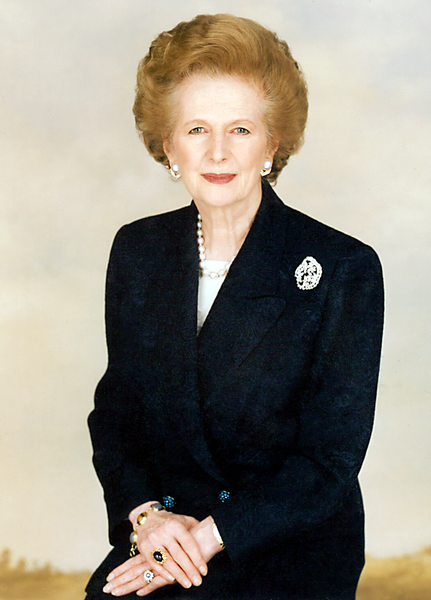
Baroness Margaret Thatcher (1925-2013), Prime Minister 1979-1990

MARGARET THATCHER, Britain's longest-serving and first - and so far only - female Prime Minister, has died at the age of 87, following a stroke.

Mrs Thatcher was PM from 1979 to 1990, and utterly transformed the country with her radical Right-wing policies during a controversial 11-year rule.

However, as shown by Meryl Streep's Oscar-winning portrayal of Mrs Thatcher in the film The Iron Lady, her recent years had been blighted by ill-health.

And, at Monday lunchtime, her friend and spokesman Lord Bell confirmed: "It is with great sadness that Mark and Carol Thatcher announced that their mother Baroness Thatcher died peacefully following a stroke this morning."

The flags over Downing Street were lowered to half-mast, and Mrs Thatcher's latest successor, David Cameron said: "Margaret Thatcher succeeded against all the odds. The real thing is she didn't just lead our country; she saved our country.

"I believe she will go down as the greatest British peacetime Prime Minister."

Tributes followed from across the political spectrum. Labour leader Ed Miliband said: "She will be remembered as a unique figure. She reshaped the politics of a whole generation.

"She was Britain's first woman prime minister. She moved the centre ground of British politics and was a huge figure on the world stage.

And deputy Prime Minister, the leader of the Liberal Democrats Nick Clegg added: "Margaret Thatcher was one of the defining figures in modern British politics.

"Whatever side of the political debate you stand on, no one can deny that as prime minister she left a unique and lasting imprint on the country she served."

Meanwhile, a Buckingham Palace spokesman said: "The Queen was sad to hear the news of the death of Baroness Thatcher. Her Majesty will be sending a private message of sympathy to the family."

But Mrs Thatcher was also truly a divisive figure, and has indeed become a hate-figure for many on the Left, having privatised several state-run industries and been involved in long run-ins with trade unions.

The most famous of these was the miners' strike of 1984-85 when pit-workers and police officers held brutal, running battles, notably in Orgreave, South Yorkshire.

Ultimately, though, Mrs Thatcher won. Unemployment in these communities soared, and the communities themselves broke down and lost any sense of purpose.

For this, Mrs Thatcher will never be forgiven in the pit towns and mining villages. As far as they are concerned, they were considered collateral damage in her reforms and their wounds remain to this very day.

At the time, there were many unashamedly spiteful protest songs - notably Elvis Costello's Tramp The Dirt Down and Hefner's The Day That Thatcher Dies, which foretold her demise with children singing "Ding Dong, the witch is dead" in its closing section.

Of course, it mattered not. The political result was the same - victory for Mrs Thatcher.

Indeed, it was clear by the time New Labour were swept into power in 1997, replacing John Major's tired Tory administration, that the post-war consensus was over and free-market economics had become the order of the day.

Tony Blair, who was elected in 1997, paid tribute to Mrs Thatcher, describing her as a "towering political figure" who changed "not only the political landscape of their country but of the world".

Of course, just like Mrs Thatcher, Mr Blair won three general elections and did not lose one, before being forced out instead by an internal party rift.

But, unlike Mrs Thatcher, Mr Blair did not significantly change the political landscape of Britain, as he has admitted himself.

"I always thought my job was to build on some of the things she had done rather than reverse them," he said, and in doing so he has effectively rendered Labour and the Conservatives as two sides of the same coin.

Mr Blair's successor Gordon Brown even invited a frail Mrs Thatcher to Downing Street in a seemingly fruitless attempt to broaden his appeal.

Now, at this point, I should point out that my parents actually benefited from Mrs Thatcher's period in power. The Right to Buy scheme took them out of council accommodation and put them on the property ladder.

But, in many ways, they were fortunate. My dad had a steady job as an electrician with a sign firm and the company he worked for did not go bust - but many did, especially in the early 1990s recession.

This meant that a lot of people who bought their homes could not afford to repayments, and a lack of social housing, which the government felt was not much required, left no safety net to those who became insolvent.

Famously, as Chancellor, Mr Brown foolishly promised an end to Tory "boom and bust". But then, in 2008, coincidentally shortly after he had become PM himself, came the biggest crash since the Great Depression in 1930s.

Just like in Mrs Thatcher's day, growth in the economy under New Labour had been utterly reliant on the financial services sector and an unsustainable housing boom.

Nothing had changed, and still nothing has. Mrs Thatcher is dead but her politics live on.

Tuesday, 12 March 2013

Falklanders overwhelmingly opt to stay British

FALKLAND ISLANDS"Do you wish the Falkland Islands to retain their current political status as an Overseas Territory of the United Kingdom?"
Yes1,513 (99.8%)
No3 (0.2%)
Total votes: 1,517 (one invalid ballot) Turnout: 90.7%


FALKLAND ISLANDERS have voted overwhelmingly to remain British in a referendum held in the south Atlantic territory over the past two days.

In all, 1,513 (99.8%) voters responded in the affirmative to the set question: "Do you wish the Falkland Islands to retain their current political status as an Overseas Territory of the United Kingdom?". Only three people (0.2%) voted against in a strong turnout of 90.7%.

That the outcome was not a surprise is an understatement, to say the least. Indeed, in terms of elections, there will rarely be anything as inevitable as this result.

So, why hold the referendum then in the first place? Well, the Argentine government has claimed it is nothing more than a PR exercise and has already confirmed it will simply ignore the result.

And, in a certain sense, the Argentines are correct in their suggestion. The vote has been held for little other reason than for the Falkland people to make an unequivocal statement.

However, it is now over 30 years since the Falklands War, and more than 26 since the Falklanders last voted to affirm their desire to be British.

It is no wonder they have now felt inclined to do so, particularly with the Falklands recently having become a bit of a hot issue again.

Earlier this year, Argentine foreign minister Hector Timerman said that the islands would be under the control of his country within 20 years. He also accused Britain of occupying the islands for "access to oil and natural resources".

Moreover, the fervour swept up by the Argentine government looks like it is working. Faced with an economic situation, which is worsening by the day, the baseless sabre-rattling is proving to be a successful distraction for Argentina President Cristina Kirchner.

Polling by Yougov and Argentine equivalent Ibarometro shows that, while only 1% of British people pick the Falklands as one of the most important international issues facing the country, 24% of Argentinians do.

Asked directly about Falklands, 54% of British respondents think it is an important issue to Britain, compared to 67% of Argentinians who think it is an important issue to Argentina.

Despite that, many Argentinians seem to have little idea of the islands' history, or remain knowingly ignorant.

The argument used by foreign minister Timerman - that there is no such thing as a Falklander and that Britain occupies the islands solely for use of its natural resources - is parroted unthinkingly.

But, even if it was the case that Britain now maintains a south Atlantic base for oil, it certainly was not in the past. Not unless the first British settlers had incredible foresight in 1690, that is 126 years before Argentina even became a country in its own right.

Of course, the nadir in diplomatic relations between Britain and Argentina occurred in 1982 with the outbreak of the Falklands War, a 74-day conflict which cost the lives of 255 British servicemen, approximately 650 Argentine servicemen, and three Falklands civilians.

The single biggest loss of life came with the sinking of the Belgrano, an Argentine navy ship, by HMS Conqueror. 323 Argentina servicemen were killed in what remains a highly controversial military assault by the British.

Worse, though, was the now infamous tub-thumping reaction of the Sun newspaper, and its sickeningly vainglorious "Gotcha" headline.

No doubt, the fate of the Belgrano and its occupants is the most memorable incident in the war, and one which has coloured the view of many people in Britain of the whole conflict.

Certainly, there seems to be a lot of bitterness about the Falklands War generally by those on the political Left.

For example, there have been no fewer than three articles on the Guardian website in the last few days, all of them written from an Argentine perspective, including one by the South American country's ambassador to London, Alicia Castro.

Of course, it did not help the Left that one of the direct consequences of the British victory was the huge boost in morale for Margaret Thatcher's ailing Conservative government.

Indeed, having been struggling in the polls through almost all of her first term, the Tories rallied from the summer of 1982 onwards and pulled off a huge landslide win in the 1983 general election.

It was an even bigger victory for Mrs Thatcher than her breakthrough win in 1979, and it essentially sealed her position at the top of British politics for the rest of the decade.

But, while the fate of history was clearly not on the side of the Left politically, such pettiness should be put aside and the Left should accept the necessity of the Falklands War (if not, necessarily, the Belgrano incident).

Ultimately, as far as I am concerned, the good folk in Port Stanley are as British as anyone living in Bristol, Bradford or Birmingham.

And, after the dark day on 2 April 1982 when Argentine forces swept unannounced across the island, those Britons' lives deserved to be protected by a British counter-offensive.

Far from being meaningless, as suggested by ambassador Castro, this referendum result actually means everything to the Falklanders.

It is their only way of making a statement to the rest of the world that they will not be moved. Now, if only Argentina would listen.

Friday, 25 January 2013

Cameron offers a way out of Europe

BRITAIN could hold an in-out referendum on whether to stay in the European Union under re-negotiated terms after the next general election, Prime Minister David Cameron announced this week.

In a long-awaited landmark speech, Mr Cameron set out the proposals for a nationwide vote to be held by the end of 2017 so long as he is returned as PM.

Mr Cameron said he would seek a return of certain powers from Brussels to Westminster before campaigning to stay in the EU on the new terms.

Ultimately, though, he confirmed that the choice would be made by the public. "It is time for the British people to have their say," he said.

"It is time to settle this European question in British politics. I say to the British people: this will be your decision."

Unsurprisingly, the news was welcomed by most Eurosceptics who have long campaigned for a vote, but UKIP leader Nigel Farage said he would have only been satisfied by an immediate referendum.

Nevertheless, it must be said that Mr Cameron has made a clever move politically, and it is one which has almost certainly put Labour and UKIP on the back foot.

Even LabourList editor Mark Ferguson has conceded that Ed Miliband's hasty response in ruling out a referendum could mean that he and his party are perceived as "the status quo-endorsing, Europhile democracy haters".

Meanwhile, the UK Polling Report blog has recalled the popularity boost which Mr Cameron received in December 2011 when he used his veto over proposed treaty changes.

There are some cautionary words on the same site, however. Europe is not actually an issue which is particularly salient with the public, ranking behind other topics such as "the economy, pensions, crime, health and so on".

Also, the fact that, on the very next day, the Chancellor George Osborne announced his spending cuts would have to continue, coincidentally, until 2017 will not give the Tory vote much chance to bounce.

Indeed, the struggling economy means there remains a fair chance that Mr Cameron may only be a one-term Prime Minister, unable to follow through on his promise.

Even if he is re-elected, it is not clear exactly what settlement he would be able to secure as both France and Germany have warned Britain that it simply cannot "cherry pick" its EU membership.

But, despite these difficulties, it was no surprise to see Mr Cameron face this challenge head-on.

The issue of Europe has haunted the Conservatives for decades, so much so it effectively brought down the curtain on the premierships of Margaret Thatcher and John Major.

During the Cameron ministry too, it has lingered in the background like a bad smell and the rift has continued. For now, though, both sides seem to have been placated.

Eurosceptic Tories will be pleased that they finally have a goal to aim for, and that the UKIP vote against them should be blunted.

Meanwhile, BBC political editor Nick Robinson notes that pro-Europeans "were relieved by the pragmatic tone of much of the rhetoric".

That rift in the Conservative party remains, though - and it cannot be underestimated just how big a political risk Mr Cameron has taken with his promise to hold a referendum. Certainly, Mr Cameron will have to hope history does not repeat itself.

For, when Labour Prime Minister Harold Wilson held a similar vote in 1975, the fall-out caused a schism in the party which would eventually leave it in the electoral wilderness for years. 

Defeat to the Conservatives in 1979 sent Labour lurching further to the Left, and this caused centrist pro-European members to set up the Social Democratic Party, which would subsequently merge with the Liberals to form the Liberal Democrats.

Of course, it is highly unlikely anything as dramatic as that will happen to the Conservatives, especially while they remain in power.

However, it could still be the case that Mr Cameron will be forced again to take on the Eurosceptics in his own party, depending of course on how successful the election and his negotiations are.

Finally, it must be said that the views of the British public on EU membership are unpredictable, to say the least.

Back in that vote in 1975, voters overwhelmingly opted to stay in Europe by a margin of two to one. But who knows, though, what the outcome will be in 2017 if we do indeed get the chance to vote?

Indeed, bearing in mind the anticipated one-eyed Eurosceptic stance from the likes of the Sun and its ilk, it will also be worth asking: just how informed will the decision actually be?

Friday, 13 January 2012

Deconstructing the Iron Lady

 The Iron Lady (12A)
Dir: Phyllida Lloyd
Meryl Streep, Jim Broadbent
Running time: 105 minutes


THE IRON LADY has split the opinion of the critics right down the middle - and many will suggest, not unfairly, that it is quite an appropriate verdict on a figure as divisive as Margaret Thatcher.

But, while I think little for Thatcherism and feel some disdain at the extent to which it sadly pervades British politics today, at the same time I found this biopic rather engaging and also strangely moving.

The film benefits from a simple background plot in which an ageing Mrs Thatcher (Meryl Streep) is being helped by her daughter Carol (Olivia Colman) to clear out the clothes of Mrs Thatcher's late husband, Denis (Jim Broadbent).

We find that Denis is never far away from Mrs Thatcher's thoughts. In fact, she still sees him all of time and his sharp sense of humour ensures that he gets many of the best lines.

In the same way as Denis is close to Mrs Thatcher's thoughts, so are the former premier's political memories, and these are presented in a series of flashbacks.

This device may seem a little contrived for some critics but it logically allows the film to shift time from present to past with a smooth chronology.

We get to see how Mrs Thatcher rose through her party from an unpromising position to win power in the 1979 general election; how she then overcame her early problems in government with decisive victories in the Falklands abroad and at home against the miners.

And, finally, how she ultimately fell from grace with her party split over Europe and her popularity diminished by her introduction of the regressive poll tax.

There are, of course, scenes throughout the film of Mrs Thatcher debating in the House of Commons and heading her Cabinet meetings. However, none of the issues mentioned above is presented in the context of a political discourse.

For, that is not what this film set out to do - these are, more simply, the sepia-tinged memories of Mrs Thatcher and her thoughts upon them now.

Still, nothing of what I have written yet explains why someone like me - far removed from the Thatcher political philosophy - found the film "rather engaging and strangely moving".

Well, while I am not about to start paying subscription fees to her fan club, even this Thatcher detractor must concede that the drive and ambition which the young Mrs Thatcher showed in rising to the top was remarkable.

In this regard, Streep does fantastically well to convey the conviction and steely determination of the green-grocer's daughter, written off by many even from inside her own party.

Nowhere in the film is this better shown than in the scenes in the Commons where, at the height of her power, Mrs Thatcher's screechy oration was able to control the attention of a rowdy chamber full of men.

However, for me, Streep really excels with her portrayal of the much older Mrs Thatcher as a dementia sufferer in the present.

Dementia is an illness which is no respecter of authority and Streep's accurate representation of how it affects one of the previously most powerful persons in the world is highly commendable.

As you may have guessed, dementia is something which is rather close to home for me. Two of my deceased grandparents suffered from it, and my remaining 80-year-old nanna is also having her final years blighted by it.

I do not think I will ever understand how the brain will allow a person to remember vividly a moment from 30 years ago or more, and yet that same person cannot say what month it is, or what they had for breakfast. 

Oddly, the illness is still largely treated as a bit of a taboo subject when it comes to film and television, and so members of the Alzheimer's Society forums have been heartened to see it highlighted on the big screen.

I can only add my support to this and, consequently, I am happy to concede that Meryl Streep's Iron Lady has found an unlikely ally.

Thursday, 27 October 2011

Private Eye still packs a punch at 50

SATIRICAL mouthpiece Private Eye celebrated its 50th birthday this week in time-honoured fashion.

Featured on the front page of the latest edition, no. 1300, is David Cameron and his Conservative counterpart from 1961, Harold Macmillan.

It is the 23rd occasion that the current Prime Minister has been put on the cover though that is some way behind another of his predecessors, Margaret Thatcher, who leads with 95 appearances.

Famous front covers include a picture of Adolf Hitler telling us he is in fancy dress as Prince Harry after the young Royal's faux pas, and the hugely controversial 'Media to Blame' headline when Princess Diana died.

Other examples can be found on the Private Eye website which has a comprehensive index of its back issues.

Digging a little deeper, the Eye supplies fortnightly an irrepressible run of recurring in-jokes, regular columns, cartoons, and parodies of politicians, celebrities and, indeed, the newspaper industry.

Yes, journalism does not escape the clutches of the Eye: the Sun is oft-parodied for its SENSATIONALIST style, the Daily Mail mocked for its right-wing leanings and the Guardian - or Grauniad - for its spelling.

However, Private Eye is not just a joke mag but also a source itself of serious investigative journalism and a sanctuary for whistleblowers.

Indeed, the anniversary edition of the Eye has a list of 50 stories which it has broke over the years from the Profumo affair to Andrew Marr's more recent infidelity.

Among the magazine's current set of targets is former HM Revenue & Customs boss Dave Hartnett for his dodgy tax dealings with investment bank Goldman Sachs.

Of course, the Eye's propensity to push the boundaries has made it a few enemies in high places over the past half-century.

The proof of that comes in the fact that current editor - and Have I Got News For You panellist - Ian Hislop holds the unenviable record for being the most sued man in Britain.

Nevertheless, the Eye, with a circulation of more than 200,000, remains pretty well-regarded among political anoraks in this country, if not perhaps the British public at large.

Liberal Democrat MP Bob Russell even tabled an Early Day Motion at Westminster, proposing: "That this House congratulates satirical magazine Private Eye on its 50th anniversary".

The motion attracted 22 signatories, though the Eye notes that this total is five fewer MPs than the 27 who signed a similar proposal for its 1000th edition, 11 years ago.

Perhaps the recent scandals surrounding lobbying and MPs expenses means the Eye has got up a few more politicians' noses - but, in that respect, Mr Hislop and his team are only doing their jobs.

The American author and journalist Finley Peter Dunne once wrote that the job of a newspaper is "to comfort the afflicted, and afflict the comfortable".

And it would seem that Private... (cont. p94)

(That's enough, Ed.)