Showing posts with label gordon brown. Show all posts

Friday, 19 September 2014

Salmond steps down as Scotland says Naw - for now

Should Scotland be an independent country?
AYE
NAW
44.7%
55.3%
National turnout: 84.6%

ALEC SALMOND resigned as First Minister after Scotland rejected independence and voted to remain part of the United Kingdom in a historic referendum last night.

National turnout was almost 85% as the Better Together campaign topped two million votes, and eventually finished ahead of Yes Scotland by 383,937 ballots.

The pattern of the night's results from the 32 council areas became quickly established with reports of disappointed Yes campaigners knowing they had not done as well as the final polls suggested.

In fact, the first seven local authorities - including the islands of Orkney and Shetland - all voted in favour of Naw to varying extents with the tightest race of the whole poll coming in Inverclyde.

There, Better Together beat Yes Scotland by just 86 votes and it would have been quite amazing if the overall race had been so close.

Dundee became the first area to vote Aye, swiftly followed by West Dunbartonshire - and, for a brief few moments, the overall running totals tightened up.

However, a whole slew of results - in Midlothian, East Lothian, Stirling, Falkirk, Angus, Dumfries, East Renfewshire, East Dunbartonshire, and Aberdeen - then came in for Naw. 

It meant that, even with Scotland's biggest city Glasgow voting 53-47 to leave the Union, the Yes campaign was still behind.

Then, Scotland's former and present capitals both swung behind Better Together. Perth and Kinross went Naw by a 60-40 margin while Edinburgh was just as decisive with its 61-39 breakdown. 


By the time of the Edinburgh result, the BBC had already called the election in favour of Better Together, doing so at 5.14am with six councils left to report. 

Fife officially took Naw over the winning line shortly afterwards with the penultimate result in Moray and the last result from Highland also both voting to reject independence. 

Ultimately, only four local authority areas - Glasgow, Dundee, West Dunbartonshire and North Lanarkshire - voted Aye in deep contrast to the state of the political map in 2011. 

Back then, just over three years ago, Mr Salmond's Scottish National Party swept the Central Belt and gained an unexpected majority in the devolved Scottish Parliament in Holyrood. 

Indeed, it was this overwhelming mandate which rather forced Mr Salmond's hand. 

His party, set up in 1934 with the stated aim of breaking away from the Union, had a majority in a system which was not even supposed to produce such results. 

And so, if Mr Salmond had not offered a referendum after his 2011 result, he would have been accused by his opponents of running scared. 

The caution at holding a vote came from the fact that, while his Scottish Nationalists were a popular alternative to the Conservatives, Labour and the Liberal Democrats in elections, actual support for independence hung at around just over a third. 

Nevertheless, this campaign soon changed that. Sometimes feisty and always passionate, the last few weeks have seen an independence movement growing in confidence, belief and numbers on the ground. 

Aye supporters even gained a whole load of concessions from the three Westminster leaders in the closing days before the ballot. 

In truth, the Westminster establishment was running scared after a single, probably rogue, opinion poll put Yes Scotland ahead for the first time with less than two weeks to go. 

Business as usual in the House of Commons was postponed as Prime Minister David Cameron, Deputy Prime Minister Nick Clegg and Leader of the Opposition Ed Miliband all hastily hopped on a train. 

Former Prime Minister and Labour leader Gordon Brown also became influential in the process, setting out a tight timetable for further devolution which Mr Cameron is now almost obliged to follow. 

It means that, while Mr Cameron may not have overseen the break-up of the Union, the coming constitutional changes will cause him a major headache ahead of a general election less than eight months away.

What also became clear is that the cry of an overhaul of British politics was not just coming from Scotland

The long-standing West Lothian question - where Scottish MPs in Westminster can vote on English-only matters - must surely now be properly addressed. 

Similarly, the Barnett formula - devised in the 1970s with the aim of sharing public spending fairly - has become massively outdated with Wales and some English regions now badly losing out to Scotland. 

Despite the Westminster leaders' vow to keep it, this is an imbalance which needs a review, even to the admission of the creator of the original formula, Joel Barnett. 

And this is especially the case with the Scottish Parliament effectively getting Home Rule with further powers over tax, spending and welfare arrangements. 

Some of the more embittered Aye campaigners have considered last night's result to be the very definition of fear triumphing over hope - but this is far too simplistic a view. 

Concerns over currency and the economy in general still remained as legitimate as ever, no matter how many times Mr Salmond blindly and falsely accused his opponents of scaremongering. 

With his dream of an independent Scotland over, Mr Salmond said this afternoon he would quit as First Minister in November.

But, despite his decision, his dream of an independent Scotland is not over altogether. Opinion polls showed the younger generation to be much more enthusiastic about independence than older folk. 

Aye led in every age-group except for the over-60s and it looks as if the overwhelming 'small-c' conservatism of the 'grey vote' was the decisive factor in keeping Scotland in the Union. 

The direction of travel is undeniable - and, while Mr Salmond will now not be the leader to achieve it, he made a point in his concession speech of stating Scotland had rejected independence "at this stage".

Should auld acquaintance be forgot? Not until the next time at least.

FULL RESULTS
SCOTLANDAYE
NAW
Local authority area (turnout)44.7%
55.3%
Aberdeen city (82%)59,390 (41.4%)84,094 (58.6%)
Aberdeenshire (87%)71,337 (39.6%)108,606 (60.4%)
Angus (86%)35,044 (43.7%)45,192 (56.3%)
Argyll and Bute (88%)26,324 (41.5%)37,143 (58.5%)
Clackmannanshire (89%)16,350 (46.2%)19,036 (53.8%)
Dumfries and Galloway (88%)36,614 (34.3%)70,039 (65.7%)
Dundee city (79%)53,620 (57.4%)39,880 (42.6%)
East Ayrshire (85%)39,762 (47.2%)44,442 (52.8%)
East Dunbartonshire (91%)30,624 (38.8%)48,314 (61.2%)
East Lothian (88%)27,467 (38.3%)44,283 (61.7%)
East Renfrewshire (90%)24,287 (36.8%)41,690 (63.2%)
City of Edinburgh (84%)123,927 (38.9%)194,638 (61.1%)
Falkirk (89%)50,489 (46.5%)58,030 (53.5%)
Fife (84%)114,148 (45.0%)139,788 (55.0%)
Glasgow City (75%)194,739 (53.5%)169,347 (46.5%)
Highland (4am)78,069 (47.1%)87,739 (52.9%)
Inverclyde (87%)27,243 (49.9%)27,329 (50.1%)
Midlothian (87%)26,370 (43.7%)33,972 (56.3%)
Moray (85%)27,232 (42.5%)36,935 (57.5%)
North Ayrshire (84%)47,072 (49.0%)49,016 (51.0%)
North Lanarkshire (84%)115,783 (51.1%)110,922 (48.9%)
Perth and Kinross (87%)41,475 (39.8%)62,714 (60.2%)
Renfrewshire (87%)55,466 (47.2%)62,067 (52.8%)
Scottish Borders (87%)27,906 (33.4%)55,553 (66.6%)
South Ayrshire (86%)34,402 (42.1%)47,247 (57.9%)
South Lanarkshire (85%)100,990 (45.3%)121,800 (54.7%)
Stirling (90%)25,010 (40.2%)37,153 (59.8%)
West Dunbartonshire (88%)33,720 (54.0%)28,776 (46.0%)
West Lothian (86%)53,342 (44.8%)65,682 (55.2%)
Na h-Eileanan Siar (86%)9,195 (46.6%)10,544 (53.4%)
Orkney Islands (84%)4,883 (32.8%)10,004 (67.2%)
Shetland Islands (84%)5,669 (36.3%)9,951 (63.7%)
Totals (popular vote):1,617,989
2,001,926

Wednesday, 10 April 2013

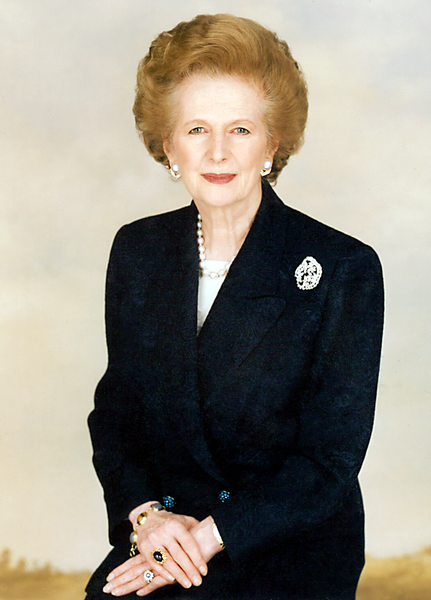
Thatcher dies but her politics live on

Baroness Margaret Thatcher (1925-2013), Prime Minister 1979-1990

MARGARET THATCHER, Britain's longest-serving and first - and so far only - female Prime Minister, has died at the age of 87, following a stroke.

Mrs Thatcher was PM from 1979 to 1990, and utterly transformed the country with her radical Right-wing policies during a controversial 11-year rule.

However, as shown by Meryl Streep's Oscar-winning portrayal of Mrs Thatcher in the film The Iron Lady, her recent years had been blighted by ill-health.

And, at Monday lunchtime, her friend and spokesman Lord Bell confirmed: "It is with great sadness that Mark and Carol Thatcher announced that their mother Baroness Thatcher died peacefully following a stroke this morning."

The flags over Downing Street were lowered to half-mast, and Mrs Thatcher's latest successor, David Cameron said: "Margaret Thatcher succeeded against all the odds. The real thing is she didn't just lead our country; she saved our country.

"I believe she will go down as the greatest British peacetime Prime Minister."

Tributes followed from across the political spectrum. Labour leader Ed Miliband said: "She will be remembered as a unique figure. She reshaped the politics of a whole generation.

"She was Britain's first woman prime minister. She moved the centre ground of British politics and was a huge figure on the world stage.

And deputy Prime Minister, the leader of the Liberal Democrats Nick Clegg added: "Margaret Thatcher was one of the defining figures in modern British politics.

"Whatever side of the political debate you stand on, no one can deny that as prime minister she left a unique and lasting imprint on the country she served."

Meanwhile, a Buckingham Palace spokesman said: "The Queen was sad to hear the news of the death of Baroness Thatcher. Her Majesty will be sending a private message of sympathy to the family."

But Mrs Thatcher was also truly a divisive figure, and has indeed become a hate-figure for many on the Left, having privatised several state-run industries and been involved in long run-ins with trade unions.

The most famous of these was the miners' strike of 1984-85 when pit-workers and police officers held brutal, running battles, notably in Orgreave, South Yorkshire.

Ultimately, though, Mrs Thatcher won. Unemployment in these communities soared, and the communities themselves broke down and lost any sense of purpose.

For this, Mrs Thatcher will never be forgiven in the pit towns and mining villages. As far as they are concerned, they were considered collateral damage in her reforms and their wounds remain to this very day.

At the time, there were many unashamedly spiteful protest songs - notably Elvis Costello's Tramp The Dirt Down and Hefner's The Day That Thatcher Dies, which foretold her demise with children singing "Ding Dong, the witch is dead" in its closing section.

Of course, it mattered not. The political result was the same - victory for Mrs Thatcher.

Indeed, it was clear by the time New Labour were swept into power in 1997, replacing John Major's tired Tory administration, that the post-war consensus was over and free-market economics had become the order of the day.

Tony Blair, who was elected in 1997, paid tribute to Mrs Thatcher, describing her as a "towering political figure" who changed "not only the political landscape of their country but of the world".

Of course, just like Mrs Thatcher, Mr Blair won three general elections and did not lose one, before being forced out instead by an internal party rift.

But, unlike Mrs Thatcher, Mr Blair did not significantly change the political landscape of Britain, as he has admitted himself.

"I always thought my job was to build on some of the things she had done rather than reverse them," he said, and in doing so he has effectively rendered Labour and the Conservatives as two sides of the same coin.

Mr Blair's successor Gordon Brown even invited a frail Mrs Thatcher to Downing Street in a seemingly fruitless attempt to broaden his appeal.

Now, at this point, I should point out that my parents actually benefited from Mrs Thatcher's period in power. The Right to Buy scheme took them out of council accommodation and put them on the property ladder.

But, in many ways, they were fortunate. My dad had a steady job as an electrician with a sign firm and the company he worked for did not go bust - but many did, especially in the early 1990s recession.

This meant that a lot of people who bought their homes could not afford to repayments, and a lack of social housing, which the government felt was not much required, left no safety net to those who became insolvent.

Famously, as Chancellor, Mr Brown foolishly promised an end to Tory "boom and bust". But then, in 2008, coincidentally shortly after he had become PM himself, came the biggest crash since the Great Depression in 1930s.

Just like in Mrs Thatcher's day, growth in the economy under New Labour had been utterly reliant on the financial services sector and an unsustainable housing boom.

Nothing had changed, and still nothing has. Mrs Thatcher is dead but her politics live on.

Wednesday, 21 March 2012

Budget 2012: Osborne's massive "granny tax" gamble

CHANCELLOR George Osborne will abolish age-related allowances from April 2013 to help pay for a cut in the highest rate of income tax from 50% to 45%.

Mr Osborne defended the decision, stating it was part of a wider policy of simplifying tax, but the undeniable truth is that millions of older folk will lose out over the next few years.

The age-related allowances in the coming tax year are £10,500 for pensioners aged between 65 and 74, and £10,660 for people older than 75.
 

But those amounts will be frozen from April 2013 for those who are within those age brackets until the standard personal allowance catches up. Meanwhile, anyone who becomes 65 after April 2013 will only get the standard allowance of £9205. 

This means a person turning 65 in the coming tax year will receive an annual allowance of £10,500 but a person turning 65 after April 2013 will only get the £9205 amount. 

Now, of course, Mr Osborne will receive credit for raising the main personal allowance to the £9205 mark in line with the policy of his party's coalition partners, the Liberal Democrats.

However, his decision to freeze the age-related allowances for pensioners to pay for a cut to the higher rate tax band is a bold political gamble.

In the Commons, Mr Osborne defended the move to scrap the 50p rate, stating a report by HM Revenue & Customs confirmed it had damaged the UK's competitiveness.

The Chancellor added that the rate had "caused massive distortions" and "raised next to nothing", and he stated that those taxpayers would pay "five times more" to the exchequer due to changes to stamp duty levies and a new cap on tax relief.

"No chancellor can justify a tax rate that damages our economy and raises next to nothing," said Mr Osborne.

Nevertheless, as BBC's Nick Robinson pointed out, the policies set out in the Budget still mean that a higher-rate taxpayer who does not buy any property or use any tax relief will still gain significantly at the expense of a pensioner in April 2013.

Labour leader Ed Miliband was quick to pick up on this fact, labelling Mr Osborne's plans a "millionaire's Budget which squeezes the middle".

Mr Miliband added: "After today's Budget, millions will be paying more, while millionaires will be paying less."

But, while the latter part of that statement may or may not be true - it is hard to tell at this point - it is certainly the case that Mr Osborne is testing the loyalty of some of the Conservative party's supporter base.

Labour is back in the lead in most polls but the Tories retain a plurality of support among the over 65s in almost all cases.

Mr Osborne and Prime Minister David Cameron also hold a lead, by 32% to 26%, over Mr Miliband and Shadow Chancellor Ed Balls in terms of being trusted with the economy.

However, both of these positions will soon disappear if Mr Osborne's decision to freeze age-related allowances becomes seen as akin to Labour's shocking removal of the 10% starting rate in 2007.

That dreadful move cost Gordon Brown much support for his claim to economic competence, even before the financial crisis hit a year later.

And so - regardless of the justification for their lowering of the 50% tax rate - the separate issue of the removal of pensioners' allowances means the coalition may have just committed their own fatal income tax error.

 Meanwhile, in other moves in his third Budget, Mr Osborne...
- Forecast growth to be 0.8% in 2012 and 2% in 2013, 2.7% in 2014 and 3% in the two years after that. (Note: While the 2012 figures are improved from the news in his Autumn Statement when Mr Osborne had announced growth for 2012 would be just 0.7%, they compare unfavourably with the forecast of 2.5% made 12 months ago. Mr Miliband suggested the figures were proof that the Government's plan had failed).

- Cut the rate of corporation tax by 2% to 24%, adding it would further reduce to 22% by 2014.

- Promised to address loopholes in the VAT system while retaining the usual exemptions on food, clothes, books and newspapers.

- Tweaked the coalition's policy on Child Benefit so that its removal from higher rate taxpayers is tapered. (Note: despite this, the inherent unfairness of the policy remains: a couple both earning £40,000 will not lose any Child Benefit but a household in which only one partner earns over £50,000 will lose out).

- Announced that the planned 3p rise in fuel duty in August would go-ahead, and that vehicle excise duty will increase in line with inflation.

- Hit smokers the hardest in terms of duties with a 5% above-inflation rise on a packet of cigarettes, the equivalent of 37p on a packet. There was no change to alcohol duties but a new duty was introduced on gaming machines.


2012 BUDGET DETAILS
Growth forecasts/Fiscal policy
*Growth will be 0.8% in 2012, and 2% in 2013.
*Borrowing in 2012 will be £126bn, falling to £120bn in 2013, £98bn in 2014, eventually to £21bn in 2017. Government saving £36bn in debt interest.
*Independent OBR expects inflation in 2012 to be 2.8%, falling in 2013 to 1.9%.
*OBR forecasts unemployment to peak this year at 8.7% before falling each year to 6.3% in five years.

Taxation/State Pension/Child Benefit
*Abolition of age-related personal allowances for over-65s, as from April 2013.
*Highest rate of income tax will be 45% from April 2013, stays at 50% for 2012-3 - as HMRC report proves it damages the UK's competitiveness, and "caused massive distortions".
*Personal tax-free allowance to £8105 for 2012-13 to £9205 from April 2013.
*Consultation on tax/NI simplification to be published next month.
*From 2014, 20m people to receive new personal tax statement, detailing what they are paying and what they are paying for.
*Corporation tax rate cut by 2% to 24%; will be 22% by 2014. Banks continue to get no benefit from corporation tax rate due to bank levy being increased to 0.105%, raising £2.5bn per year.
*Loopholes in VAT system to be addressed but exemptions to stay on food, clothes, and books.
*Increase on stamp duty to 7% on homes worth more than £2m (or 15% on residential properties of more than £2m bought by a company).
*New cap on tax relief set at 25% of total income for anyone claiming more than £50,000 in a year, but no significant change to pensions relief.
*State Pension to rise by £5.30 per week. Single tier pension to be set around £140 and based upon future contributions for future pensioners. Automatic review of state pension age.
*Child benefit only withdrawn from higher rate taxpayers if someone in household has income of more than £50,000 - gradual withdrawal of 1% for every £100 above £50,000.

Levies
*Alcohol: No further changes.
*Cigarettes: 5% rise above inflation, equivalent of 37p extra duty on a packet of cigarettes.
*Fuel: No further changes. Above-inflation rises will only return if price of oil falls below £45 a barrel.
*Vehicle excise: Increased in line with inflation - but frozen for road hauliers.
*Gambling: New duty on gaming machines at a standard rate of 20% and a lower rate for low-prize machines of 5% of net takings.

Investment
*Increased private investment in roads.
*Network Rail to upgrade Trans-Pennine rail route between Manchester and Sheffield; improvement to the lines between Manchester and Preston, and Manchester and Blackpool.
*24 enterprise zones now operating, new enterprise zone in Deeside, Wales. Enhanced capital allowances for businesses setting up in new Scottish enterprise zones (Dundee, Irvine, Nigg).
*Spending on Afghanistan £2.4bn lower than planned. Extra £100m for military housing, 100% council tax relief for armed forces overseas, family welfare grant for armed fores doubled.
*£3bn tax allowances for oil exploration in Shetlands.
*Tax credit for television, video games and animation industries.
*£100m support for new university science research facilities.
*£70m fund for new jobs and businesses in London.
*£150m to help local councils promote development.
*Funding for superfast broadband and wi-fi in the UK's 10 largest cities with £50m available for smaller cities.

Miscellaneous
*Royal Mail pension fund assets switched to Treasury control.
*Sunday trading laws relaxed for eight weeks commencing on 22 July.

Tuesday, 19 July 2011

Murdoch empire starts to fall apart

THE PHONE-hacking scandal has moved onto a new level in the last two weeks with arrests, resignations, apologies and recriminations.

Since my last post 12 days ago, the 168-year-old News of the World officially closed on 7 July and Rupert Murdoch withdrew his bid for full control of BSkyB on 13 July.

On 15 July, 11 days after it was revealed Millie Dowler's phone had been hacked, Rebekah Brooks - the chief executive of News International - eventually fell on her sword.

Two days later, on Sunday, she was arrested by the Metropolitan Police on suspicion of phone-hacking and making illicit payments to police officers. She was released on bail until October.

Just hours on from that, the country's most senior police officer, Met Police Commissioner Sir Paul Stephenson then resigned.

Stephenson had received criticism for hiring former News of the World executive editor Neil Wallis as an advisor and for using a luxury health spa owned by a company for which Wallis also worked.

But the Commissioner departed with a stinging criticism of his own in the direction of Prime Minister David Cameron for the PM's ill-judged appointment of former News of the World editor Andy Coulson as his director of communications.

It is worth noting here that Coulson had been arrested on 8 July for conspiring to intercept communications. On 14 July, Wallis was arrested under suspicion of committing the same offence.

Before Brooks' arrest on 17 July, News International used their own newspapers and others to print a full-page apology.

The apology took the form of a letter from Murdoch in which he wrote: "The News of the World was in the business of holding others to account. It failed when it came to itself.

"We are sorry for the serious wrongdoing which occurred. We are deeply sorry for the hurt suffered by individuals affected. We regret not acting faster to sort things out."

However, in the next line, Murdoch added: "I realise that simply apologising is not enough." Even the 80-year-old Australian media mogul appears to think he is a busted flush in Britain.

That so much was evident by spiking of the BSkyB bid, although Murdoch and News International took it upon themselves to give the government and Parliament perhaps one last run around.

First, Culture secretary Jeremy Hunt looked less than impressive in referring the bid to the Competition Commission shortly after Murdoch confirmed he was happy to do this.

And then Murdoch pre-empted a special debate in the House of Commons on the bid by withdrawing it before proceedings started anyway.

Nevertheless, the debate went ahead and the MPs acted as if a millstones had been removed from their necks and spoke against Murdoch and News International without fear of reprisal.

These were quite extraordinary moments with members on all sides of the House lining up to pour scorn on the man who has indirectly controlled British politics since the rise of Margaret Thatcher in 1979.

The British political system may remain far from perfect, to say the least, but it seems now to be free of the clutches of Murdoch at last.

Even former Prime Minister Gordon Brown was in the chamber for only the second time since his general election defeat last May.

And the former Labour leader used his rare appearance to lay into News International.

He accused NI of "law-breaking on an industrial scale" and claimed it had "descended from the gutter to the sewers".

Mr Cameron had pointed out earlier at Prime Minister's Questions that, despite there being questions over his relationship to Coulson, he had at least set up an independent inquiry which his predecessor Mr Brown had failed to do.

However, Mr Brown attempted to defend himself saying his moves to set up a judicial review were blocked by senior civil servants.

Meanwhile, his successor Ed Miliband has had his strongest few weeks since gaining the Labour leadership last September.

Mr Miliband was written off as a weak performer after mixed May election results.

But, in this scandal, he has been judged to have set the agenda, giving his personal poll ratings a much-needed boost to the heady heights of -28 'approval'. Mr Cameron remains ahead of Mr Miliband on -13, though.

And, of course, the Labour leader has not emerged entirely squeaky clean from the scandal himself after confirmation he had also attended events in Brooks' lair.

I guess the mere fact that Mr Miliband was even present as Leader of the Opposition just goes to show how deep Murdoch and the other top brass at News International had their claws into British politics.

Ah, Murdoch and Brooks - back to them, inevitably.

Inevitable because they will provide the next development of this fascinating story when they appear before a House of Commons Select Committee tomorrow.

There, we will see if Parliament really will show its teeth having been freed from the leash of the Murdoch empire.

Friday, 21 January 2011

Resignation season

GOVERNMENT Director of Communications Andy Coulson became the second major political figure in under 24 years to resign after Shadow Chancellor Alan Johnson quit yesterday.

Mr Coulson stood down today having endured months of speculation over claims that phone-hacking took place at the News of the World while he was editor.

Yesterday evening, Mr Johnson left his post from the Opposition front bench "for personal reasons", amid allegations that his wife had an affair with a policeman assigned to protect him.

And, while both resignations come in rather different circumstances, it is much harder to spot the difference between the lack of judgement of the two main party leaders.

Resignation #1: Andy Coulson
Government Director of Communications (until today at 11:37GMT today)

Prime minister David Cameron first appointed Mr Coulson as Director of Communications in 2007 while the Conservatives were still in Opposition.

However, even back then, the arrival of the former News of the World editor caused a stir and the decision by Mr Cameron was questioned.

After all, these phone-hacking allegations, which have since stunk out the Wapping offices of the News of the World, were prevalent then.

And Mr Coulson was only able to take up his post at Conservative Central Office because he had resigned from the Rupert Murdoch-owned paper after Royal correspondent Clive Goodman was jailed for plotting to intercept phone messages.

For his part, Mr Coulson has always denied any knowledge of the phone-hacking scandal - and, indeed, the newspaper has always maintained the practice was down to a single rogue reporter in Goodman.

However, that claim is in danger of unravelling after the paper's hired private investigator Glenn Mulcaire told a court this week that the head of news Ian Edmonson commissioned him to access voicemail messages.

Of course, Mr Mulcaire's claim does not corrupt Mr Coulson in itself - but it is fair to say that the former editor now has some questions to answer.

And, undoubtedly, Mr Coulson would find it much easier to answer to the allegations without somehow having to deal with the press on a daily basis.

Bafflingly, Mr Cameron does not seem to understand this, claiming that Mr Coulson has been "punished for the same offence twice".

True, Mr Coulson has had to resign twice but then it was a surprise he got the chance in the first place, given the allegations hanging over him.

As Mr Coulson today said himself: "When the spokesman needs a spokesman, it's time to move on", echoing a line used in September by The Thick Of It writer Armando Iannucci.

Surely, Mr Cameron must realise this.

Resignation #2: Alan Johnson
The Labour Party's Shadow Chancellor (until yesterday at 17:00GMT)

While Mr Coulson's resignation has perhaps been coming for some time, Mr Johnson's departure "for personal reasons" was a genuine bolt from the blue.

Several newspapers now carry the story that his resignation relates to his wife's affair with a policeman employed to protect him while he was Home Secretary.

From this, Mr Johnson appears to be blameless and the popular former postman's promising political career has crashed around him through little fault of his own.

However, Labour party leader Ed Miliband must take a share of the blame - not for the affair, of course, but for a poor political strategy which left Mr Johnson flailing.

Mr Miliband appointed Mr Johnson as Shadow Chancellor in order to temper the influence of Brownite economist Ed Balls.

But Mr Johnson was ill-suited to job, admitting on his first day that he needs an "economics primer".

The MP for West Hull and Hessle was subsequently caught out by not knowing the rate of employers' National Insurance contributions or the rate of VAT on food.

However, given Mr Johnson's overall appeal to voters, it was likely that he would have been given time to grow into the position - and so his resignation was still a shock.

Now, Mr Balls is back and in a stronger position than before as Mr Miliband cannot afford to lose another Shadow Chancellor.

In other words, it could be said that Mr Balls has his party leader by the... er, balls.

Of course, the Conservatives will hardly find it difficult to associate Mr Balls with the size of the deficit left by Mr Cameron's predecessor Gordon Brown.

Mr Balls was in as an adviser to Mr Brown for 13 years between 1994 and 2007 until he became Secretary of State for Children, Schools and Families.

Much now depends on the relationship between Mr Miliband and Mr Balls - and the ability of the latter to land hefty blows on his opposite number, George Osborne.

All in all, a rather messy end to the week in Westminster - and a week which has left both main parties shuffling their pack and scratching their heads over just what might happen next.

Wednesday, 22 December 2010

Cameron furious at Cable leaks

SENIOR Liberal Democrat Vince Cable caused profound embarrassment to the coalition government yesterday after telling undercover reporters he had "declared war" on media mogul Rupert Murdoch.

Mr Cable, who is the Business Secretary, was due to rule on Mr Murdoch's bid to incorporate BSkyB fully into the NewsCorp organisation.

But Mr Cable has now had this decision taken out of his remit after the revelations to Daily Telegraph journalists posing as members of the public.

The ruling on whether Mr Murdoch can increase his current 39% share will instead be made by Culture, Media and Sport Secretary Jeremy Hunt following a recommendation by Ofcom.

Mr Cable's comments [full transcript here] clearly showed his fears that giving Mr Murdoch full control would affect the output of Sky News and its associated channels.

He has a point - Mr Murdoch's Fox News in the US has increasingly become a platform for little more than propaganda shows of right-wing buffoons.

But Mr Cable has also shown naivety in revealing his opposition so readily when he was meant to be impartial and decide the case upon its merits.

Prime Minister David Cameron was furious and said Mr Cable's comments were "totally unacceptable and inappropriate". The PM has consequently seriously weakened the Business Secretary's portfolio.

Indeed, the decision to strip the Business Secretary of the power to rule on Mr Murdoch was described by BBC political editor Nick Robinson as a "humiliating slap in the face".

However, it could have been a lot worse for the Twickenham MP. He is fortunate still to be on the front bench at all.

For Mr Cable also revealed to the reporters that he could "bring the government down" if he resigned but that this was a "nuclear option" which he was keeping as a last resort.

Certainly, Mr Cameron's decision to retain Mr Cable in the Cabinet caused murmurs of consternation among Conservative MPs who feel they would have faced harsher treatment.

Labour leader Ed Miliband also agreed Mr Cameron had copped out by confirming that he would have sacked the Business Secretary.

But Mr Cameron is well aware of the importance of keeping dissenting Lib Dems on side in the coalition especially in the wake of last week's narrow tuition fee vote victory.

In fact, the Prime Minister may have played a clever political game by removing media regulation from Mr Cable's portfolio, leaving him effectively as the glorified Secretary for Tuition Fees.

Of course, it is the rise in tuition fees which has had the Lib Dems in all sorts of bother. At odds with the public after their pre-election pledge to the contrary, the party has sunk to single figures in most of the polls.

Inside the House of Commons, Mr Cable lost the support of 21 Lib Dems while another six abstained.

It is unclear whether Mr Cable was in fact closer to those grassroots than you would believe given that the tuition fee rise was a measure tabled by himself.

Some of his comments on government policy certainly suggest he is closer to the backbenches than the Cabinet.

For example, the Daily Telegraph also report he criticised the way in which Child Benefit was withdrawn from higher earners as "cack-handed".

For now, though, Mr Cable, as a minister, must continue to toe the coalition line publicly under the constitutional convention of collective responsibility.

But you can only imagine the frosty reception he may receive in the first Cabinet meeting back after the Christmas break.

The breaking point has never been closer but, following Mr Cable's apology, it seems as if the government will stagger on for a few months yet.

However, if the Lib Dems perform as badly as expected in May's local elections and/or if the referendum on the alternative vote is lost, the coalition will be back under serious pressure.

Will Mr Cable, surely aggrieved at his effective demotion, choose that moment to deploy his "nuclear option"? If it came to it, Mr Cable would be wise to be bold and trust his instincts.

Better to make a serious attempt to bring down the government and fail than make a pathetic attempt like Geoff Hoon and Patricia Hewitt's undermining of Gordon Brown.

For now, Mr Cable has opted to sit tight - or, more accurately, he has been allowed to remain in situ by the PM.

But, in a weakened position, this coalition appears to be some sort of political purgatory for him and he seems to be an unhappy man, despite his denials at the Lib Dem conference in September.

It feels only a matter of time until he cracks again and hits his own big red button to send the government spiralling into panic.

Tuesday, 28 September 2010

Labour conference: Ed attempts to make a clean break

ED MILIBAND marked his first speech as the new leader of Labour with an attempt to move his party away from the Tony Blair and Gordon Brown era.

Mr Miliband said he believed that the Iraq war was "wrong", and that he understood why voters were angry about the deregulation of the City and Mr Brown's promise of an end to 'boom and bust'.

The keynote address was Mr Miliband's first major job in his new role since he beat his brother David and three other candidates in the leadership election result on Saturday.

Mr Miliband won with 50.65% of the overall vote as compared to David's share of 49.35% in the final round after the elimination of Diane Abbott, Andy Burnham and Ed Balls.

During the campaign, Mr Miliband - who only entered Parliament in 2005 as MP for Doncaster North - had already positioned himself as the man who represented change.

For instance, he had already stated that he was opposed to the Iraq war in 2003.

By contrast, David Miliband was seen as the Blairite candidate of continuity, likely to keep faith with the New Labour ethos that had brought 13 years of power.

But that period ended in acrimony with policy created on the hoof, almost daily battles between Blairites and Brownites, an obsession with spin, and five million lost votes.

When Peter Mandleson criticised Mr Miliband's 2010 manifesto and put his weight behind frontrunner David, it was perhaps the last thing the older brother needed.

Not that the eventual victor Ed avoided scrutiny too.

Indeed, while the backing of the majority of the unions ultimately ensured his victory, it also led to the right-wing press almost immediately terming him 'Red Ed' for an apparent lurch to the left-wing.

Today, Mr Miliband shrugged off the nickname, stating he would not support "irresponsible strikes" and demanding a "grown up debate" on the state of politics to be held.

But he might be entering into that discourse without defeated brother David who is still yet to confirm whether he will stand in the ballot to enter the Shadow Cabinet.

The ballot closes at 5pm tomorrow evening and the longer it takes for David to make up his mind, the more likely it seems that the elder brother will be leaving frontline politics.

South Shields MP David has been nothing less than gracious since Saturday's defeat but notably disagreed with his younger brother's stance on Iraq, refusing to applaud that bit of the speech.

A snub from former foreign secretary David would be a hard early blow for Mr Miliband but at least the leadership election and conference has his party in an unfamiliar position of strength.

The coverage of the Labour conference has helped the party achieve a poll lead over the Conservatives in the Sun's YouGov daily tracker for the first time since the 'non-election' in the autumn of 2007.

It is also the first time in three years that Labour has polled at 40 percent, well up on the 29 percent they polled in May's general election.

But the lead is likely to be short-lived given the Tories are still just a point behind and will expect to see a similar boost from their conference next week.

The more pertinent aspects of the poll centred on Mr Miliband himself with a plurality of 43% expecting him to do well as Labour leader, against 23% who do not. 34% are undecided.

One-third of those surveyed thought trade unions will have too much influence over him while 29% disagreed and 38% didn't know.

Finally, 42% considered that he had moved the party to the left but only 19% thought that 'Red Ed' moniker was justified.

However, on the point of the 'Red Ed' description, again 51% were undecided - that is hardly a surprise so early into his leadership.

And so, it would seem Labour has actually made a sound choice in electing Mr Miliband ahead of his brother.

To the majority of the electorate, he is a blank canvas and, seemingly, the most convincing candidate with whom to make a clean break.

Being on the opposition benches can be a stifling, depressing existence but the new leader has made a solid, if rather unspectacular, start in his attempts to engage the public and move his party on.

But, having already spent six months of the new Parliament on electing a new leader, now is the time for Labour to provide some effective and, importantly, some united opposition.

That is ultimately the factor on which Ed Miliband will be judged.

Wednesday, 1 September 2010

Blair book is bad timing for Labour leadership contest

TONY BLAIR became renowned for his sound judgement of political timing while in office.

After all, Mr Blair was the man who was elected Labour leader in 1994 just as the Conservative government were at their most unpopular.

He then won two landslide election victories in 1997 and 2001 before winning a third general election in 2005 despite having controversially led the country into war in Iraq and Afghanistan.

At this point, having served two full terms, Mr Blair was meant to hand over the premiership to Gordon Brown but he famously reneged on the deal.

Extracts of Mr Blair's new book The Journey make it clear why he was so wary of Mr Brown taking charge.

By 2005, their relationship had completely broken down. Mr Blair states in the book that Mr Brown was "maddening" to work with, and that the then-Chancellor threatened to stall Mr Blair's precious New Labour reforms.

Indeed, their partnership was in such tatters that Mr Blair had even consulted Manchester United manager Sir Alex Ferguson over the task of getting rid of a 'star' player.

In the end, Mr Blair chose to keep his Chancellor and eventual successor, fearing that sacking him would only accelerate his rise to the top, given the standing he then held within the party.

When Mr Blair did eventually step down in 2007, his timing was spot on again as he avoided the unforeseen global recession which ended up plaguing Mr Brown's three years in charge.

However, today's occasion, the timing of the release of Mr Blair's memoirs leaves a lot to be desired for Labour, overshadowing a vital stage of the party's leadership contest.

Worse still, Mr Blair and his long-time ally Peter Mandleson seem intent on reviving New Labour politics during the contest even though it is now associated more with infighting than anything constructive.

If nothing else, Mr Blair's book simply acts as a reminder as to how divisive government became under New Labour, a major factor in its eventual failure at the polls in May.

And yet, Labour look set to select more of the same with Blairite former foreign secretary David Miliband holding a comfortable lead in all of the polls of the leadership contest.

Despite his words to the contrary, it is hard to see how Mr Miliband is a clean break from the past. At least his brother Ed seems to have accepted New Labour's biggest mistakes such as the removal of the 10p tax band.

But this is the same Ed Miliband who wrote the manifesto for this year's failed general election campaign and that is something he is unlikely to shake off easily.

The other three candidates - Ed Balls, Andy Burnham and Diane Abbott - would appear to have little or no chance of succeeding in this contest.

Indeed, backbencher Ms Abbott only ended up on the ballot paper by collecting MPs signatures which would have gone elsewhere but for the need to make the contest appear more inclusive.

The likely election of David Miliband to the leadership is unlikely to distinguish easily this Labour opposition to the New Labour government largely rejected by the public in May.

There remain fears among Labour circles that the party could be in for another long spell of opposition if the Conservatives improve their position at the next election.

Being Labour leader in the coming years could be a thankless task, perhaps even a poisoned chalice.

But then not all party leaders can be as lucky with their timing as Mr Blair.

Tuesday, 25 May 2010

Cameron courts controversy over 55% confidence rule

NEW Prime Minister David Cameron pressed ahead with plans to change the rules on votes of confidence in the government as the Queen opened Parliament today.

Mr Cameron wants to introduce a law whereby 55% of the House of Commons would be required to vote against a government in a confidence motion in order to force an election.

The PM argues that such a law is required if fixed-term parliaments of five years are also to be brought in but that is a weak argument.

There is little wrong with fixed terms in principle but the notion that this government could constantly lose in the Commons by as many as 60 votes without an election being called is simply unacceptable.

Surely fixed terms could be introduced - to take power away from the PM over when to call an election - but with an exception made for governments which lose a confidence vote by a plain majority.

This is another worrying sign from Mr Cameron who has so far shown little respect for Parliament and even ruffled feathers on his own benches in the short time since taking power.

For one, David Davis - the eminently respected and principled Conservative MP for Haltemprice and Howden - believes a 55% law would tarnish the supposed "new politics" which the Tory-Lib Dem coalition was meant to provide.

Writing in The Telegraph, Mr Davis points out that there would have been an outcry if James Callaghan had tried to bring in the measure to prop up his minority Labour government.

As it happens, Mr Callaghan was the last Prime Minister to lose a confidence vote, by a single vote in 1979, causing an election in which Margaret Thatcher won power.

Mr Davis also states that no doubt there would have been a similar reaction if Gordon Brown had spent his final days trying to play this trick.

Indeed, this is exactly the sort of authoritarian move that the public rejected when voting Labour out of office at the start of the month.

But Mr Cameron looks set to carry on with it regardless, just as he carried on last week despite causing a rebellion among his own backbench MPs over reform of the 1922 Committee.

The 1922 Committee is a means for Conservative backbenchers to analyse government policy - a prime example of Parliament holding the executive to account.

It is times like these - with the Labour opposition embroiled in a leadership election lasting months - that the government's backbenchers should remain relatively independent.

Traditionally, when the Tories have been in power, ministers have not attended meetings of the Committee. Last week, in an audacious move, Mr Cameron changed that.

But the new PM only narrowly won the vote among Tory MPs by 168 to 118 and relied on his 78 ministers to swing it in his favour.

Internal grumblings were vocal before and after the vote. One MP even went as far as to call it "a stitch-up that would make Robert Mugabe blush".

Further evidence, if it were necessary, of Mr Cameron's disregard of Parliament came today as he rejected calls for an inquiry after a full draft version of the Queen's Speech was leaked to the Sunday Telegraph.

Now, Tony Blair famously had little time for the House of Commons either. But he was blessed with a large majority courtesy of the unfair first past the post system.

However, the Conservatives would rely on Lib Dem votes to get this 55% measure made into law, and few Lib Dems supporters, if any, would be in favour of it.

Indeed, this is exactly the sort of issue over which Lib Dem leader and Deputy PM Nick Clegg will fear driving support away from his party.

Mr Cameron would be wise to drop this 55% lark - or the coalition could collapse in double-quick time.

*Queen's Speech: Bill-by-bill summary from the BBC

Wednesday, 12 May 2010

Election 2010: Cameron's Cabinet

DAVID CAMERON has given his coalition partners, the Liberal Democrats, five of the 23 seats in his first Cabinet as Prime Minister.

Lib Dem leader Nick Clegg becomes Deputy Prime Minister and he will work alongside Mr Cameron on a daily basis in an attempt to make the coalition as strong as possible.

Dr Vince Cable gets a role as Business Secretary and Chris Huhne is Secretary of State for Energy and Climate Change.

The other Lib Dems in the Cabinet are Secretary for Scotland Danny Alexander and Chief Secretary to the Treasury David Laws.

The number of seats held by the Lib Dems arguably shows how hard they negotiated in the five days after the general election and some Tories fear Mr Cameron may have given away too much.

But the main positions, the Great Offices of State, have still been given by the PM to his closest Conservative allies.

George Osborne is Chancellor of the Exchequer, William Hague is Foreign Secretary and Theresa May, one of just four women in the Cabinet, is Home Secretary.

Dr Liam Fox, Andrew Lansley and Michael Gove all retain their previous Shadow Cabinet portfolios in Defence, Health and Education respectively.

Meanwhile, there is a return to frontbench for former Tory leader Iain Duncan-Smith as Work and Pensions Secretary, and former Chancellor Ken Clarke is the newly-appointed Justice Secretary.


The Full Cabinet:
Prime Minister David Cameron MP (CON)
Mr Cameron only became an MP for Witney in Oxfordshire nine years ago at the 2001 general election but, ever since, he has seen his star on the rise. For just six months, he was Shadow Education Secretary before winning a Tory leadership contest, becoming the party's fourth leader in just over four years. He changed his party's fortunes for the better with the Tories regularly enjoying double-digit poll leads, except for Gordon Brown's short honeymoon period in 2007. But the polls narrowed during the election campaign and the election itself resulted in a hung parliament, though with the Tories having the most seats. After five days of negotiations, Mr Cameron became Prime Minister on 11th May in an historic coalition with the Liberal Democrats.

Deputy Prime Minister Nick Clegg MP (LD)
Mr Clegg has been in the House of Commons for an even shorter period than Mr Cameron, first becoming an MP for Sheffield Hallam at the 2005 general election. Before then, Mr Clegg was an MEP for the East Midlands between 1999 and 2004 before a brief period as a lobbyist in Brussels. After becoming an MP, Mr Clegg made impressive strides within the Liberal Democrats, becoming their Home Affairs spokesperson in March 2006. In December 2007, he won the party's leadership election, beating Chris Huhne. His party enjoyed unprecedented coverage in the 2010 campaign with the introduction of television debates and gained a bounce in the polls. But, while this was not replicated on election day, a hung parliament still put Mr Clegg in the position of kingmaker.

Chancellor of the Exchequer George Osborne MP (CON)
Mr Osborne was elected as MP in the Tatton constituency in 2001, taking it back for the Tories after it had famously been won by independent Martin Bell in 1997. Since 2005, Mr Osborne has been Shadow Chancellor, most famously announcing a surprise pledge to cut inheritance tax at the 2007 Conservative Party Conference. That became a factor in ending Gordon Brown's early bounce in the polls in 2007 but it has now been shelved after negotiations with the Lib Dems.

Foreign Secretary William Hague MP (CON)
Mr Hague, MP for Richmond since a 1989 by-election victory, is best-known for his role as Leader of the Opposition between 1997 and 2001. He had a thankless task against the popularity of Tony Blair and left the post after another Labour landslide at the 2001 general election had barely changed the political map of Britain. A period on the backbenches followed before he returned to frontline politics as Shadow Foreign Secretary after David Cameron was elected leader of the Conservatives in December 2005. On occasions, Mr Hague has deputised for Mr Cameron at Prime Minister's Questions having gained a reputation when leader as a skillful and humorous debater at the despatch box.

Home Secretary Theresa May MP (CON)
Mrs May has been MP for Maidenhead since 1997 and was part of the Shadow Cabinet from 2003. She has served in several roles, starting with Environment and Transport at the same time between 2003 and 2005 before a brief period as Shadow Culture Secretary in 2005. After David Cameron became leader of the Conservatives, she was Shadow Leader of the House of Commons before a brief period as Shadow Work and Pensions Secretary until the election. Perhaps her most famous appearance actually came before she was in the Shadow Cabinet when she announced at the 2002 party conference that the Tories had to the rid themselves of a perceived "nasty party" tag. Mrs May is one of only four females in the Cabinet; she is also Minister for Women and Equality.

Justice Secretary Kenneth Clarke QC MP (CON)
A veteran Tory MP, having been first elected to serve Rushcliffe in 1970. As a result, 69-year-old Mr Clarke is one of the few members of this Cabinet to have been in government before, holding Secretary of State positions in Education and Health under Margaret Thatcher. Under her successor, John Major, Mr Clarke was briefly Home Secretary before becoming Chancellor in 1993 when Norman Lamont resigned over Black Wednesday. Mr Clarke was often at odds with his party over his pro-European views and has spent most of his time since the 1997 election defeat as a backbencher. He has, however, contested the leadership of the Tory party on three separate occasions - in 1997, 2001 and 2005 - but each time he has lost, failing to gain much support from his fellow Tory MPs because of his views on Europe. In January 2009, he became Shadow Business Secretary but he will be Justice Secretary in this new Cabinet.

Defence Secretary Dr Liam Fox MP (CON)
Dr Fox has been an MP for the Woodspring constituency, now called North Somerset, since 1992. He was Shadow Health Secretary under William Hague and Iain Duncan Smith, and Shadow Foreign Secretary under Michael Howard. Since David Cameron became leader of the Tory party, he has been Shadow Defence Secretary and takes on the role of Defence Secretary in the new government. He voted in favour of the wars in Afghanistan and Iraq, but has been critical of the lack of a post-invasion plan and poor equipment. Dr Fox contested the Tory leadership election won by Mr Cameron in 2005, losing out in the second round.

Business Secretary Dr Vince Cable MP (LD)
Dr Cable has been MP for Twickenham since 1997 but he has only gained a higher profile in recent times. Appointed as the Lib Dems' Treasury spokesperson in 2003 having previously worked as an economist, Dr Cable gained a reputation for making highly perceptive calls during the economic crisis. He assumed the position of Deputy Leader of the Lib Dems in 2006, becoming Acting Leader when Sir Menzies Campbell stepped down. Since Nick Clegg's election as Lib Dem leader, Dr Cable has returned to his role of Deputy Leader of the party, occasionally standing in for Mr Clegg at PMQs. He produced several strong performances in the chamber and famously delivered the line that Gordon Brown had gone "from Stalin to Mr Bean".

Work and Pensions Secretary Iain Duncan-Smith MP (CON)
MP for Chingford and Woodford Green since 1992, Mr Duncan-Smith is another former Tory leader after he replaced William Hague in 2001. His tenure as Leader of the Opposition was brief, lasting just two years and two months before he was replaced by Michael Howard, having failed to contest a general election. Thereafter, he returned to the backbenches and established a right-wing think tank, the Centre for Social Justice. Returning to frontline politics as Work and Pensions Secretary, he will be expected to push through the Tories' wide-ranging welfare reforms.

Energy and Climate Change Secretary Chris Huhne MP (LD)
Mr Huhne has been MP for Eastleigh since 2005, having been an MEP for South East England between 1999 and 2005. He has had various posts on the Lib Dem benches since 2005, becoming their spokesman for the Treasury (2005-06) under Charles Kennedy, the Environment (2006-07) under Sir Menzies Campbell and Home Affairs under Nick Clegg since 2007. He lost the final ballot of two Lib Dem leadership elections in successive years to Menzies Campbell and Mr Clegg, and at the general election, Mr Huhne's seat had expected to be taken by the Tories. It featured as high as number 12 on their target list but Mr Huhne retained it with an increased majority.

Health Secretary Andrew Lansley CBE MP (CON)
Elected MP for South Cambridgeshire in 1997, Mr Lansley has been Shadow Health Secretary since 2004. He was forced to apologise when he claimed "good things", such as spending more time with family, could come from the recession. He received his CBE for his role in running the successful 1992 Conservative election campaign, described by himself as one of "his proudest career achievements".

Education Secretary Michael Gove MP (CON)
Mr Gove is a journalist turned politician who was first elected as MP to the House of Commons for Surrey Heath in 2005. In 2007, David Cameron appointed him as Shadow Education Secretary and he played a significant role during the general election campaign promoting the Tories' manifesto idea of a 'Big Society'.

Transport Secretary Philip Hammond MP (CON)
Mr Hammond was elected as MP for Runnymede and Weybridge in 1997 and was promoted by Michael Howard to the Shadow Cabinet as Shadow Chief Secretary to the Treasury in May 2005. Later that year, when David Cameron assumed the leadership of the Conservative party, Mr Hammond was moved to Shadow Work and Pensions Secretary before being moved back to his role as Shadow Chief Secretary to the Treasury in 2007.

Communities and Local Government Secretary Eric Pickles MP (CON)
Mr Pickles has been MP for Brentwood and Ongar since 1992 but he has only recent emerged as a familiar face on the political scene. In David Cameron's 2007 Shadow Cabinet reshuffle, Mr Pickles became Shadow Communities Secretary before becoming Chairman of the Conservative Party in 2009. Mr Pickles was the campaign manager for the Tory win in the 2008 Crewe and Nantwich by-election, and he was a notable figure throughout the general election campaign.

Also in the Cabinet:
Environment, Food and Rural Affairs Secretary Caroline Spelman MP (CON)
International Development Secretary Andrew Mitchell MP (CON)
Northern Ireland Secretary Owen Paterson MP (CON)
Secretary for Scotland Danny Alexander MP (LD)
Secretary for Wales Cheryl Gillan MP (CON)
Culture, Olympics, Media and Sport Secretary Jeremy Hunt MP (CON)
Mr Hunt will be responsible for the 2012 Olympic Games in London, taking over this position from Tessa Jowell.
Chief Secretary to the Treasury David Laws MP (LD)
Leader of the House of Lords Rt Hon Lord Strathclyde PC (CON)
Minister without portfolio Rt Hon Baroness Warsi (CON)
Baroness Warsi is the new Chairperson of the Conservative Party, taking over from Eric Pickles MP.

Tuesday, 11 May 2010

Election 2010: Cameron becomes PM in coalition with Lib Dems

2010 ELECTION RESULT
29.0% LAB 258 (-91)
36.1% CON 306 (+97)
23.0% LD 57 (-5)
11.9% OTH 28 (-1)
CON-LD majority of 74.
After 649 seats declared. One seat, Thirsk and Malton, will declare on 17th May after the death of a candidate. It is expected to be a safe Tory seat, increasing the majority to 76.


DAVID CAMERON has become the first Conservative Prime Minister for 13 years after joining in a coalition with the Liberal Democrats to secure a majority in the House of Commons.

Mr Cameron left for Buckingham Palace at 8pm this evening where the Queen invited him to form a government.

Less than an hour earlier, outgoing PM Gordon Brown also visited the Palace where he resigned after a premiership of less than three years.

Yesterday, Mr Brown had made an audacious attempt to keep Labour in power by resigning as Labour leader to encourage talks of a coalition between his party and the Lib Dems.

But the arithmetic still worked against Labour and the Lib Dems as the two parties combined still did not have enough seats for a majority.

Meanwhile, a wider, so-called 'rainbow' coalition which also involved the Scottish and Welsh Nationalists was never seen as a viable alternative.

That so much became clear today when a Labour minister, Diana Johnson for Schools, was the first to suggest that a Labour-led coalition was in no position to form a stable government.

There had already been dissenting voices in the Labour ranks from former ministers David Blunkett and Michael Meacher, and backbenchers such as Diane Abbott and Tom Watson.

Unsurprisingly, the Labour-Lib Dems talks collapsed shortly afterwards, and almost five days after the election, the picture had finally become clear.

It was now up to the Tories and the Lib Dems to finish their negotiations and form a government.

That is something which they have done this evening and, while details are still emerging even as late as 11.30pm tonight, it would seem from first glance that the Lib Dems have done well from the talks.

Lib Dems leader Nick Clegg will be Deputy Prime Minister and four other Lib Dems will be in the Cabinet. Up to 20 Lib Dems MPs could be involved in the new government.

This is a major breakthrough for a party which has not been in such power for almost 80 years when a Lab-Lib coalition operated between 1929 and 1931.

On policy, the Lib Dems seem to have made significant progress in developing a fairer tax system.

The Tories have adopted their plans to increase the personal allowance while shelving the inheritance tax cut which would benefit just a small proportion of wealthy property owners.

Mr Cameron has also committed his party to a referendum on a form of proportional representation, the Alternative Vote (AV) system.

At the same time, Mr Cameron has placed his own close allies in prime positions with George Osborne as the new Chancellor and William Hague as Foreign Secretary.

But, while matters look rosy enough tonight, it is not easy to forget that this will be, at times, an uneasy alliance.

The two parties hold completely opposite views on issues such as Europe and immigration, and there remains a likelihood that this coalition may not last too long.

If that is the case, and there is another election, Labour must be in a position to offer a credible alternative having spent the intervening period as a strong, dignified opposition.

After all, the next Labour leader - whether it is David Miliband, Ed Balls, Alan Johnson or someone else - could very well benefit from the collapse of the coalition.

Disaffected Lib Dem voters, unhappy at the way things with the Tories worked out, are likely to switch back to Labour in seats such as Redcar, Burnley and Bradford East.

A loss of support in the North is a big risk for the Lib Dems to take but Mr Clegg has been a brave man throughout the last week and he shows no signs of stopping now.

Meanwhile, Mr Cameron's newly-appointed position completes a truly meteoric rise in British politics and, at 43, he becomes the youngest PM for almost 200 years.

He was only elected into the House of Commons as MP for Witney in Oxfordshire nine years ago at the 2001 general election.

He then became the Tories' fourth leader in just over four years in December 2005 after beating favourite David Davis in the final ballot of the leadership election.

And, once Mr Brown's brief honeymoon period as PM ended, Mr Cameron had consistent double-figure poll leads in the run-up to the election campaign.

But, during the campaign, it was a different story. The polls tightened as the Lib Dems enjoyed a bounce and policy from all three parties was scrutinised in the television debates.

On election night, a hung parliament became inevitable with the Tories shown repeatedly to be unable to win enough votes in several key seats for a majority.

Mr Cameron was kept on tenterhooks as delicate talks between the Lib Dems and his team stretched beyond the weekend.

He may have had some doubts over whether he was ever going to make it as PM when the Lib Dems also confirmed talks with Labour had taken place.

But, those talks collapsed, and Mr Cameron was able to take residence at Number 10 Downing Street.

Now, after an exhausting few days, the real hard work begins for Mr Cameron - and, of course, for Mr Clegg.

___________________________________________________
ELECTION 2010 on TheIntrepidReporter
10.05.10 PM Brown steps down to unlock door to Lib-Lab-led coalition
07.05.10 Clegg tempted by coalition with Tories
06.05.10 General Election 2010 - The Full Results
28.04.10 Brown in bother over two-faced "bigot" slur
22.04.10 Clegg comes under attack from Tory press
16.04.10 Clegg claims honours in historic first debate
06.04.10 Gordon goes to the polls
___________________________________________________