Showing posts with label james anderson. Show all posts

Wednesday, 11 September 2024

The summer Jimmy (and Mo) caught the train


ENGLAND finished the Test summer on their lowest note since Kiwi head coach Brendon McCullum took charge in May 2022 after a woeful eight-wicket defeat to Sri Lanka at the Oval. 

Previously, it had looked as if England were going to be able to move on from the James Anderson era in impressive fashion by claiming a clean sweep of both home Test series against the West Indies and Sri Lanka. 

But the collective performance of the team against the Sri Lankans in the third Test smacked of the sort of arrogance of which England are probably often wrongly accused. 

Losing the toss for the third time in the series, the home side nevertheless reached a solid 221-3 at the end of a first day which was marred by bad light and the strange eagerness of umpires Chris Gaffaney and Joel Wilson to take the players off the pitch at the earliest opportunity. 

It meant ticket holders saw only 44 overs on a day of absolutely no rain in south London whatsoever - and it rightly reopened the debate over whether punters were getting sufficient value for money. 

Back to the match itself - and, on day two, England progressed to 261-3 but then proceeded to throw away their wickets with a series of loose shots, losing 7-64 to finish on a suboptimal total of 325. 

Following that, some outrageously attacking fields bordered on being somewhat disrespectful to Sri Lanka - while a further element of farce was introduced by umpires Gaffaney and Wilson in the seventh over. 

Examining their light meters, the officials insisted Chris Woakes finished his fourth set by bowling four balls of club-standard off-spin despite sunshine beginning to beam through the clouds.

Then, Gus Atkinson was allowed to take the next over and bowl at 88mph - and, considering this was meant to be elite sport, much of the action and officiating on display left a lot to be desired. 

Rather more satisfyingly, England produced a better performance with the ball at the start of day three to dismiss their opponents for 263 and gain a seemingly handy first innings lead of 62.

Here then was the chance for the home side to bat Sri Lanka out of the game and make a major stride towards that clean sweep of victories. 

Instead, England were 71-6 at the afternoon drinks break as left-arm seamer Vishwa Fernando began to swing the ball beautifully. 

Then that became 82-7 in front of a stunned Oval crowd before Jamie Smith, to his credit, made 67 in a fine counter-attacking effort to drag England's lead beyond 200 at tea. 

On a pitch offering plenty, a prime English bowling unit might have been able to defend the 219 runs required by Sri Lanka - but this extremely raw attack was badly exposed against the finesse of Pathum Nissanka. 

The opener carried his bat for a delightful Test career-best 127 to earn his country a memorable win, 26 years on from the triumph in their only other visit to the Oval in 1998.

By contrast, for England, this was a highly damaging defeat which effectively ended their already slim hopes of a maiden appearance in the World Test Championship final.

Now, it seems quite a while ago - even though the first home Test of the year did not take place until July to accommodate the ICC T20 World Cup which took place throughout June.

But Anderson's retirement remained the main story of an underwhelming Test season - one without a high-profile visitor to these shores and in which tickets went unsold while big sporting events such as the Olympics, Paralympics and European Championship happened elsewhere. 

Ahead of the first Test against the West Indies at Lord's, Anderson announced it would be his last after the England hierarchy stated explicitly that, in preparation for the next away Ashes series, he would not be considered for any squads beyond the end of the summer. 

In that sense, it was a slightly awkward departure - but, although the now 42-year-old felt he still had more to give, he also confirmed understood the decision and there were no hard feelings. 

This was a far more understated farewell than that of his long-time strike partner Stuart Broad, who retired against the old enemy Australia by scoring a six from his final ball with the bat and taking a wicket with his final ball, 

And, in itself, that was quite typical of Anderson. While Broad finished with a fantastic return of 604 wickets, he particularly relished Ashes contests and revelled in picking his moments. 

By contrast, Anderson was simply the embodiment of consistency. Indeed, the opposition did not seem to matter to him as long as he was taking wickets. 

Never the fastest, the Burnley Express made up for a lack of outright pace with a prodigious ability to swing and reverse swing the ball. Sometimes, in cloudy and humid conditions, he was pretty much unplayable. 

Anderson, though, was more than a mere one-trick pony - and it was obvious he worked hard at his craft throughout his career. 

Unusually for a pace bowler, his average - like a fine wine - continued to improve with age, and even in overseas conditions - the flatter decks of Australia and rank turners in the subcontinent - he was rarely less than miserly in controlling the run-rate on days when he could not be at his penetrative best. 

Strangely, on English soil for his final Test, Anderson was in fact not quite at his best as, perhaps for once, the emotion of the occasion got the better of him. 

It certainly was not the West Indies batting outfit - and, even in this rather quiet conclusion to his career, he still took 1-26 and 3-32 to finish on an incredible 704 Test scalps. 

On the all-time list, Jimmy from Burnley sits third with only two spinners - Muttiah Muralitharan of Sri Lanka (800) and the late Aussie great Shane Warne (708) - above him. 

Now, the strain on the body and the sheer plethora of opportunities available in the game for pace bowlers to swan off to less physically demanding and money-rich T20 competitions means that Anderson's record might never be beaten. 

However, Anderson loved the elongated struggle provided by First Class cricket - and, despite the positive results for England this summer, his longevity and consistency leaves a massive hole to fill. 

In fairness, there are some signs that England will be able finally to move on from the Anderson-Broad axis.

Surrey fast-bowler Atkinson enjoyed a dream debut, taking 7-45 and 5-61 for match figures of 12-106, as England blew away the West Indies for 121 and 136 in the first Test at Lord's. 

More remarkably still, Atkinson produced this effort despite playing while the speeding driver who killed his mother in a crash was being sentenced at Southwark Crown Court to eight-and-a-half years in prison.

And, commendably, the 26-year-old continued to take wickets throughout the summer to finish the home Test season on 34 scalps at an average of 20.17. 

Thankfully, for the sake of cricket, the second Test against the Windies at Trent Bridge was slightly more competitive as the visitors registered a score of 457 - and even took a first innings lead of 41 runs. 

On a good wicket in Nottingham, though, England also made hay with the bat, scoring 400+ scores in both innings for the first time in history as Ollie Pope (121), Joe Root (122) and Harry Brook (109) all reached three figures during the match. 

Inevitably, the resulting chase of 385 proved far too much for the West Indies as young spinner Shoaib Bashir made his first major contribution in an England shirt with a match-winning 5-41. 

As such, Bashir notably became - at the age of 20 years and 279 days - the youngest England bowler to take a five-wicket haul in a home Test, coincidentally taking that record from Anderson. 

In the third Test at Edgbaston, West Indies - merely trying to salvage some pride - elected to bat in the third Test at Edgbaston, but could only produce another under-par effort of 282 in the first innings. 

The second innings was even tougher for the men from the Caribbean as Mark Wood (5-40) proved far too hot to handle - and openers Ben Duckett and skipper Ben Stokes were able easily to knock off the runs for a 10-wicket victory inside three days.

Stokes had opened the batting for only the second time in his Test career after Zak Crawley fractured a finger in the field. 

By the time that the Sri Lanka series came around, though, Stokes too was injured after tearing his left hamstring while playing for the Northern Superchargers in the truly lamentable Hundred competition.

That meant instead that Dan Lawrence came in at the top of the order - but the 27-year-old middle-order man rarely looked comfortable in the role and scored just 120 runs at an average of 20, with a top score of 35.

Lawrence was not alone in his struggles. Brook disappointed for the first time in a series while stand-in skipper Ollie Pope seemed slightly overawed by the position and his form suffered badly until his 154 in a losing cause. 

Consequently, the batting unit was again more often than not propped up by Root - and his twin tons in the second Test against Sri Lanka at Lord's took him above Sir Alastair Cook to the top of the list of England century-makers in the format. 

Root now has 34 Test centuries and 12,402 runs - and his uncharacteristic failure to produce a significant score in the third Test defeat only served to emphasise just how greatly England rely upon their former captain. 

Wicket-keeper Smith at least can hold his head up following a more than decent start to his own Test career. 

Consistently smart behind the stumps with his glovework, the 24-year-old also made significant contributions with the bat including a maiden Test century in the first Test at Old Trafford to take that match away from Sri Lanka. 

Indeed, this was still a largely successful summer for an England team which is clearly in transition - and too much introspection for a side in development can be just as damaging as too little. 

Not that there is a lot of time for a deep analysis in any case. The Test team are back in action in just 26 days on 7 October in a three-match tour of Pakistan ahead of a further three games away in New Zealand before Christmas. 

And, prior to all that, England take on Australia in three home T20 Internationals and five One-Day Internationals in a series of matches which will begin today and end on 29 September as mid-autumn approaches. 

The main significance of the white-ball matches is that they will be the first for the team under McCullum after the 42-year-old replaced tactical dunce Matthew Mott

Unsurprisingly, McCullum has already moved to put his own stamp on the squads - and there is no room for 37-year-old Moeen Ali. 

Moeen took the decision upon his omission to retire from international cricket - but, while he cannot boast the sort of figures achieved by Anderson, his tally of 204 Test wickets included a dozen in the successful 2015 Ashes series. 

Meanwhile, Moeen's willingness to bat anywhere in the order made him a key figure over the years in white-ball squads - and he played a part in the triumphant 2019 Cricket World Cup and 2022 T20 World Cup tournaments. 

Nevertheless, with little room for sentiment, the Bazball revolution continues unabated - and, despite the patchy results and some annoying performances, it has been largely good couple of years following the staid tactics of Chris Silverwood. 

But, with all of the teams united once again under one coach and an Ashes series just over a year away, the McCullum era really has now begun to enter the phase on which it truly will be judged. 


RESULTS
WEST INDIES • England won the series 3-0
10-14 July
England 371 beat West Indies 121 & 136 by an innings and 114 runs
Lord's
18-21 July
England 416 & 425 beat West Indies 457 & 143 by 241 runs
Trent Bridge
26-28 July

England 376 & 87-0 beat West Indies 282 & 175 by 10 wickets

Headingley

SRI LANKA • England won the series 2-1
21-24 August
England 358 & 205-5 beat Sri Lanka 236 & 326 by five wicketsOld Trafford
29 August
-1 September
England 427 & 251 beat Sri Lanka 196 & 292 by 190 runs

Lord's

6-9 September
Sri Lanka 263 & 219-2 beat England 325 & 156 by eight wicketsThe Oval

FIXTURES
AUSTRALIA • Fixtures
11 September
FIRST T20  (D/N)Southampton
13 SeptemberSECOND T20  (D/N)Cardiff
15 September
THIRD T20  (D/N)Old Trafford
19 SeptemberFIRST ODI  (D/N)Trent Bridge
21 SeptemberSECOND ODIHeadingley
24 September
THIRD ODI  (D/N)Chester-le-Street
27 September
FOURTH ODI  (D/N)Lord's
29 SeptemberFIFTH ODIBristol

PAKISTAN • Fixtures
7-11 October
FIRST TEST
Multan
15-19 October
SECOND TEST
Karachi
24-28 October

THIRD TEST

Rawalpindi

NEW ZEALAND • Fixtures
27 November-
1 December
FIRST TEST

Christchurch

5-9 DecemberSECOND TESTWellington
13-17 December
THIRD TESTHamilton

Tuesday, 11 July 2023

Ashes alive after England win Headingley nail-biter

ENGLAND kept the Ashes alive with a tight victory at Headingley by three wickets to reduce their series arrears to 2-1.

It was a third nail-biting finale of the summer after similar knife-edge chases by Australia in the first Test at Edgbaston and England in the second Test at Lord's. 

Australia were successful in their pursuit while England were 44 runs short at the Home of Cricket to leave the series at 2-0 to the Aussies.

As holders, the Baggy Greens had made the ideal start - and, even just a draw at Leeds would have been enough for them to retain the urn.

The third Test at Headingley had therefore become a must-win for the hosts.

Sent into bat after losing a third toss in a row, Australia soon found themselves reduced to 85-4 as David Warner (4), Usman Khawaja (13), Marnus Labuschagne (21) and Steve Smith (22) all fell cheaply.

But the unheralded Travis Head and Mitchell Marsh almost took the tourists to Tea without further damage when, on the stroke of the interval, the latter nicked Chris Woakes behind.

Still, Marsh had made 118 by then at exactly a run-per-ball and had made Joe Root pay for dropping him on 12 early in his innings.

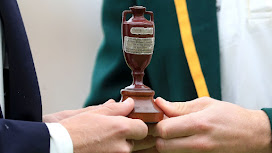
⚱️

Infuriatingly, for home fans, this was nothing new - and sloppiness from England is, frankly, a major reason for the Aussies' series lead.

In the field, England have dropped 18 catches - with Root in the slips guilty of shelling six alone.

Meanwhile, wicketkeeper Jonny Bairstow has had a torrid time behind the stumps, missing seven chances including an easy stumping.

Ben Foakes would appear to be a ready-made replacement, even if Bairstow was still retained as a batsman.

However, the Surrey glove-man remains out-of-favour with the team selection for the fourth Test next week at Old Trafford already confirmed.

Bairstow can consider himself pretty fortunate to have retained his place - although, to be fair, he still has some credit in the bank following his heroics last summer against New Zealand and India.

In this series, though, he averages just 23.50, a figure which can be partly attributed to his controversial stumping by Alex Carey in second innings at Lord's.

Carey had noticed Bairstow walking out of his crease after balls which he had left so, when the Yorkshireman did just that from a ball by Cameron Green, the Aussie keeper threw down the stumps.

The controversy derives from Law 20.1.1.1 which states that the ball is dead when it is finally settled in the hands of the wicket-keeper or of the bowler.

In fairness to Carey, though, he released the ball quickly before Bairstow had moved in anticipation that he would again leave his ground.

Perhaps, in the interests of the spirit of the game and to avoid the rather unexpected barracking which they received in the usually genteel Long Room at Lord's, Australia could have used the incident to serve a warning before withdrawing their appeal.

Regardless, though, it was dozy cricket from Bairstow - and, indeed, far more worthy of a wicket than the catch claimed by Mitchell Starc when he had slid the ball with his hand along the ground on the previous evening.

In terms of other head-scratching moments, the decision of skipper Ben Stokes to declare at 393-8 on the very first day of the series has also come in for criticism, particularly as Root was in control at the crease on 118 not out.

True, it meant Australia had to survive a tricky period before the close of play - but they duly did survive - and it seemed instead that England had failed to heed the lessons of their defeat to New Zealand in February.

That match at the Basin Reserve in Wellington brought another first innings declaration by Stokes - but, after the Black Caps made 483 in their second knock, England ended up short in the chase by a single run. 

⚱️

Back to the vital third Test - and, with Marsh removed by the last ball before Tea, England resumed after the break re-energised.

Mark Wood (5-34) prompted a collapse of 6-23 as Australia were bundled out for 263 - but, unfortunately, the wickets did not end there.

Just before the close, England lost Zak Crawley (33) to finish the day on 68-3 with Ben Duckett (2) and Harry Brook (3) having earlier barely troubled the scoreboard.

Then, on the second morning, it got worse. From the second ball of the day, Root was caught at first slip by Warner off skipper Pat Cummins and Bairstow could only make a dozen before nicking Starc to Smith at second slip.

England were 87-5 and even first innings parity looked a long way off.

But, to his great credit, Stokes (80) intervened to play a truly great captain's knock, scoring steadily with Moeen Ali and Woakes before Wood also brought fireworks with the bat.

The Ashington-born fast bowler hit 24 off just eight balls - and Stokes then joined the fun by hitting Starc for three consecutive boundaries before twice cracking successive sixes off the bowling of spinner Todd Murphy.

Eventually, England were bowled out for 237, a mere 26-run deficit when it had looked as if it was going to be a lot worse.

Indeed, with Warner - removed by Broad for the 17th time in Tests - and Labuschagne (33), Smith (2) and Khawaja (43) again gone early, there was little at that point to choose between both teams.

Head and Marsh guided the Aussies to stumps as the lead neared 150 - and, in the Yorkshire drizzle, much of day three was an exercise in frustration.

In the end, there was actually more play than expected - enough time, in fact, for the express pace of Wood to bowl out the Aussies for 224, which left England with a target of 251.

Crawley and fellow opener Duckett eased England unscathed to 27-0 at the close of play - but, in truth, it was never going to be a straightforward chase, even though the pitch clearly held no demons.

Four overs after Lunch on day four, England were 171-6, still 80 runs short, after Bairstow completed a miserable Test by dragging an attempted drive off Starc onto his stumps.

Thankfully, though, Brook was still there - and the Keighley-born right-hander on his home ground settled into a good rhythm with Woakes to put on 59 for the seventh wicket.

Brook departed for 75 with 21 still required to leave the door open for one final twist if the Aussies were able to run through the tail.

By then, though, Woakes had played himself in and he provided the perfect foil for the more aggressive Wood who added 16 runs off eight balls to make it 40 off 16 in the match.

Nevertheless, it was Woakes who deservedly hit the winning runs with a confident drive through point to ensure England kept the Ashes alive.

⚱️

Remarkably, in the eight Ashes series - four home and four away - between 1989 and 2002-03, England won just one live Ashes Test, the first match at Edgbaston in 1997.

That series still finished 3-2 to Australia - but, in fairness, over the past 20 years, the overall contest has been more evenly matched.

At home, England are unbeaten in the contest since 2001 with four wins and a draw in the intervening 22 years.

However, Down Under, there have been two whitewashes of England in 2006-07 and 2013-14 - and another two 4-0 results in the Aussies' favour in 2017-18 and 2021-22.

In truth, Australia remain strong favourites for this Ashes series as well - they have lost all three tosses, generally have had the worst of the conditions, and yet still lead 2-1.

Moreover, the only side in Ashes history to win from 2-0 down were the Australians in 1936-37 with a team featuring a certain Donald Bradman.

But at least this time, with this attacking line-up and mindset, England have given themselves a chance - and, in never settling for the draw, it is win-win or bust between now and the end of July. 

⚱️

Friday, 16 June 2023

Baz-ball faces its biggest Test of all in Ashes

A RESURGENT England team begin their quest to regain the Ashes today against the newly-crowned World Test champions Australia.

England have not held the Ashes for almost six years now with successive 4-0 thrashings in the 2017-18 and 2021-22 away series having sandwiched a 2-2 draw at home in 2019.

On the other hand, the last time that an Aussie team won an Ashes series on English soil outright was back in 2001, with four England victories and that draw in the intervening 22 years.

Nevertheless, only 14 months ago when Joe Root stepped down as captain, any chance of a competitive series this summer looked extremely slim.

England had departed Australia in January 2022 in a complete mess - and matters got worse again on the next tour against West Indies as Root's team collapsed to 120 all out in the third Test in Grenada to lose the series 1-0.

That defeat spelled the end for the Yorkshireman's difficult tenure as captain, and - without a skipper, head coach, chief selector or a managing director - England were frankly in complete disarray.

Suddenly, though, at the start of the summer of 2022, Baz-ball arrived.

Led by new head coach Brendan McCullum and his freshly-appointed, similarly-minded skipper Ben Stokes, England began to determine their own fate by attacking with the bat and setting aggressive fields.

Last summer, it felt like just about anything could be chased down in the fourth innings even though it is meant to be the toughest period to bat due to the wear of the pitch.

Indeed, England reached targets of 277, 299 and 296 against New Zealand, and 378 in the rearranged match against India, with a ridiculous amount of ease.

The good form continued into the winter as England toured Pakistan for the first time in 17 years - and, in less than three weeks, more than doubled their number of Test wins there in history.

A 3-0 series triumph featured yet more blistering batting, peaking at an average rate of 7.37 runs per over in the second innings of the first Test as England pushed for victory after the teams' first innings suggested a high-scoring draw was on the cards.

Further victories in Multan and Karachi meant that, having only ever previously recorded two Test wins in Pakistan in 1961 and 2000, Stokes's side had brought the total number of match triumphs by an England team there to five.

In fact, altogether, the hosts head into the Ashes with 10 wins in their last 12 Tests under Stokes and McCullum - a sequence which represents quite the turnaround after having tasted success in only one of their previous 17 under Root.

Certainly, though, Australia will be formidable opponents over the next six-and-a-bit weeks.

The Baggy Greens have only lost Test series against India since 2018, although there have been three such defeats, including a 2-1 home reverse in 2020-21 when an injury-ravaged Indian team recovered from being 1-0 down after the first match when they crumbled to 36 all out.

Nevertheless, earlier this month, the Aussies comfortably beat their bogey team in the World Test Championship final at the Oval after dominating from the very first ball - and, as such, will be as battle-hardened as touring sides get nowadays.

Meanwhile, England had the far easier task of beating a rather weak offering from Ireland which they did easily, despite fielding back-up bowler Matthew Potts and debutant Josh Tongue alongside Stuart Broad and Jack Leach.

Unsurprisingly, with the ailing Jofra Archer ruled out of the entire series, Ollie Robinson previously troubled by a sore ankle, and James Anderson turning 41 at the end of July, England did not want to risk causing further damage to their bowling options. 

On that matter, it was a perfect match for skipper Stokes. Still nursing a niggly knee injury, the 32-year-old remarkably became the first captain in Test history neither to bat, bowl, or keep wicket at any stage in the proceedings.

But then came the sort of news which England had been fearing. On 4 June, spinner Leach announced he was out of the whole Ashes series after sustaining a stress fracture to the lower back.

It is a real shame for Leach who had played in every Tests under McCullum and benefited from the greater confidence shown in his ability by Stokes compared to predecessor Root.

Moeen Ali has stepped into the breach and confidently asserted that Baz-ball will also suit his style.

"I spoke to Stokesy about how he talked to batters and there's no question marks over any shots you play; that gives me licence to play a few more rash shots I guess," said Moeen.

"Even with the ball, [Stokes is] more on the aggressive side. I know I go for runs but he knows there's also some wicket-taking deliveries in between, which is all he cares about really."

Nevertheless, the 35-year-old will still be under pressure to improve his distinctly average record against Australia which, even on home soil, reads 15 wickets in six matches at an average of 47.86.

By contrast, Aussie skipper Pat Cummins has an embarrassment of bowling riches at his disposal, including himself of course - to the extent that either Mitchell Starc or Josh Hazlewood will struggle to make the cut.

Instead, Cummins is likely to line-up alongside Starc or Hazlewood, experienced spinner Nathan Lyon, and medium-fast Scott Boland who was a remarkable find during the last Ashes series.

Boland might not have express pace but he looks perfect for classic English conditions favouring swing and seam.

Then again, Stokes has requested "fast, flat" pitches rather than traditional English green-tops with the aim of taking advantage of his side’s batting prowess.

But, while these surfaces have obvious benefits for performance with the bat, they will also make even the strongest bowling unit toil.

And, if England are weakened by further injuries on this front, there could be some particularly painful afternoon ahead this summer, watching the likes of Steve Smith and Marnus Labuschagne rack up the runs.

Now, regardless of all that, a fully-fit England team - at their Baz-ball best - is genuinely capable of blowing away even this talented Aussie outfit.

However, fears of an England implosion are never too far away - and, of all the Australian sides to visit these shores since the heydey of Steve Waugh, Shane Warne and Glenn McGrath, this particular squad appears to be best-placed to deliver that long-awaited away win.

Excitingly, if both teams play to their maximum, this really could be one of the all-time great Ashes series, akin to 2005.

But perhaps the biggest unknown is just how Baz-ball tactics stand up against an opponent who will simply refuse to take a backward step, especially as England appear to be vulnerable to a mid-series injury crisis. 


FIRST TEST 16 June-20 June
ENGLAND393-8dec & 273▪️ AUSTRALIA won by two wickets
Edgbaston
AUSTRALIA386 & 282-8
SECOND TEST 28-June-2 July
ENGLAND325 & 327▪️ AUSTRALIA won by 43 runs
Lord's
AUSTRALIA416 & 279
THIRD TEST 6 July-10 July
ENGLAND237 & 254-7▪️ ENGLAND won by three wickets
Headingley
AUSTRALIA263 & 224
FOURTH TEST 19 July-23 July
ENGLAND592▪️ DRAWN
Old Trafford
AUSTRALIA317 & 214-5
FIFTH TEST 27 July-31 July
ENGLAND283 & 395▪️ ENGLAND won by 49 runs
The Oval
AUSTRALIA295 & 334

SQUADS
ENGLAND  ▪️  Ben Stokes (c), Moeen Ali, James Anderson, Jonny Bairstow (wk), Stuart Broad, Harry Brook, Zak Crawley, Ben Duckett, Dan Lawrence, Ollie Pope (wk), Matthew Potts, Ollie Robinson, Joe Root, Josh Tongue, Chris Woakes, Mark Wood

AUSTRALIA  ▪️  Pat Cummins (c), Scott Boland, Alex Carey (wk), Cameron Green, Marcus Harris, Josh Hazlewood, Travis Head, Josh Inglis (wk), Usman Khawaja, Marnus Labuschagne, Nathan Lyon, Mitchell Marsh, Todd Murphy, Jimmy Peirson (wk), Matt Renshaw, Steve Smith, Mitchell Starc, David Warner

Wednesday, 29 December 2021

Ducking hell


➡️ SCHEDULE: AUSTRALIA LEAD THE SERIES 3-0
DateGMT
Venue
8-11 Dec
00:00
1 Australia 425 & 20-1 beat England 147 & 297 by nine wicketsBrisbane
16-20 Dec
04:002 Australia 473-9d & 230-9d beat England 236 & 192 by 275 runsAdelaide (D/N)
26-28 Dec
23:303 Australia 267 beat England 185 & 68 by an innings and 14 runsMelbourne
5-9 Jan
23:30FOURTH TEST
Sydney
14-18 Jan
02:30FIFTH TEST
Hobart (D/N)

ENGLAND equalled their all-time annual record of 54 ducks as they collapsed to a humiliating total of 68 all out in the Boxing Day Test in Melbourne.

In only the seventh session of the match, England officially conceded any chance of regaining the Ashes after going 3-0 down in a thoroughly embarrassing defeat.

Quite understandably, all Australian thoughts have already now turned towards completing a fourth whitewash in Ashes history.

Of course, two of those 5-0 whitewashes are within relatively recent memory, coming in the 2006-07 and 2013-14 series.

Meanwhile, the most recent series Down Under in 2017-18 finished 4-0 with England only able to stave off the whitewash on that occasion by securing a draw in the fourth Test in Melbourne thanks to Alastair Cook's unbeaten 244. 

The three defeats this time in Brisbane, Adelaide and Melbourne therefore make it 12 losses out of 13 for England in Australia, and four wins and 22 losses out of the 28 matches played there this century. 

Remarkably, three of those four England wins came during their spectacularly successful 2010-11 series - and each of those victories, in Adelaide, Melbourne and Sydney, came by an innings.

Back then, England lined up with Cook, captain Andrew Strauss, Jonathan Trott, Kevin Pietersen, Ian Bell, Paul Collingwood and Matt Prior in their top seven. 

Cook, in fact, finished the series with an incredible average of 127.66 after scores of 235 not out, 148 and 189. 

Then, within a year of that momentous Ashes triumph, England were officially deemed the best team in the world after completing a 4-0 home whitewash of India.

Unfortunately, this current selection has far more similarities with the Nasser Hussain-led team of 1999 which infamously became the worst Test side in the world after a home series defeat to New Zealand.

The year before, in 1998, that record of 54 ducks in a year was set - and yet, that summer, Michael Atherton inspired England to a comeback series win against a strong South Africa side. 

As such, this feels far worse - an inescapable trap of repeated humiliating failures displayed almost unashamedly to the extent that the record books constantly need to be on hand for the pundits, commentators and cricket geeks. 

It got to the stage this year where, in all honesty, all of the above expected these England flops to reach their duck record of 54 - and Joe Root's men duly obliged. 

Resuming on 31-4, England were yet again in a fragile position - but, with their best batsman, Root, still at the crease, it did not seem like it would be a momentous task, even for these hapless tourists, to score the 51 runs required for Australia to have to bat again.

Instead, local hero Scott Boland took 6-7 on debut as England folded again and fell 14 runs short of the Aussies' modest total of 267 despite having had the benefit of two knocks. 

Perhaps unsurprisingly, it is the lowest Test total since 1986 to have won a match by an innings, and the eighth-lowest ever. 

Yet it is merely the latest - and worst - day in a whole slew of bad days for England in this series. 

In the first Test at the Gabba in Brisbane, Root won the toss and opted to bat on a green-top which brought about a predictably rotten outcome.

It all started to go wrong from the very start with Rory Burns bowled first ball to a Mitchell Starc delivery which landed on leg-stump. 

Burns's technique was dreadful, falling across to the off-side and exposing his wicket; it really was altogether a horrendous start. 

By the end of the first hour, England had also lost captain Root for a duck, and they were eventually rolled over for 147 on the stroke of tea before rain wiped out the last session. 

The second day - with the ball - went little better as the English attack struggled for line and length, and were guilty of bowling several no-balls. 

Many of the overstepping offences failed to be called by the umpire - but wicket-balls are always checked now and, agonisingly, Stokes reprieved Aussie opener David Warner while he was on just 17.  

Warner was also dropped by the forlorn Burns on his way to 94 - while Travis Head (152) and Marnus Labuschagne (74) helped Australia post 425. 

Elsewhere, spinner Jack Leach was carted around at almost eight-an-over and taken out of the attack - while Ollie Robinson and Stokes, on his return to cricket after an absence of more than nine months, visibly struggled for fitness. 

In the second innings, after the customary loss of two early wickets, the indefatigable Root was joined by Dawid Malan in a partnership of 162. 

But their two wickets precipitated another collapse of 8-74 as England fell away from 223-2 to 297 all out, and left Australia with a facile fourth innings target of 20 runs.

The second Test in Adelaide was a day-night encounter and, just like four years ago, it was reported to be a way back into the series for England.

Just like four years ago, though, Australia dominated under the lights, racking up 473-9 declared through the efforts of Labuschagne (103) and talented sandpaper cheat Steve Smith (93). 

The absence of Pat Cummins following his close contact with a person who had tested positive COVID-19 meant Smith was temporarily promoted back to his previous role as skipper. 

Another Aussie fast-bowler Josh Hazlewood was also absent with a side strain - but the home attack had more than enough for England's batting line-up. 

England lost both openers early again and then lost 8-86 to collapse from 150-2 to 236 all out following the wickets of Root and Malan. Rinse and repeat. 

Australia were then able to declare for the second time in the match on 230-9 as, with Leach dropped, the tourists' five-man seam attack lacked variation and even struggled against the tail.

Skipper Root eventually took the wickets of Alex Carey and Starc with his off-spin - while Robinson was reduced to bowling a three-over spell of off-breaks. 

The rotation policy of bumbling head coach Chris Silverwood was justified on the basis that a well-rested England team would be in prime condition for this Ashes series. 

Instead, though, it rather looks as if they make it up as they go along and the sight of Robinson bowling spin was simply another sign of a team in complete disarray. 

Set a nominal target of 468 runs for victory, Burns made a gritty 34 but England ended four down at the close of play on day four with Root caught behind off the final ball before stumps. 

Jos Buttler (26 off 207 balls) provided some resistance and took the match beyond the tea interval on the final day.

But, just when it looked like his efforts might be enough for England to escape from Adelaide with the most unlikely of draws, he trod on his own stumps to be out hit wicket.

It was another face-palm moment for England - and Australia soon wrapped up another huge victory to go 2-0 up.

In all, this Ashes series was lost within 12 days of playing time. England had spent longer in quarantine on entry to Australia.

For sure then, there are some mitigating factors - spending weeks in a bio-secure bubble to mitigate against COVID-19 is hardly the ideal way to deal with a campaign which has as much intensity as an Ashes series.

Indeed, there is still a chance that this series ends early due to COVID-19, although the outbreak in the England camp has been restricted so far to three coaches and three family members.

Pre-series preparation was also hampered by poor weather in Queensland which washed out the greater part of both inter-squad warm-up matches.

Nevertheless, there is simply no justification for 68 all out, or the fact that the innings was the sixth time in the last four years in which England had failed to score more than 85 in a Test match.

For the record, the other matches came against New Zealand in March 2018 (58 all out in Auckland), the West Indies in January 2019 (77 all out in Barbados), Ireland in July 2019 (85 all out at Lord's), Australia in August 2019 (67 all out at Headingley), and India in January this year (81 all out in Ahmedabad).

Remarkably, two of those matches - against Ireland and Australia - ended in England victories, but the pattern of failure with the bat has been obvious for years.

In fact, no other player introduced to the side since Root made his debut in 2012 has an average over 40.

And, this year in particular, the gap between Root and the rest has reached an embarrassing level. 

Skipper Root has compiled a total of 1,708 runs, the third-highest ever total for a calendar year behind only Mohammad Yousuf's tally of 1,788 in 2006 for Pakistan and West Indies legend Sir Vivian Richards's total of 1,710 in 1976. 

Despite that, though, England have still managed to be all out for less than 200 in 13 of their 29 innings. 

Behind Root, the only other contributions above 400 have come from Burns (530), who was dropped for the third Test, and Extras (412).

England's nine Test defeats in 2021 is a record for any team in a calendar year. 

In short, England never really stood a chance in Australia - but the disappointing aspect of the series is that, bar the efforts of Root with the bat and 39-year-old Jimmy Anderson with the ball, the tourists have simply not come close to competing.

There are inevitable questions about the position of Root as captain, and he may not even want to carry on in the role himself if this ends up being another whitewash - although there is no ready-set candidate to step into the breach.

Regardless of that, though, England should dispense of the services of head coach Silverwood with immediate effect since he has now lost the confidence of almost all of the supporters and possibly some of the team. 

Silverwood's selection and management of a struggling set of players in various series - and especially this one - has sent the team backwards. 

Of course, the problems run deeper than Silverwood - but obvious starting points are the appointment of a fully-competent head coach and the reintroduction of a selector to take the heat off the former.

The structure of the county cricket season definitely needs an overhaul: 

Scrap the current format windows so that both red-ball and white-ball cricket is played right across the summer and introduce a far more rigorous assessment of four-day county pitches 

The Hundred competition also needs to be scrapped and put down as a costly mistake by the England and Wales Cricket Board (ECB). 

Collectively, the ECB now simply needs to accept its failure to cash in fully on the T20 format in the face of the juggernaut that is the Indian Premier League (IPL). 

It also needs to accept that there was no need for the introduction of another white-ball competition using a format played nowhere else, especially one which trashed the traditional links between supporters and county teams.

None of the above suggestions would be automatically enough for England to win the Ashes in Australia, of course - but they should help a future squad to compete a little bit better.

At the same time, there needs to be a far greater focus on the coaching of basic batting technique and the temperament required for Test cricket. 

The forward-defence will never be a sexy shot in the context of the array of strokes brought into the game by T20 and 50-over cricket. 

However, it can look just as spectacular as a ramp shot or a switch-hit when it used against the final ball of the day to save a draw from a losing position. 

Patience is a virtue which also can be taught and the expertise of the likes of battlers like Cook and Atherton should be called upon. 

Too often in this series, England players have failed to leave the ball on length, and too often they also have fished at deliveries going well wide of off-stump. It has made for agonising viewing. 

As it stands, Ashes series in Australia are currently a broken shell of a competition - 5-0, 4-0, 3-0 on the way to 5-0. It all feels like a rather pointless pursuit. 

For now, these five-Test thrashings Down Under somehow remain marketable, even in the era of COVID-19. 

But for how long will that be the case if nothing changes? And if the oldest rivalry in Test cricket - in many ways still the blue-ribbon event - cannot survive, what does that say for the format as a whole? 

In the short term, England are trying to stave off another whitewash not only for their own good but also the good of Test cricket. 

Yet it is not at all clear how on earth they can succeed.

➡️ ENGLAND 54 DUCKS OF 2021
6 Rory BurnsDuckDuckDuckDuckDuckDuck 5 Ollie RobinsonDuckDuckDuckDuckDuck 4 Dom Sibley, Haseeb Hameed, Dan Lawrence, Jonny Bairstow, James AndersonDuckDuckDuckDuck 3 Sam Curran, Stuart BroadDuckDuckDuck 2 Zak Crawley, Jos Buttler, James Bracey, Jack Leach, Jofra Archer, Mark Wood DuckDuck 1 Joe Root, Dawid Malan, Dominic Bess, Moeen Ali, Olly StoneDuck

Tuesday, 7 December 2021

Overshadowed, uncertain Ashes series steps out of the shade

➡️ SCHEDULE
DateGMT
Venue
8-12 December
00:00
FIRST TEST
Brisbane
16-20 December
04:00SECOND TEST
Adelaide (D/N)
26-30 December
23:30THIRD TEST
Melbourne
5-9 January
23:30FOURTH TEST
Sydney
14-18 January
TBCFIFTH TEST
TBC

ENGLAND captain Joe Root has admitted that the Ashes series, beginning tonight at midnight in Brisbane, will define his four-year tenure in charge of the Test team.

Root will lead his side on a tour Down Under for a second time, hoping to fare rather better than four years ago when England were soundly beaten 4-0 in his first away series as skipper.

Australia currently still hold the Ashes, of course, after securing a 2-2 draw in England in a first tied series between the teams since 1972.

Incredibly though, even accounting for the coronavirus pandemic, the Aussies have only played nine Test matches in three series - and none abroad - since retaining the urn in the summer of 2019.

As such, the comments from their then-skipper Tim Paine, which seemed to cast aspersions on the tentative attitude of the England players towards the harsh Australian coronavirus restrictions, were the height of hypocrisy. 

Just this week, less than 48 hours before the first ball of the series, Perth was stripped of the hosting rights to the fifth Test due to the extreme requirements set by authoritarian Western Australia leader Mark McGowan.

Not that any of this is the concern of Paine now. The 36-year-old married father-of-two shed tears as he was forced to quit his position after sexually explicit messages between himself and a female colleague were revealed. 

Rather ludicrously, this affair had been going on at the exact same time that Paine had been appointed captain in an effort to clean up the image of Australian cricket. 

That was required because his predecessor Steve Smith - along with David Warner and Cameron Bancroft - had been exposed for ball-tampering in one of the biggest scandals in the sport in recent times. 

Paine's replacement Pat Cummins is a rookie skipper but was an obvious choice from the shortest of shortlists having led the bowling attack over the last few years. 

Nevertheless, Cummins will also be ably assisted by Smith whose unquestionable quality with the bat has largely restored his reputation Down Under, alongside that of fellow sandpaper cheat Warner. 

Understandably, most England fans view the pair rather differently. 

For, although their cheating was uncovered during a match against South Africa, it remained a mystery throughout the 4-0 drubbing four years ago why Australia were able to reverse swing the ball while England could not. 

Of course, English cricket itself is not in a particularly healthy place right now. 

The serious racism allegations from Azeem Rafiq, while referring specifically to his own treatment while he was a Yorkshire player, suggest there is a wider far deep-rooted problem in the sport. 

Rafiq may have personally lost some credibility when his own historic anti-Semitic comments were subsequently uncovered. 

However, his appearance in front of the Culture, Media and Sport Select Committee on 16 November will have left a few members of the "old-school tie" at Lord's shuffling uncomfortably in their seats - and this is an issue which will not just conveniently go away. 

Back on the field of play, England - like Australia - will head into this series badly undercooked in terms of recent First Class cricket, with both of the inter-squad warm-up matches against England Lions severely affected by heavy rain. 

In the first match against the Lions, only 29 overs were possible across the three days - while the second game fared only a little better with the first two days of four completely washed out. 

Ben Stokes looked in fine nick with bat and ball during the play that was possible, taking 2-31 and bashing 42 not out off 56 balls, as he settles well into the squad following his late selection. 

Previously, on 30 July, Stokes had made himself unavailable, citing the need to prioritise his mental wellbeing and rest his injured left index finger as the reasons for his decision to take an indefinite break from all cricket. 

For sure then, Stokes has made a brave choice to return to the fold at this very moment, immediately before this incredibly intense series. 

Furthermore, the introduction of squad bubbles in the post-COVID-19 world has made life even more difficult for the cooped-up players with doubts at one stage over whether the players' families would be admitted by Australian immigration control. 

Then again, Stokes was clearly determined not to be absent for another Ashes series having been omitted from the tour four years ago following his infamous scrap outside of a Bristol nightclub.

Of course, Root could not hide his joy at the news that Stokes was on board. 

After all, the Durham all-rounder is the heartbeat of this team and carries the same sort of aura against the Australians as his predecessors Ian Botham and Andrew Flintoff.

England may have been unable to regain the Ashes at home in the last series - but Stokes's batting heroics at Headingley, where he made 135 not out and batted for an hour with last man Jack Leach, have now been seared into the history of this contest.

The 2-2 draw also kept England unbeaten in home Ashes series since 2001, but their recent touring record against the top three sides in the world - Australia, India and New Zealand - does not make for pretty reading at all.

A surprise victory in Chennai was England's first - and, so far, only - away Test triumph against that trio of opponents under Root's captaincy. 

Even then, India roared back, winning each of the last three matches, including the third Test on a highly suspect pitch in Ahmedabad inside two days. 

The forecast in Brisbane continues to be unsettled and points possibly towards a rain-affected draw in the first Test at the notoriously tough Gabba where Australia have lost only once since 1986. 

That defeat against India was as recently as January, though - and there is now also the prospect of James Anderson being able to swing the ball under the lights in two day-night Tests. 

Nevertheless, world number one bowler Cummins relishes the fast, hard and bouncy surfaces Down Under and the English batting order remains frighteningly brittle. 

Add in England's dreadful away record against the top sides in the world - and it is extremely difficult to look past another comfortable home Ashes win for Australia.

Prediction: Australia win 3-1
📺 Live on BT Sport, highlights on BBC Sport
📻 Test Match Special, live on BBC Radio 4 (LW) and BBC 5 Live Sports Extra

➡️ SQUADS
ENGLANDAge
Tests10050HS
Joe Root (c)30Yorkshire1092350254
James Anderson39Lancashire1660181
Jonny Bairstow (wk)32Yorkshire78622167*
Dominic Bess24Yorkshire140157
Stuart Broad35Nottinghamshire149113169
Rory Burns31Surrey29311133
Jos Buttler (vc) (wk)31Lancashire53218152
Zak Crawley23Kent1514267
Haseeb Hameed24Nottinghamshire60482
Dan Lawrence24Essex80381*
Jack Leach30Somerset160192
Dawid Malan34Yorkshire1717140
Craig Overton27Somerset60041*
Ollie Pope23Surrey2016135*
Ollie Robinson28Sussex50042
Ben Stokes30Durham711024258
Chris Woakes32Warwickshire3916137*
Mark Wood31Durham210152

AUSTRALIA
Pat Cummins (c), Cameron Green, Marcus Harris, Josh Hazlewood, Travis Head, Usman Khawaja, Marnus Labuschagne, Nathan Lyon, Michael Neser, Jhye Richardson, Mitchell Starc, Mitchell Swepson, Steve Smith (vc), David Warner

ENGLAND LIONS
Alex Lees (c) (Durham), Tom Abell (Somerset), Josh Bohannon (Lancashire), Harry Brook (Yorkshire), James Bracey (Gloucestershire), Mason Crane (Hampshire), Matthew Fisher (Yorkshire), Ben Foakes (wk) (Surrey), Saqib Mahmood (Lancashire), Liam Norwell (Warwickshire), Matt Parkinson (Lancashire), Jamie Smith (Surrey), Robert Yates (Warwickshire)

➡️ ENGLAND TEST TOUR WOES since the start of the 2013/14 Ashes series
• Away record versus Australia, India and New Zealand: P23 W1 D4 L18
2013-14
AUSTRALIAlost 0-5 [5]
2016-17INDIAlost 0-4 [5]
2017-18AUSTRALIAlost 0-4 [5]
2017-18NEW ZEALAND
lost 0-1 [2]
2019-20NEW ZEALAND
lost 0-1 [2]
2020-21INDIAlost 1-3 [4]
• NOTE 38.8% of the defeats (7/18) have been by an innings